
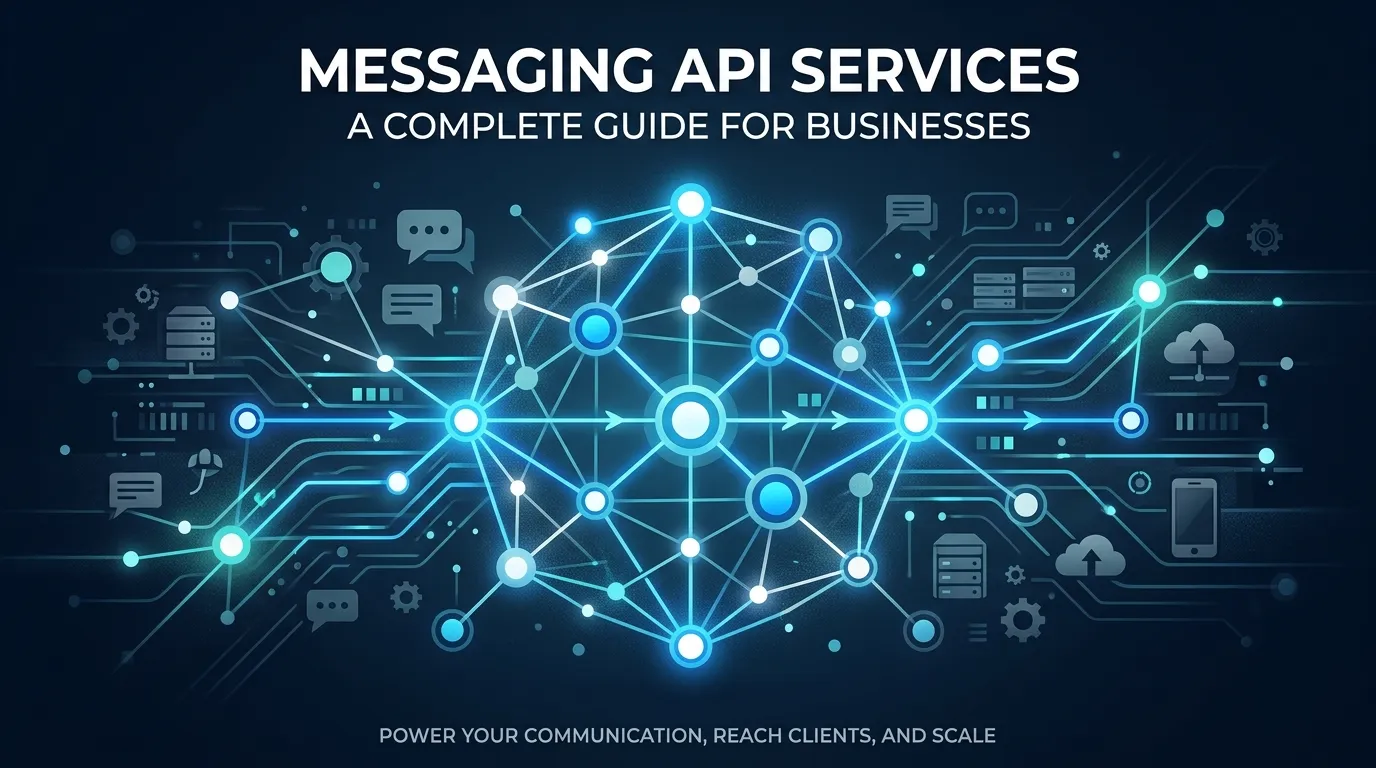
Messaging API services let businesses send and receive messages—SMS, WhatsApp, push notifications, and more—directly through their own apps and software. They power everything from order confirmations to two-factor authentication, helping companies reach customers instantly across multiple channels without building messaging infrastructure from scratch.
Customers expect fast, convenient communication. A delayed shipping update or a missed appointment reminder can quickly sour an otherwise great experience. That’s where messaging API services come in. These tools connect your software directly to messaging channels, so you can automate texts, alerts, and chats at scale.
This guide breaks down the main types of messaging APIs, what each one does best, and how to choose the right solution for your business. Whether you’re a developer building a notification system or a business owner looking to improve customer engagement, you’ll find practical insights to help you make informed decisions.
By the end, you’ll understand the difference between SMS, WhatsApp, and push notification APIs, know what to look for in a provider, and feel confident picking a platform that fits your needs and budget.
What is a messaging API?
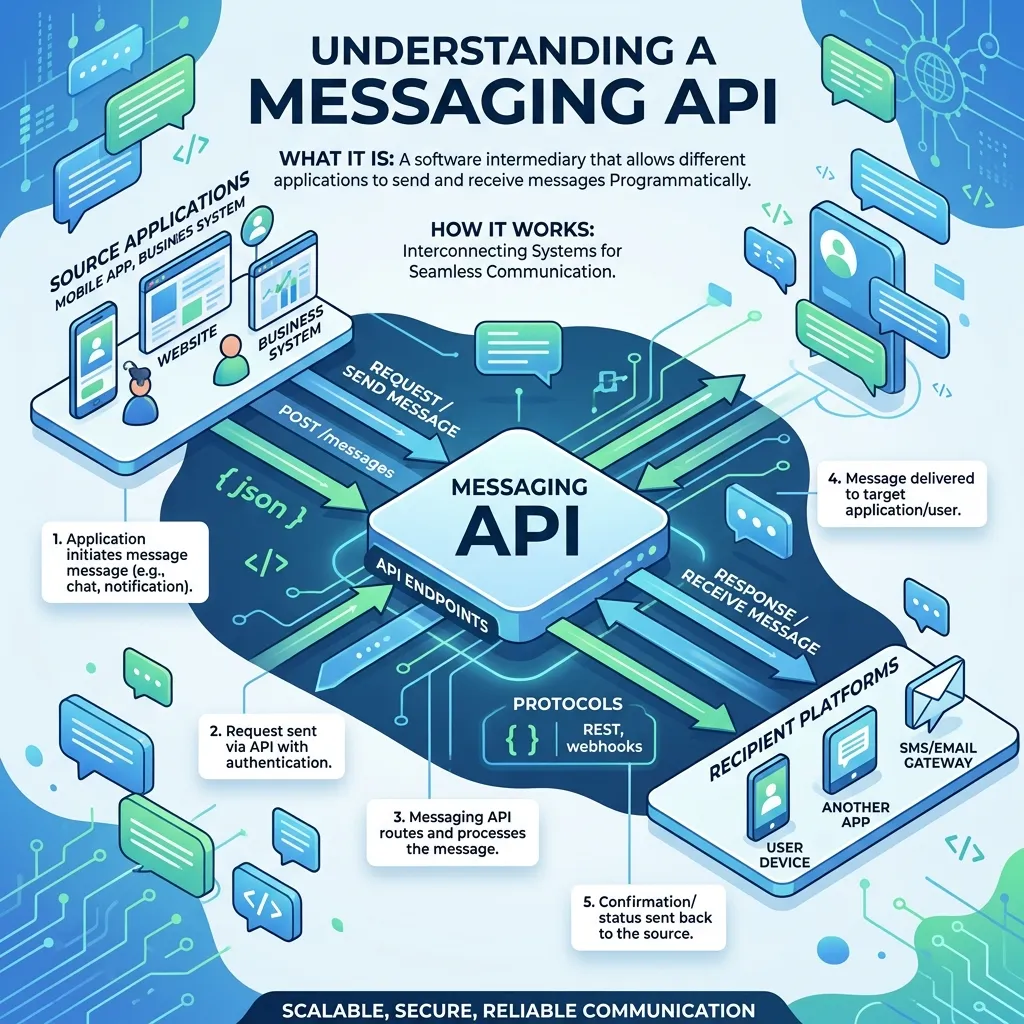
A messaging API (Application Programming Interface) is a set of tools that lets your software send and receive messages automatically. Instead of manually typing out texts or emails, your application can trigger messages based on specific actions—like a purchase, a sign-up, or a password reset.
Think of it as a bridge. On one side is your business software. On the other are messaging channels like SMS networks, WhatsApp, or mobile apps. The API connects them, handling the technical heavy lifting so your messages get delivered reliably.
Messaging APIs save time, reduce errors, and let you communicate with thousands of customers at once. They’re a foundational tool for modern customer engagement.
SMS messaging API providers: the foundation of business texting
SMS remains one of the most reliable ways to reach customers. Text messages have famously high open rates, and nearly every mobile phone can receive them—no app required.
SMS messaging API providers give you the infrastructure to send texts programmatically. Popular options include Twilio, Vonage, and MessageBird. These platforms handle delivery across carrier networks worldwide, so your messages arrive quickly and consistently.
Common uses for SMS APIs include:
- Appointment reminders for clinics, salons, and service businesses
- Order confirmations and shipping updates for e-commerce
- Two-factor authentication (2FA) codes for secure logins
- Marketing promotions sent directly to opted-in customers
When choosing an SMS provider, pay attention to delivery rates, pricing per message, and the countries they support.
Bulk SMS API for businesses: reaching audiences at scale

Need to send thousands of messages at once? A bulk SMS API is built for exactly that. It lets businesses broadcast a single message to large lists of recipients in seconds.
Bulk SMS works well for time-sensitive announcements—flash sales, event reminders, weather alerts, or service outages. Retailers often use it to drive traffic during promotions, while schools and government agencies rely on it for emergency notifications.
The key advantage is speed and reach. A well-configured bulk SMS API can deliver your message to your entire contact list almost instantly. Just be sure to follow local regulations around consent and opt-outs, such as the TCPA in the United States, to stay compliant.
Cloud messaging API solutions: flexibility without the infrastructure
Cloud messaging API solutions run entirely online, which means you don’t need to maintain physical servers or messaging hardware. Everything scales automatically based on your usage.
This setup offers major benefits for growing businesses:
- Scalability: Handle a few hundred messages today and millions next month without changing your setup.
- Cost efficiency: Pay only for what you use, rather than investing in expensive infrastructure.
- Reliability: Leading cloud providers maintain high uptime and built-in redundancy.
Cloud messaging is ideal for startups and enterprises alike. It removes the technical burden of managing servers and lets your team focus on building great customer experiences.
Business messaging API platforms: unifying customer communication

Business messaging API platforms go beyond a single channel. They combine SMS, email, voice, chat, and social messaging into one integrated system. This gives you a complete view of customer conversations across every touchpoint.
These platforms often include extra features like message templates, analytics dashboards, and automation workflows. For example, you can set up a customer journey where a welcome SMS is followed by a WhatsApp message, then a push notification—all triggered automatically.
Choose a business messaging platform if you want to manage multiple channels from one place and create consistent, connected experiences for your customers.
Real-time messaging API services: instant, two-way conversations
Some interactions can’t wait. Real-time messaging API services enable instant, two-way communication—perfect for live chat, customer support, and interactive applications.
These APIs use technologies like WebSockets to keep a constant connection open between your app and your users. Messages appear the moment they’re sent, with no refresh needed.
Real-time messaging powers:
- Live customer support chats on websites and apps
- In-app messaging between users, like in marketplaces or dating apps
- Collaborative tools where teams chat while working together
If your product depends on immediate back-and-forth communication, a real-time messaging API is essential.
WhatsApp Business API integration: meeting customers where they are
With over two billion users worldwide, WhatsApp is one of the most popular messaging apps on the planet. WhatsApp Business API integration lets companies tap into this massive audience.
Unlike the free WhatsApp Business app, the API is designed for medium and large businesses that need to send messages at scale. It supports rich features like images, documents, quick-reply buttons, and verified business profiles that build trust.
Businesses use the WhatsApp Business API for:
- Customer support in a familiar, convenient channel
- Order updates and notifications with rich media
- Appointment confirmations and reminders
Keep in mind that WhatsApp has specific rules about messaging templates and customer opt-ins. You’ll typically work through an official provider like Twilio, 360dialog, or Meta’s own Business Platform to get started.
Push notification API services: re-engaging app users
Push notifications are the messages that pop up on a user’s phone or desktop, even when your app is closed. Push notification API services let you send these alerts programmatically to boost engagement and retention.
Popular tools include Firebase Cloud Messaging (FCM), OneSignal, and Apple Push Notification service (APNs). They let you target users by behavior, location, or preferences.
Effective push notifications can:
- Remind users about abandoned carts
- Announce new content, features, or sales
- Deliver personalized recommendations
- Re-engage users who haven’t opened your app in a while
The trick is balance. Too many notifications annoy users and lead to opt-outs, while well-timed, relevant alerts keep people coming back.
Cross-platform messaging API tools: one integration, many channels
Managing separate APIs for SMS, WhatsApp, email, and push can get complicated fast. Cross-platform messaging API tools solve this by letting you reach multiple channels through a single integration.
With one API call, you can send a message and let the platform decide—or let you choose—the best channel to reach each customer. If a WhatsApp message fails, for instance, the system can automatically fall back to SMS.
This approach saves development time and creates a smoother experience. Your team writes less code, and your customers get reached on whichever channel they prefer.
Programmable SMS API for developers: control and customization
A programmable SMS API gives developers fine-grained control over how messages are sent and received. Rather than a fixed system, it offers building blocks you can customize to fit your exact needs.
Developers value programmable SMS APIs for their flexibility. You can:
- Set up automated workflows triggered by specific events
- Personalize messages with dynamic data like names or order numbers
- Handle inbound replies and route them to the right system
- Track delivery status and analytics in real time
Good developer-focused APIs come with clear documentation, software development kits (SDKs) for popular programming languages, and sandbox environments for testing. Twilio is widely praised for its developer experience, but Vonage and Plivo are strong alternatives worth comparing.
Enterprise messaging API solutions: built for scale and security
Large organizations have unique needs—high message volumes, strict security requirements, and compliance with regulations like GDPR and HIPAA. Enterprise messaging API solutions are designed to meet these demands.
These solutions typically offer:
- Advanced security with encryption and data protection
- Dedicated support and service level agreements (SLAs)
- Compliance tools for regulated industries like healthcare and finance
- High throughput to handle millions of messages reliably
Enterprise platforms also tend to include detailed analytics, role-based access controls, and integrations with existing business systems like CRMs. If your company operates at scale or in a regulated industry, an enterprise-grade provider is the safest bet.
How to choose the right messaging API service
With so many options, picking the right messaging API comes down to your specific goals. Here are the key factors to weigh:
- Channels: Do you need just SMS, or a mix of WhatsApp, push, and more? Choose a cross-platform tool if you want flexibility.
- Scale: Estimate your message volume. Cloud and enterprise solutions handle growth more easily.
- Budget: Compare per-message pricing and any monthly fees. Bulk pricing can save money at high volumes.
- Developer experience: Strong documentation and SDKs make integration faster and smoother.
- Compliance: Make sure the provider supports the regulations in your industry and regions.
- Reliability: Look for high uptime, strong delivery rates, and responsive support.
Start by mapping out how you want to communicate with customers. Then match those needs to the provider that fits best.
Putting messaging APIs to work for your business
Messaging API services have become essential tools for connecting with customers quickly and reliably. From simple SMS reminders to rich WhatsApp conversations and real-time support chats, the right API can transform how your business communicates.
The best approach is to start small. Pick one channel that solves an immediate need—like order confirmations or appointment reminders—and test it with a provider that offers clear documentation and flexible pricing. As you see results, you can expand into more channels and build a complete, cross-platform messaging strategy.
Take time to compare providers, read their documentation, and test their free tiers before committing. The right messaging API won’t just send messages—it’ll help you build stronger, lasting relationships with your customers.
Frequently asked questions
How much do messaging API services cost?
Pricing varies by provider and channel. SMS APIs typically charge per message, often a fraction of a cent to a few cents depending on the destination country. WhatsApp and other channels may have different pricing models, sometimes based on conversations or templates. Many providers offer pay-as-you-go plans, and bulk volumes usually unlock lower per-message rates.
What’s the difference between SMS and WhatsApp Business API?
SMS works on any mobile phone without an internet connection or app, making it nearly universal. WhatsApp Business API requires users to have the WhatsApp app and internet access, but it supports richer features like images, buttons, and verified business profiles. SMS is best for universal reach, while WhatsApp suits engaging, media-rich conversations with active app users.
Do I need a developer to use a messaging API?
For most APIs, some technical knowledge helps, especially during setup and integration. However, many providers offer no-code or low-code tools, pre-built integrations, and clear documentation that simplify the process. Business messaging platforms in particular often include visual workflow builders that let non-developers create automated messaging campaigns.
Are messaging APIs secure and compliant?
Reputable messaging API providers use encryption and follow data protection standards. Enterprise messaging API solutions go further, offering compliance tools for regulations like GDPR and HIPAA. If you operate in a regulated industry such as healthcare or finance, confirm that your provider supports the specific compliance requirements you need.
Which messaging API is best for developers?
Developer-focused programmable SMS APIs like Twilio are widely praised for excellent documentation, SDKs across many programming languages, and sandbox testing environments. Vonage and Plivo are strong alternatives. The best choice depends on your preferred programming language, the channels you need, and your budget.
What are Messaging API Services?
Messaging API Services allow applications to send and receive messages automatically across channels like SMS, WhatsApp, and push notifications.
How do messaging APIs work?
They connect business software to messaging networks, enabling automated communication based on user actions or events.
What is an SMS messaging API?
An SMS API lets businesses send and receive text messages programmatically through their applications.
What is the difference between SMS and WhatsApp Business API?
SMS works on any mobile phone, while WhatsApp Business API supports rich media, interactive messages, and verified business profiles.
What are push notification API services used for?
They send alerts and updates directly to mobile or desktop devices to improve user engagement and retention.
Can Messaging API Services support multiple channels?
Yes, many platforms offer cross-platform messaging that combines SMS, WhatsApp, email, voice, and push notifications.
Are Messaging API Services suitable for small businesses?
Yes, many providers offer affordable pay-as-you-go pricing and scalable solutions for businesses of all sizes.
What should I look for in a messaging API provider?
Consider reliability, pricing, supported channels, security, scalability, documentation, and integration options.
Are messaging APIs secure?
Reputable providers use encryption, authentication, and compliance features to protect customer data and communications.
Which industries benefit most from Messaging API Services?
E-commerce, healthcare, finance, education, logistics, and customer support teams commonly use messaging APIs for automated communication.