
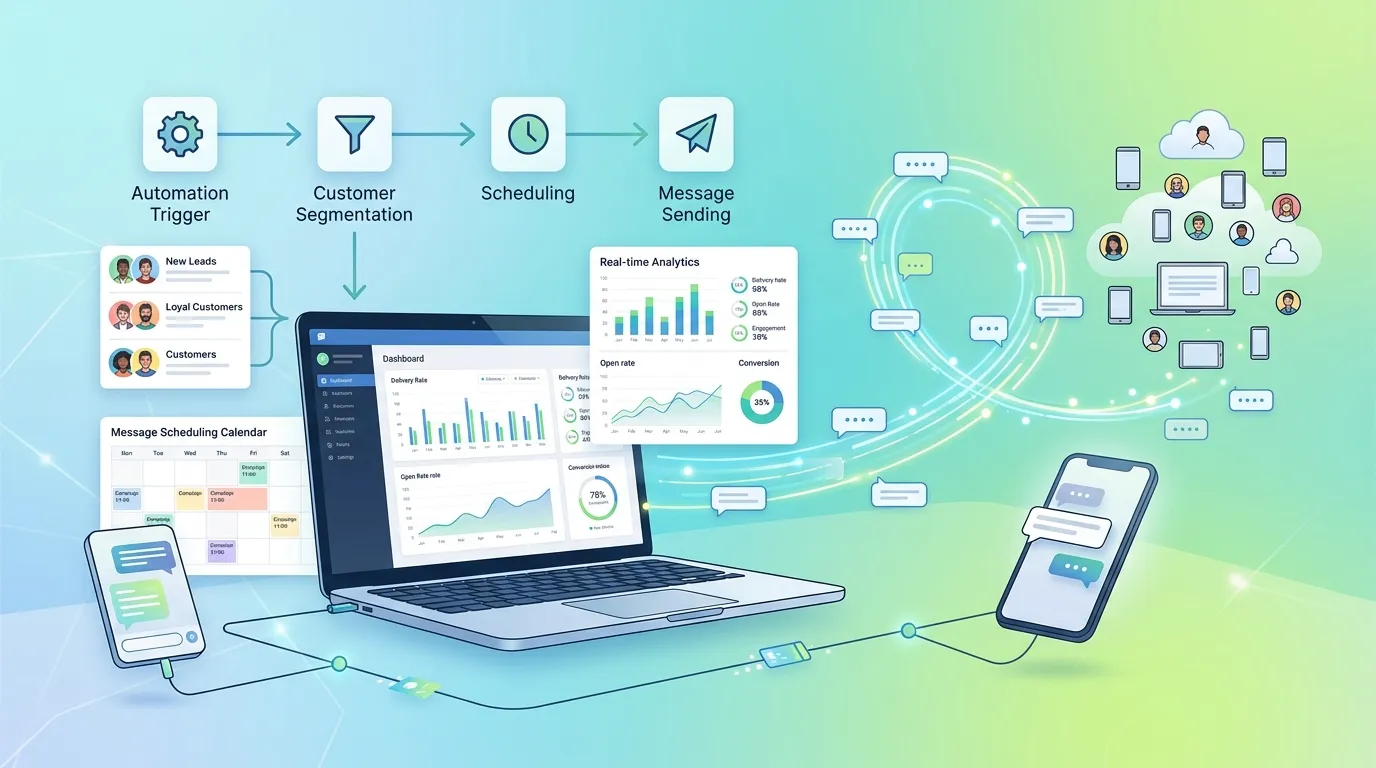
An automated SMS tools lets businesses send scheduled, triggered, or bulk text messages to customers without manual effort. The best platforms combine SMS campaign management, contact segmentation, analytics, and cloud-based delivery—making them essential for businesses that want to boost customer engagement at scale.
SMS open rates sit at around 98%, compared to roughly 20% for email (Klaviyo, 2023). That single statistic explains why more businesses are rethinking how they communicate with customers—and why automated SMS tools have moved from “nice to have” to a core part of the modern marketing stack.
But there’s a meaningful difference between sending a text and running a smart SMS strategy. Manually drafting and sending messages to thousands of contacts is slow, error-prone, and impossible to scale. SMS marketing automation software solves this by handling the heavy lifting—scheduling messages, triggering texts based on customer behavior, managing bulk sends, and tracking performance—all from one platform.
This guide breaks down everything you need to know: what automated SMS tools actually do, which features matter most, how to choose the right platform, and how to get the most out of SMS campaign management for your business.
What Is an Automated SMS Tool?
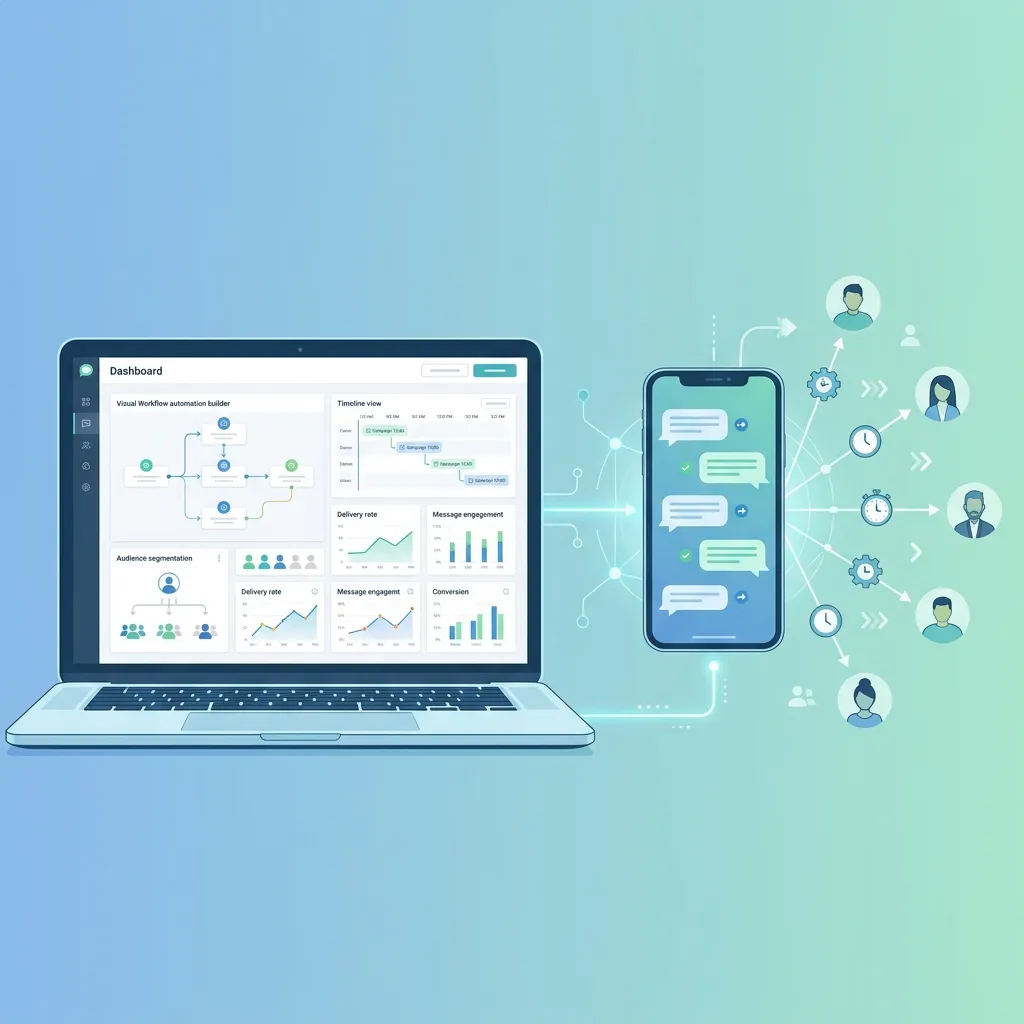
An automated SMS tool is software that enables businesses to send text messages to customers automatically, based on predefined triggers, schedules, or audience segments. Rather than composing and sending each message manually, businesses set up workflows once—and the platform handles delivery.
These tools are commonly used for:
- Promotional campaigns: Flash sales, product launches, seasonal offers
- Transactional alerts: Order confirmations, shipping updates, appointment reminders
- Customer re-engagement: Win-back campaigns, loyalty rewards, feedback requests
- Internal notifications: Staff alerts, shift reminders, operational updates
At their core, automated text messaging systems connect your customer data to a cloud-based SMS delivery infrastructure, ensuring messages reach the right person at the right time—without manual intervention.
Key Features to Look for in SMS Marketing Automation Software
Not all platforms are created equal. When evaluating business SMS marketing software, these are the features that separate genuinely powerful tools from basic messaging apps.
Does the platform support bulk SMS automation with audience segmentation?
Bulk SMS automation tools allow you to send thousands of messages simultaneously—but broadcast blasts rarely convert as well as targeted sends. Look for platforms that combine bulk sending with robust segmentation, so you can tailor messages based on location, purchase history, engagement level, or custom tags.
Platforms like Klaviyo, Attentive, and SimpleTexting all offer segmentation-based bulk SMS sending. The difference in conversion rates between a generic bulk message and a segmented one can be significant—Attentive reports that segmented SMS campaigns generate up to 20% higher click-through rates than unsegmented ones.
How flexible is the scheduled SMS sending software?
Scheduling flexibility is critical. The best platforms let you:
- Schedule individual messages or full campaign sequences in advance
- Send based on recipient time zones (not just your local clock)
- Trigger messages automatically based on customer actions (e.g., abandoned cart, sign-up, purchase)
Time-zone-aware scheduling is especially important for businesses with national or international audiences. Sending a promotional text at 2 a.m. in a recipient’s local time isn’t just ineffective—it’s a fast way to lose subscribers.
What does the SMS campaign management platform offer for tracking and analytics?
A good SMS campaign management platform gives you real-time visibility into delivery rates, open rates, click-through rates, and opt-out rates. Some platforms go further, offering A/B testing for message copy, conversion attribution, and revenue tracking per campaign.
Without these metrics, it’s nearly impossible to optimize your campaigns over time. Prioritize platforms that make analytics easy to read and act on—not just raw data exports.
Is it a cloud-based SMS automation platform?
Cloud-based delivery ensures your messages are sent reliably at scale, without depending on local infrastructure. Cloud-based SMS automation platforms also tend to offer better uptime guarantees, easier integrations with CRM and eCommerce tools, and faster setup times than on-premise alternatives.
For most businesses, cloud-based is the only practical choice.
How Automated SMS Tools Improve Customer Engagement
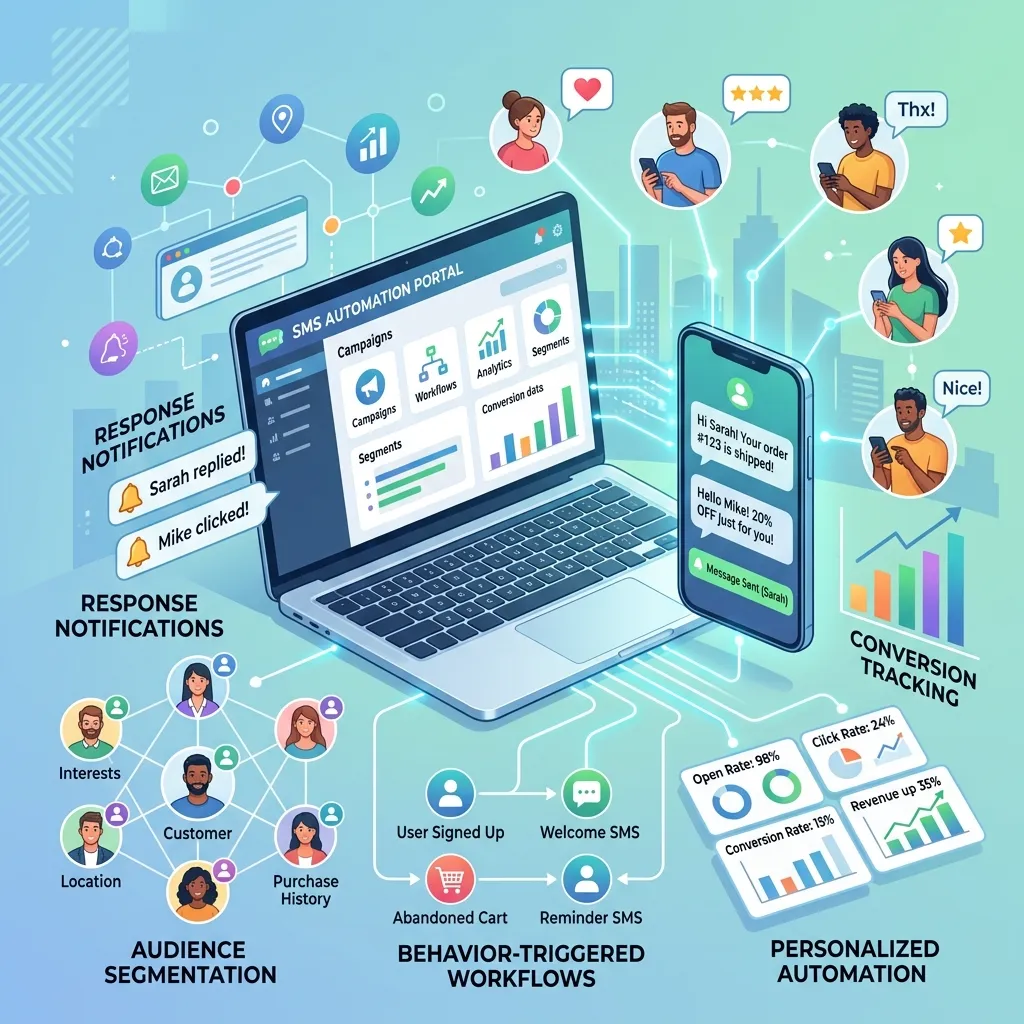
Customer engagement SMS tools work because they meet people where they already are. The average person checks their phone 96 times per day (Asurion, 2022). SMS doesn’t compete with a cluttered inbox—it lands directly in a space people actively monitor.
Here’s how SMS notification automation systems drive real engagement outcomes:
Appointment reminders reduce no-shows. Healthcare providers, salons, and service businesses that use automated SMS reminders report no-show rate reductions of up to 30% (Appointy, 2023).
Abandoned cart messages recover revenue. Automated SMS workflows triggered by cart abandonment consistently outperform email re-engagement sequences, with some retailers reporting 10–15x higher conversion rates from SMS versus email for the same trigger.
Two-way messaging builds trust. Several modern SMS platforms now support conversational flows—where customers can reply to automated messages and receive intelligent, pre-configured responses. This creates a more personal experience without requiring a live agent for every interaction.
Post-purchase follow-ups increase retention. A simple automated text sent 48 hours after purchase—asking for feedback or offering a discount on the next order—can meaningfully lift repeat purchase rates.
How to Choose the Right SMS Marketing Automation Software for Your Business
The right platform depends on your business size, use case, and existing tech stack. Here’s a practical framework for making the decision.
What is the best automated SMS tools for small businesses?
Small businesses typically need an affordable, easy-to-use platform with solid scheduling, basic automation, and good customer support. Tools like SimpleTexting, EZTexting, and SlickText are popular choices in this category—they offer intuitive interfaces, flexible pricing, and enough features to run effective campaigns without a steep learning curve.
Choose a simple platform if: you’re sending fewer than 10,000 messages per month, your team has limited technical resources, and your primary use case is promotional messaging or appointment reminders.
Which SMS campaign management platform suits mid-market and enterprise businesses?
Businesses with complex customer journeys, large contact lists, and multiple channels to manage need more sophisticated tools. Attentive, Klaviyo (for eCommerce), Twilio (for custom-built solutions), and Salesforce Marketing Cloud all offer enterprise-grade SMS automation with deep integrations, advanced segmentation, and robust analytics.
Choose an enterprise platform if: you need to integrate SMS with CRM data, run multi-channel campaigns across SMS and email simultaneously, or require dedicated compliance and deliverability support.
What integrations should a marketing automation via SMS platform support?
At minimum, look for native integrations with:
- Your eCommerce platform (Shopify, WooCommerce, BigCommerce)
- Your CRM (HubSpot, Salesforce, Zoho)
- Your email marketing tool (Klaviyo, Mailchimp, ActiveCampaign)
- Any customer support software you use (Zendesk, Intercom)
The more seamlessly your SMS platform syncs with existing tools, the more accurate your audience data will be—and the better your campaigns will perform.
Building an SMS Automation Strategy That Actually Works
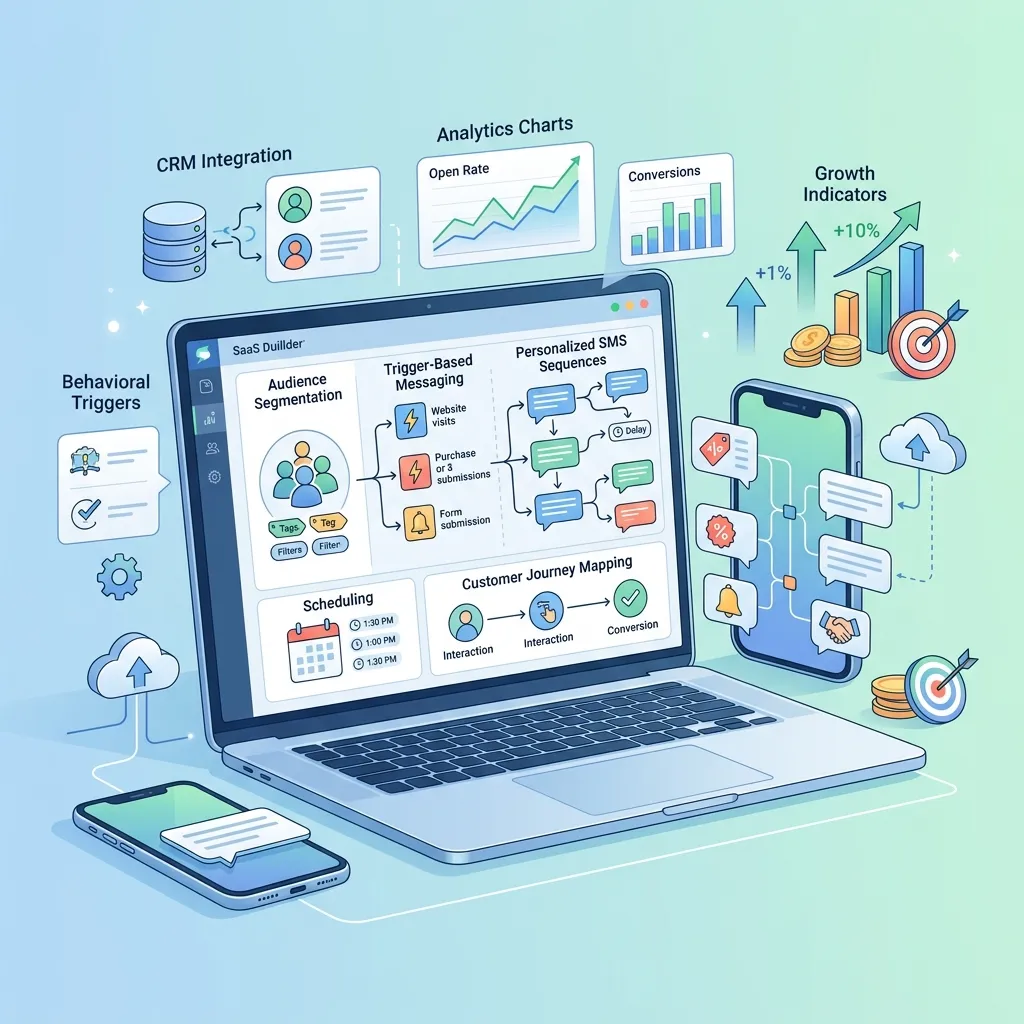
Having the right tool is only half the equation. Here’s how to use your automated text messaging system effectively.
Start with compliance. In the United States, the Telephone Consumer Protection Act (TCPA) requires explicit opt-in consent before sending marketing texts. Violating TCPA rules can result in fines of up to $1,500 per message. Always use a double opt-in process, include clear unsubscribe instructions in every message, and work with a platform that automates compliance management.
Keep messages short and purposeful. SMS has a 160-character standard limit per message segment. Even with modern platforms that support longer messages, brevity performs better. State the value clearly, include a direct call-to-action, and don’t pad the message.
Use triggers, not just schedules. Scheduled campaigns work well for promotions, but behavior-triggered messages—sent in direct response to something a customer just did—consistently outperform time-based sends. Set up triggers for key moments: first purchase, cart abandonment, subscription renewal, and re-engagement after inactivity.
Test, measure, and iterate. A/B test message copy, send times, and offers regularly. Even small changes—like moving a discount code to the beginning of a message versus the end—can produce measurable differences in conversion rates.
Respect opt-out rates. If your opt-out rate climbs above 2–3%, it’s a signal that your messaging frequency or content relevance needs adjustment. Monitor this metric closely, especially after launching new campaigns.
Is an Automated SMS Tools Worth the Investment?
For most businesses, yes—particularly those in retail, healthcare, hospitality, and services, where timely, direct communication drives clear revenue outcomes.
The ROI case is straightforward: SMS campaigns have lower cost-per-message than many digital ad formats, significantly higher open rates than email, and faster time-to-read (most SMS messages are read within three minutes of receipt, according to GSMA). When paired with smart segmentation and behavioral triggers, the return on a well-run SMS automation program can be substantial.
The more important question is which platform fits your needs—and whether your team has the strategy in place to use it well.
Take Your SMS Strategy to the Next Level
Automated SMS tools have redefined what direct customer communication looks like. The combination of near-universal open rates, real-time delivery, and sophisticated automation capabilities makes SMS one of the most effective channels available to businesses today.
Start by identifying your highest-value use case—whether that’s reducing appointment no-shows, recovering abandoned carts, or running promotional campaigns—and choose a platform built to handle that use case at scale. From there, build out your automation workflows, test consistently, and expand into more complex segments and triggers as you learn what resonates with your audience.
The businesses getting the most from SMS marketing automation software aren’t the ones sending the most messages. They’re the ones sending the right message, to the right person, at exactly the right moment.
Frequently Asked Questions
What is the difference between an automated SMS tools and a standard texting app?
A standard texting app sends messages manually, one at a time, from a single device. An automated SMS tool is a software platform that sends messages automatically at scale—based on schedules, triggers, or audience segments—and includes analytics, contact management, and compliance features.
How much does SMS marketing automation software typically cost?
Pricing varies widely. Basic platforms like EZTexting start at around $20–$25 per month for small volumes. Mid-market tools like Attentive and Klaviyo typically charge based on message volume and contact list size. Enterprise platforms like Twilio use a pay-per-message model starting at $0.0079 per SMS in the US. Most providers offer a free trial or demo.
Is marketing automation via SMS compliant with privacy laws?
It can be, provided you follow the applicable regulations. In the US, the TCPA requires explicit written consent before sending marketing texts. In the EU, GDPR applies. Reputable SMS automation platforms include built-in compliance tools—opt-in management, unsubscribe handling, and consent logging—to help businesses stay within legal requirements.
What is the best use case for an SMS notification automation system?
High-value, time-sensitive communications deliver the strongest results via SMS—appointment reminders, order updates, shipping notifications, and limited-time promotional offers. These use cases benefit most from the high open rates and immediacy of text messaging.
Can a bulk SMS automation tools integrate with my existing CRM?
Yes. Most leading platforms offer native integrations with popular CRMs including HubSpot, Salesforce, and Zoho, as well as eCommerce platforms like Shopify. Some platforms, like Twilio, also offer API access for custom integrations with proprietary systems.
How do I grow my SMS subscriber list?
Common methods include website pop-ups with an opt-in incentive, keyword opt-in campaigns (e.g., “Text SAVE to 12345”), checkout opt-ins on eCommerce platforms, and social media promotions. Always ensure the opt-in process meets regulatory requirements for your market.