
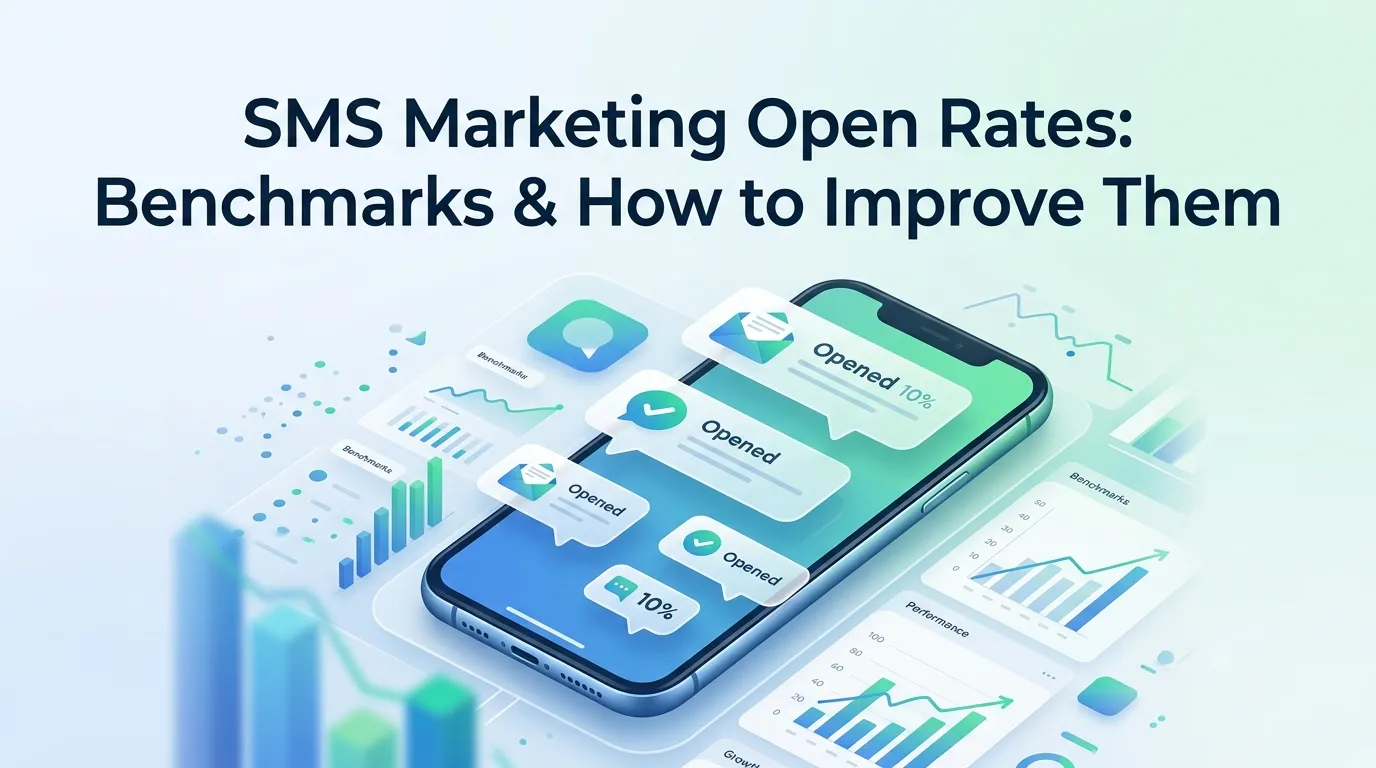
SMS Marketing Open Rates average 95–98%, making SMS one of the most effective marketing channels for reaching customers quickly. By using personalization, audience segmentation, strategic timing, and clear calls-to-action, businesses can improve engagement, boost click-through rates, and turn high open rates into real conversions.
SMS marketing open rates average around 98%, far outpacing email’s 20–30% average. Most text messages are read within 3 minutes of delivery. To maximize SMS campaign performance, focus on timing, personalization, clear calls to action, and audience segmentation.
SMS is one of the most direct marketing channels available. No algorithm filters. No crowded inbox. Just a message, a notification, and a near-guaranteed read. Yet many marketers still treat it as an afterthought—sending generic blasts and wondering why responses are underwhelming.
The data tells a compelling story. SMS marketing consistently outperforms most digital channels on open rates, response rates, and engagement speed. But raw open rates only tell part of the story. To run SMS campaigns that actually drive results, you need to understand what the benchmarks mean, why some campaigns perform better than others, and which levers to pull when your numbers fall short.
This post breaks down the key SMS marketing metrics—open rates, response rates, click-through rates, and more—and gives you a practical framework for improving each one.
What Is the Average SMS Marketing Open Rate?
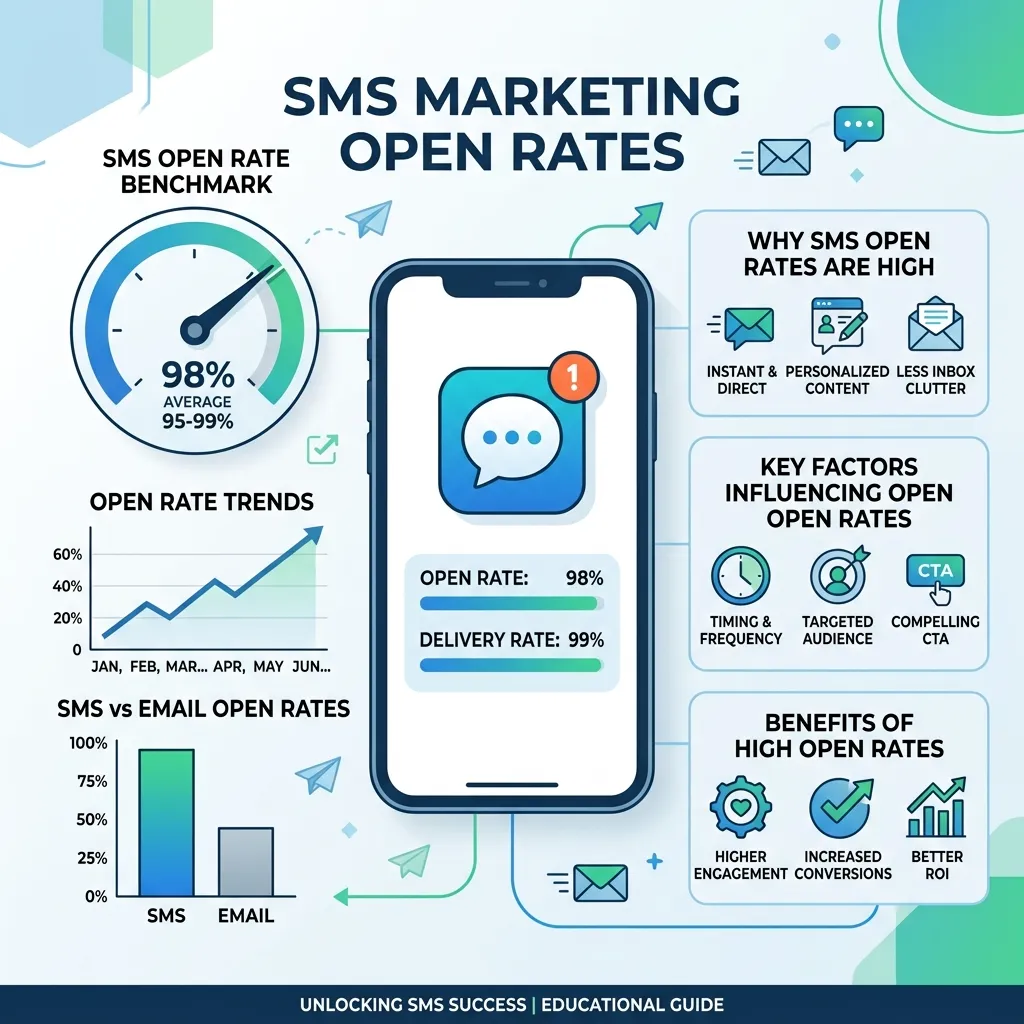
The average SMS marketing open rate sits between 95% and 98%, according to widely cited industry data from sources including Gartner and Mobilesquared. For context, the average email open rate across industries hovers around 20–30%, according to Mailchimp’s 2023 benchmarks.
The gap is significant—and it comes down to behavior. Most people have notifications enabled for text messages and check them reflexively. Unlike email, where promotional messages often land in a filtered tab or get skimmed days later, SMS messages are typically read within 3 minutes of receipt (according to MobileMonkey research).
That immediacy is SMS marketing’s greatest asset. It also means the stakes are higher. A poorly timed or irrelevant message doesn’t just get ignored—it can prompt an opt-out.
SMS Open Rate Benchmarks by Industry
While the overall average is high, open rates can vary depending on industry, audience, and message type. Here’s how SMS marketing open rates generally break down:
- Retail and eCommerce: 95–98% — Flash sales, order updates, and cart abandonment messages tend to perform exceptionally well.
- Healthcare: 95–97% — Appointment reminders and follow-up messages see strong open rates due to their practical value.
- Hospitality and travel: 90–96% — Booking confirmations and time-sensitive offers drive engagement.
- Financial services: 90–95% — Fraud alerts and account notifications command near-universal opens.
- Nonprofits: 85–90% — Donor engagement messages perform well, though typically below commercial benchmarks.
It’s worth noting that “open rate” in SMS is measured differently than in email. Because SMS messages don’t embed tracking pixels, open rates are largely inferred from read receipts, response rates, and link click data. The figures above represent industry estimates, not precision-tracked metrics.
Text Message Marketing Open Rates vs. Other Channels
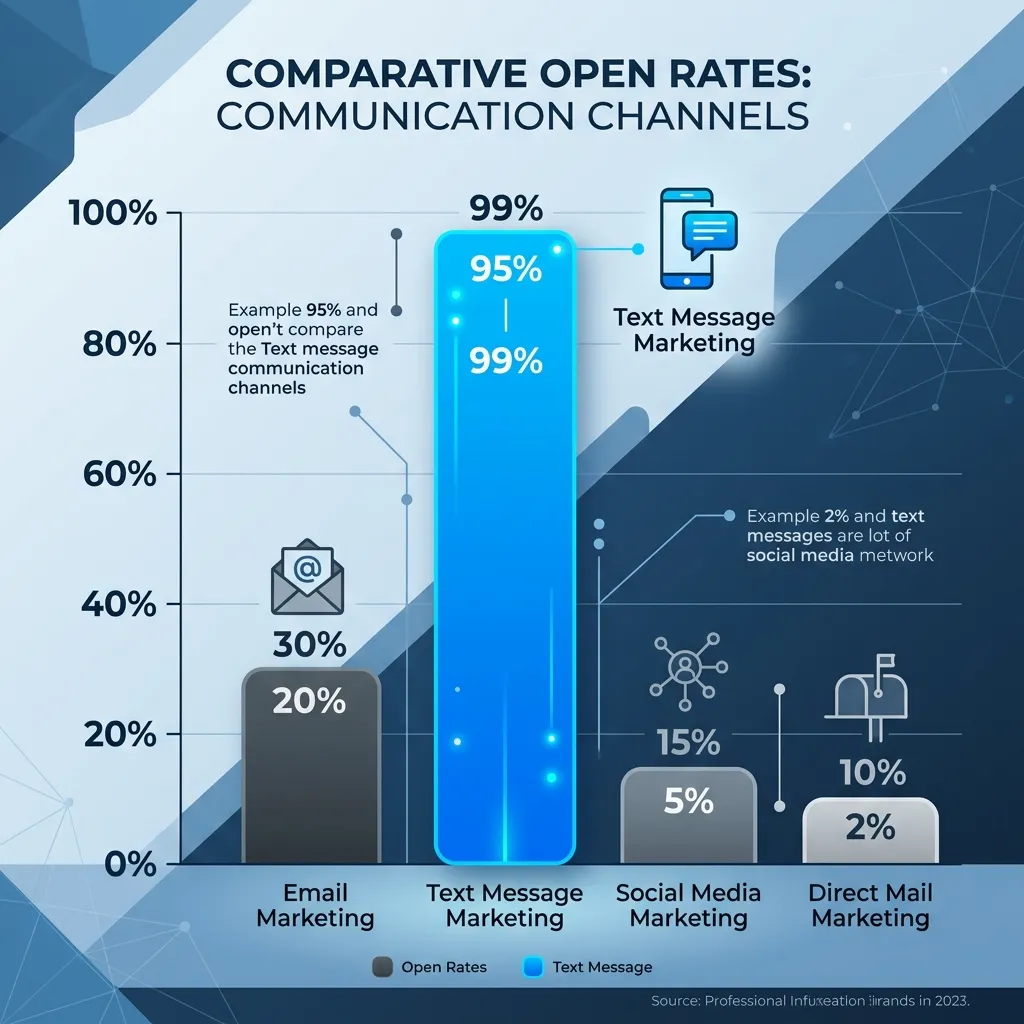
To appreciate why SMS marketing open rates matter, it helps to compare them against competing channels:
|
Channel |
Average Open Rate |
|---|---|
|
SMS |
95–98% |
|
Push notifications |
50–60% |
|
|
20–30% |
|
Facebook organic |
~5% |
SMS doesn’t just lead—it dominates. And when you factor in speed (3-minute average read time), the channel becomes especially valuable for time-sensitive campaigns like flash sales, event reminders, and urgent customer communications.
That said, SMS works best as part of a broader multi-channel strategy. Using SMS to support email campaigns—rather than replace them—typically produces stronger results than relying on either channel alone.
What Counts as a High SMS Open Rate?
Given the channel’s baseline performance, a “high” SMS open rate is anything consistently above 98%. Campaigns hitting this benchmark usually share a few common traits:
- Messages are sent to highly segmented, opted-in audiences
- Content is directly relevant to the recipient’s behavior or preferences
- Send timing aligns with the audience’s daily routine
- The message is short, clear, and includes a single call to action
If your open rates are falling below 90%, that’s a signal worth investigating. Declining open rates often point to list hygiene issues, poor segmentation, or message fatigue from over-sending.
SMS Campaign Open Rate vs. SMS Engagement Rate: What’s the Difference?
Open rate and engagement rate measure different things—and conflating them can lead to misleading conclusions about campaign performance.
SMS open rate measures how many recipients opened (or are inferred to have opened) your message. Given the nature of SMS, this is almost always high.
SMS engagement rate measures what recipients did after opening—clicking a link, responding to a question, redeeming an offer, or visiting a landing page. This is the metric that most directly connects to business outcomes.
A campaign can achieve a 97% open rate and a 2% click-through rate. That’s not a success—it’s a targeting or messaging problem.
What Is a Good SMS Engagement Rate?
Industry benchmarks for SMS engagement rates vary by message type:
- SMS click-through rate (CTR): 19–36%, according to data from SimpleTexting and Klaviyo. This compares favorably to email CTR benchmarks of 2–5%.
- SMS response rate: Around 45%, according to Gartner—significantly higher than email response rates of roughly 6%.
- SMS conversion rate: Typically 1–10%, depending on the offer and audience quality.
The wide ranges reflect how much variables like audience quality, message relevance, and offer strength influence outcomes.
What Is the SMS Click-Through Rate Benchmark?
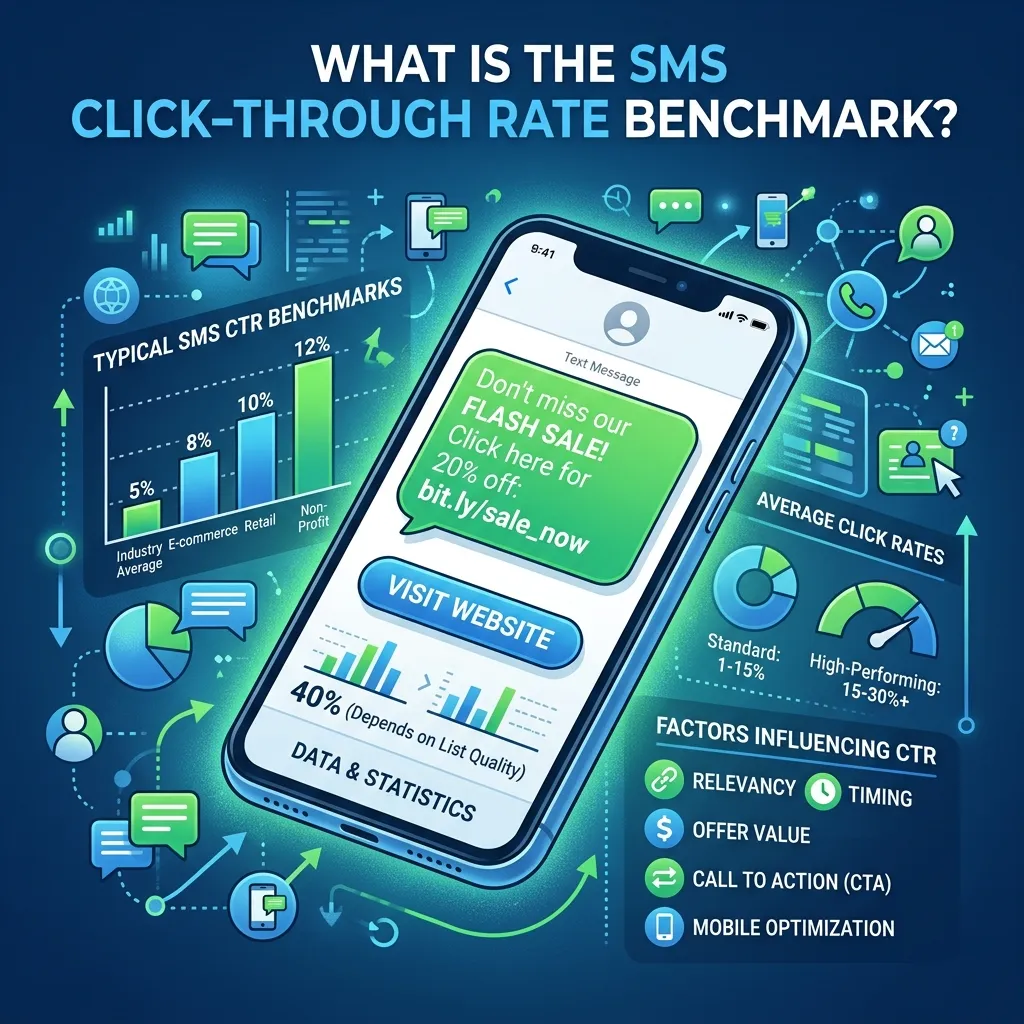
The SMS click-through rate benchmark sits between 19% and 36% for marketing messages, based on aggregated data from Klaviyo (2023) and SimpleTexting. Transactional messages—like order confirmations with tracking links—often exceed this range because recipients actively expect and want the information.
Promotional campaigns targeting cold or loosely segmented audiences typically land at the lower end. Highly personalized campaigns sent to warm, engaged subscribers can exceed 30%.
To improve SMS CTR specifically, focus on:
- Link placement: Put your link near the end of the message, after the value proposition is clear
- Short URLs: Use branded link shorteners to reduce character count and build trust
- Single CTA: One clear action per message—don’t ask recipients to do two things at once
- Landing page relevance: The page recipients land on should directly match the promise in your SMS
Mobile Marketing Open Rates: Why SMS Outperforms Push Notifications
Push notifications are SMS marketing’s closest competitor in mobile marketing—and the gap is notable. Push notifications average 50–60% open rates, compared to SMS’s 95–98%.
Several factors explain the difference:
- Default behavior: Most users have SMS notifications on by default. Push notifications require app installation and permission grants, creating more friction.
- Perceived urgency: Text messages carry a social association with personal communication. They feel more immediate.
- Inbox clutter: Push notifications from multiple apps compete for attention simultaneously. SMS has its own dedicated inbox.
This doesn’t mean push notifications aren’t valuable—they are, particularly for app-centric businesses. But for reach and immediacy, SMS holds a structural advantage.
How to Improve Your SMS Marketing Open Rate
If your SMS open rates are lower than benchmarks suggest, the fix usually comes down to one of five areas.
1. Clean your contact list regularly
Stale lists drag down performance metrics and inflate your sending costs. Remove contacts who haven’t engaged in 90 days, and use re-engagement campaigns before cutting anyone loose. A smaller, cleaner list consistently outperforms a larger, unmaintained one.
2. Optimize your send time for your specific audience
Timing is one of the highest-leverage variables in SMS marketing. General benchmarks suggest sending between 10 AM–12 PM or 2 PM–5 PM on weekdays. But your audience’s optimal window may differ. Test across time slots and let your own data guide decisions—not just industry averages.
3. Personalize beyond the first name
Basic personalization (inserting a recipient’s first name) is table stakes. High-performing SMS campaigns personalize based on behavior—purchase history, browsing data, loyalty tier, or location. A message that references a product someone viewed is far more likely to prompt action than a generic promotion.
4. Segment your audience with precision
Sending the same message to your entire list is the fastest way to accumulate opt-outs. Segment by demographics, purchase frequency, geographic location, or customer lifecycle stage. The more targeted the audience, the more relevant the message—and the higher the engagement.
5. Audit your message content and length
SMS messages should be short—typically under 160 characters to avoid multi-part message charges. Lead with value, not preamble. Avoid vague language like “Check this out!” and replace it with specific, benefit-driven copy: “Your exclusive 20% discount expires at midnight. Shop now: [link].”
Frequently Asked Questions
What is the average SMS marketing open rate?
The average SMS marketing open rate is between 95% and 98%. This figure is significantly higher than email (20–30%) and push notifications (50–60%), making SMS one of the highest-performing channels for direct outreach.
How is SMS open rate measured?
SMS open rates are largely estimated rather than directly tracked, since text messages don’t support tracking pixels. Marketers typically infer open rates from read receipts (where available), response rates, and link click data collected via URL shorteners.
What is a good SMS click-through rate?
A good SMS click-through rate falls between 19% and 36%, according to Klaviyo and SimpleTexting benchmarks. Highly personalized campaigns sent to engaged subscriber lists often achieve the higher end of this range.
Why are my SMS open rates declining?
Declining SMS open rates usually indicate list fatigue, poor segmentation, or send frequency issues. Start by auditing how often you’re messaging your list, removing inactive subscribers, and increasing the relevance of your content through better segmentation.
How does SMS compare to email for marketing response rates?
SMS response rates average around 45%, compared to approximately 6% for email, according to Gartner. SMS also generates faster responses—most replies arrive within minutes rather than hours or days.
Is SMS marketing still effective ?
Yes. SMS marketing continues to deliver some of the highest open rates and response rates of any marketing channel. Effectiveness depends heavily on list quality, message relevance, and frequency—brands that treat SMS as a precision tool rather than a broadcast channel consistently outperform industry benchmarks.
What are SMS Marketing Open Rates?
SMS Marketing Open Rates measure the percentage of recipients who open or read a text message. Most SMS campaigns achieve open rates between 95% and 98%, making SMS highly effective.
Why are SMS marketing open rates higher than email?
Text messages are delivered directly to mobile devices and are usually read within minutes, while emails often compete with crowded inboxes and spam filters.
What is considered a good SMS marketing open rate?
A good SMS Marketing Open Rates is typically 95% or higher. Rates above 98% are considered excellent for well-targeted campaigns.
What is the average SMS click-through rate?
The average SMS click-through rate ranges from 19% to 36%, depending on audience quality, message relevance, and the offer.
How can I improve my SMS marketing open rates?
Improve results by segmenting your audience, personalizing messages, sending at the right time, keeping texts concise, and including one clear call-to-action.
Does personalization increase SMS engagement?
Yes. Personalized SMS messages based on customer behavior, purchase history, or location generally generate higher engagement and conversion rates.
What is the best time to send marketing text messages?
Weekdays between 10 AM–12 PM and 2 PM–5 PM often perform well, but testing different times helps identify what works best for your audience.
How often should businesses send SMS marketing campaigns?
Most businesses see the best results by sending 2–8 messages per month, depending on customer preferences and campaign goals.
What causes SMS marketing open rates to decline?
Common reasons include poor audience segmentation, sending too frequently, outdated contact lists, irrelevant content, and weak offers.
Are SMS marketing campaigns still effective?
Yes. SMS Marketing Open Rates remain among the highest of any digital marketing channel, making SMS an excellent choice for promotions, reminders, customer updates, and time-sensitive offers.
Turn High Open Rates Into Real Business Results
SMS marketing’s open rate advantage is real—but it doesn’t automatically translate into revenue. The brands that get the most from this channel treat each message as a deliberate, targeted touchpoint rather than a bulk communication.
Start by benchmarking your current metrics against the industry figures in this post. If your open rates are strong but click-through rates are lagging, the issue is likely message content or landing page relevance. If open rates themselves are declining, focus on list hygiene and segmentation before anything else.
The channel rewards precision. The more relevant your messages, the better your metrics—and the longer your subscribers stay on your list.