
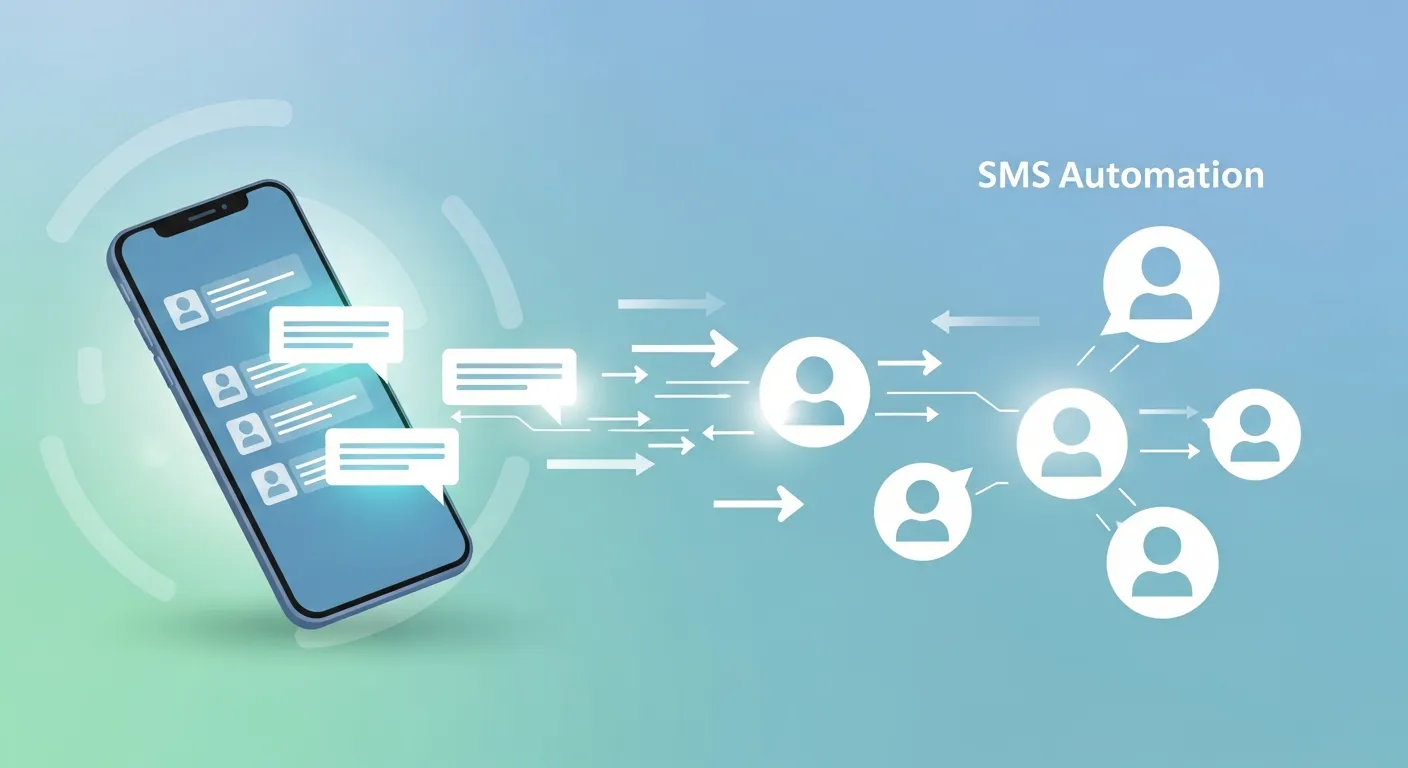
SMS automation uses software to send text messages automatically based on triggers, schedules, or customer actions. Businesses use it for marketing campaigns, order updates, appointment reminders, and drip sequences—reaching customers instantly while saving hours of manual work and boosting engagement rates well above email.
Text messages get read. That’s the simple truth driving thousands of businesses toward SMS automation. Studies consistently show open rates near 98%, with most texts read within minutes of arriving. Compare that to email, where open rates hover around 20%, and you can see why automated texting has become a serious channel for marketers and operations teams alike.
But sending texts one at a time doesn’t scale. That’s where automation steps in. With the right setup, your business can send a welcome message the moment someone signs up, remind a customer about tomorrow’s appointment, or nudge a shopper who left items in their cart—all without anyone lifting a finger.
This post breaks down what SMS automation actually does, the types of campaigns worth running, how to pick a platform, and a few strategies that separate the pros from the spammers. No fluff, no exhaustive 50-step manual—just the parts that matter.
What is SMS automation, and how does it work?
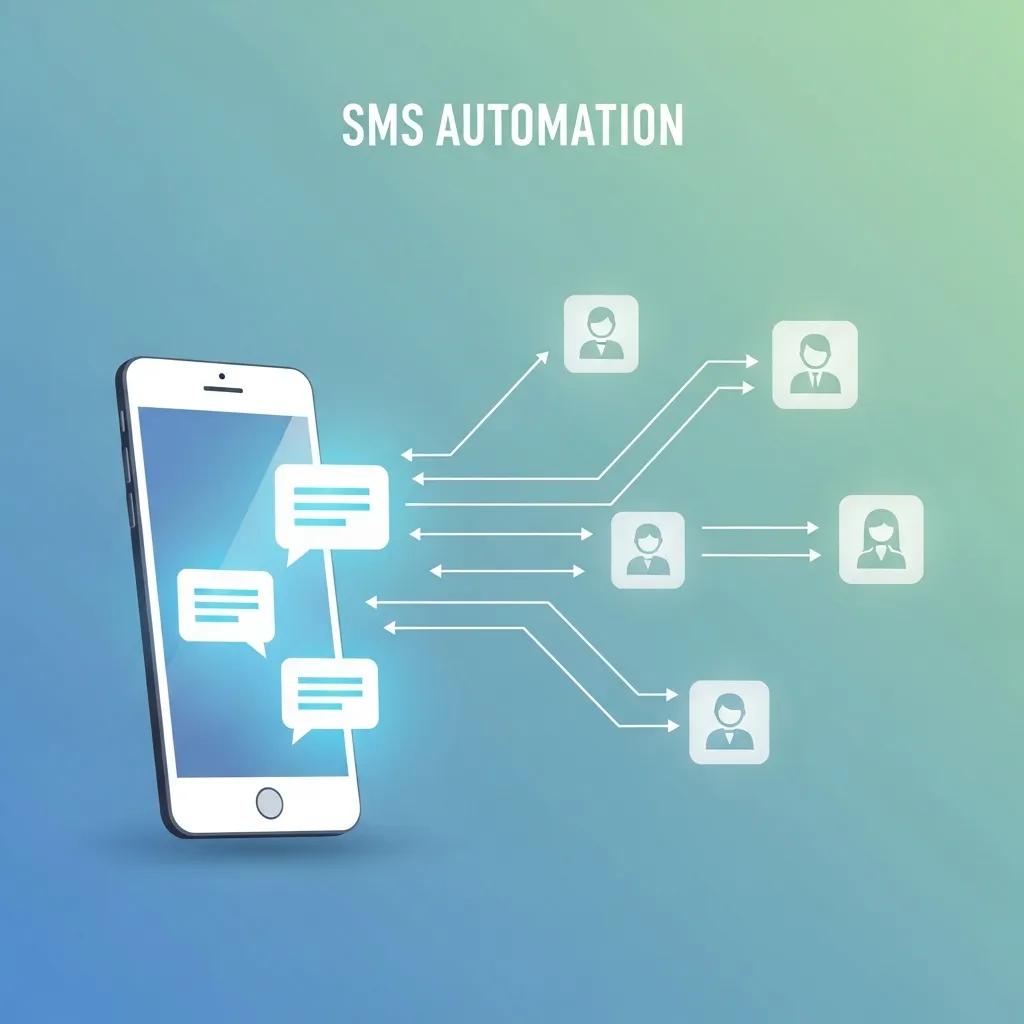
SMS automation is the use of software to send text messages automatically, triggered by specific events, schedules, or customer behaviors. Instead of typing and sending each message yourself, you set up rules once and let the system handle the rest.
The mechanics are straightforward. You connect an automated text messaging platform to your customer data—often through a CRM, e-commerce store, or booking system. When a defined trigger fires, such as a new purchase or a date on the calendar, the platform sends the matching message. A shoe store might text a tracking link the second an order ships. A dentist might send a reminder 24 hours before each appointment.
There are two broad buckets here. Marketing automation covers promotional messages: sales, new product drops, loyalty rewards. Transactional automation covers operational messages: receipts, shipping updates, password resets, and confirmations. Both run on the same principle, but they serve different goals and often follow different compliance rules.
What types of automated SMS campaigns can businesses run?
Not every text serves the same purpose. Understanding the main campaign types helps you decide where to start.
Automated SMS marketing campaigns
These are scheduled or triggered promotions sent to subscribers who’ve opted in. Think flash sale alerts, seasonal discounts, or product launch announcements. Because texts feel personal, marketing campaigns work best when they’re timely and relevant rather than constant. A burst of value beats a flood of noise.
SMS drip campaign automation
A drip campaign sends a planned series of messages over time. Someone joins your list, and over the next two weeks they receive a welcome text, a brand story, a first-purchase discount, and a gentle reminder before the offer expires. Each message builds on the last. Drip sequences are ideal for onboarding new subscribers and warming up leads who aren’t ready to buy yet.
Automated customer SMS notifications
These keep customers informed without any prompting. Order confirmations, delivery updates, back-in-stock alerts, and appointment reminders all fall here. Notifications reduce support tickets because customers get answers before they think to ask. A retailer that texts “Your order shipped” cuts down on the “Where’s my order?” emails.
Transactional SMS automation system
Transactional texts confirm an action the customer already took. Payment receipts, login codes, and booking confirmations are the classic examples. These messages carry high trust because customers expect them, which makes the system behind them mission-critical—a delayed login code can lock someone out of their account.
What features should an SMS automation tool have?
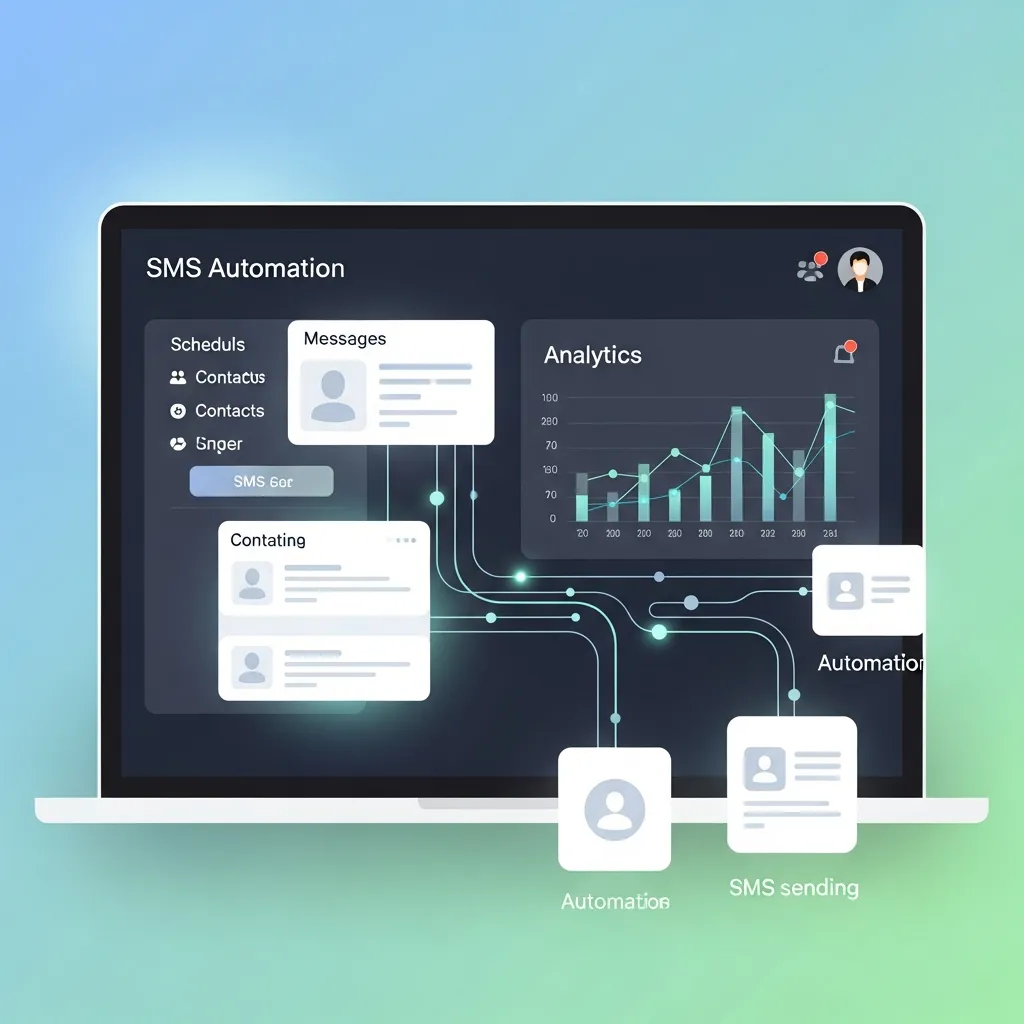
Picking from the crowded field of SMS marketing automation tools comes down to matching features to your actual needs. Here’s what separates capable platforms from basic ones.
- Trigger-based workflows. The core of any automated text messaging platform. Look for the ability to fire messages based on customer actions, dates, and data changes.
- Bulk SMS capability. Solid bulk SMS automation software lets you reach thousands of contacts at once while still personalizing each message with names or order details.
- Integrations. Your tool should connect to your CRM, e-commerce platform, and email software. Without integration, you’re stuck copying data by hand.
- Two-way messaging. Customers reply to texts. A good platform routes those replies to a real person or a smart auto-responder.
- Compliance management. Built-in opt-out handling (like automatic STOP keyword processing) keeps you on the right side of regulations.
- Analytics. Delivery rates, click-throughs, and conversion tracking show what’s working and what’s wasting your budget.
How do I choose the right platform for my business size?
Choose a lightweight tool with simple drip and broadcast features if you run a small business and value speed of setup over deep customization. Pick a robust platform with advanced segmentation and CRM integration if you manage large contact lists and need transactional and marketing messages running side by side. The biggest mistake is overbuying—paying for enterprise features a five-person team will never touch.
What are the best SMS marketing automation strategies?
Owning a powerful tool means nothing without smart execution. These strategies separate campaigns that convert from ones that get blocked.
Always get explicit consent
Permission isn’t optional—it’s the law in most regions and the foundation of trust. Only text people who’ve clearly opted in, and make opting out just as easy. Regulations like the TCPA in the United States carry steep penalties for unsolicited messages, so consent protects both your customers and your bottom line.
Keep it short and clear
Texts have a natural length limit, and people read them fast. Lead with the value, include one clear call to action, and skip the corporate jargon. “Flash sale: 30% off today only. Shop here: [link]” beats three sentences of buildup.
Time your messages well
A text at 7 a.m. or 11 p.m. annoys people. Send during reasonable hours and consider time zones if your audience spans regions. For business text message automation tied to events—like abandoned carts—timing matters even more. A reminder sent within an hour of cart abandonment recovers far more sales than one sent the next day.
Personalize beyond the first name
Real personalization uses behavior, not just a name field. Segment your list by purchase history, location, or engagement level, then tailor messages to each group. A customer who buys running shoes should hear about new running gear, not formal wear.
Combine SMS with other channels
SMS workflow automation for businesses works best as part of a wider system. Use text for urgent, time-sensitive nudges and email for detailed content. A cart-recovery sequence might send an email first, then follow up with a text only if the email goes unopened.
Why does SMS automation outperform manual texting?
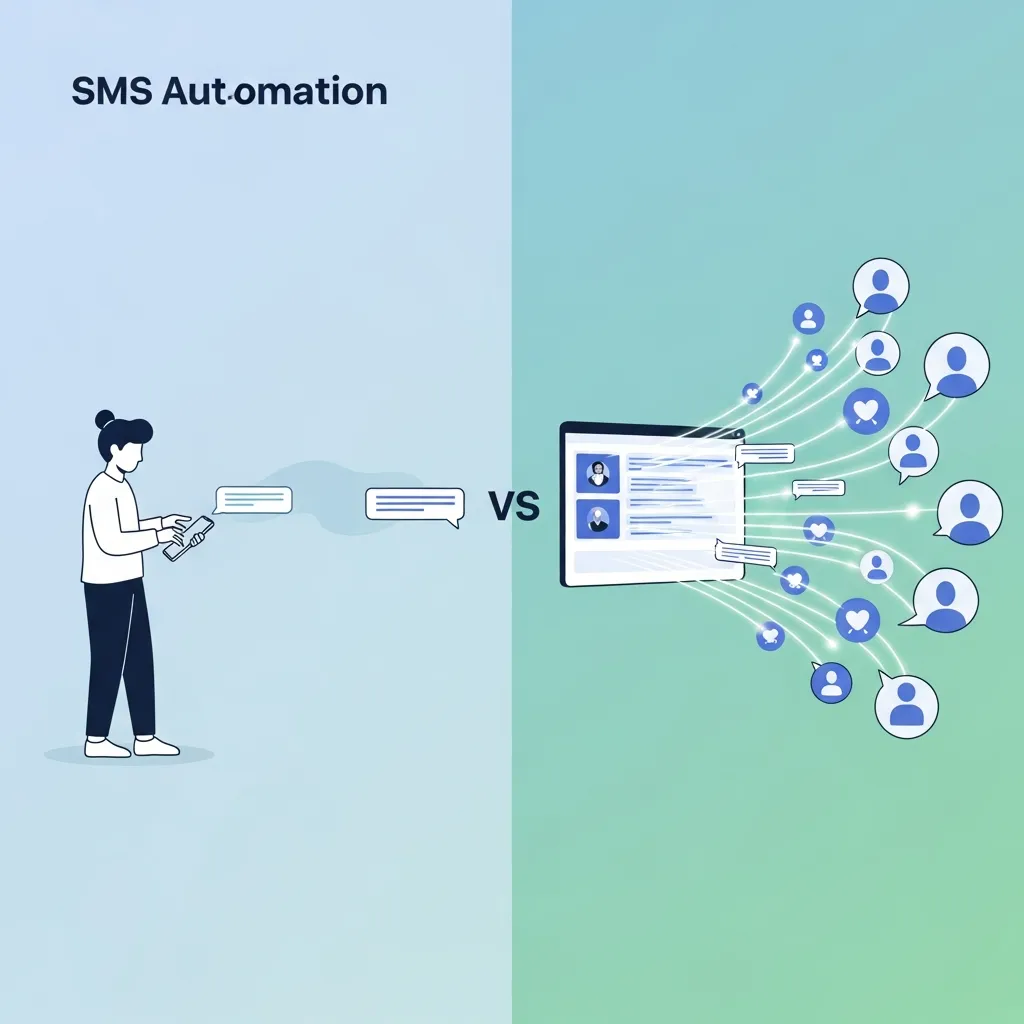
Manual texting falls apart at scale and misses the moments that matter most. Automation fixes both problems at once.
Speed is the obvious win. An automated system sends an order confirmation in seconds, while a person might take hours—or forget entirely. That immediacy shapes how customers perceive your reliability.
Consistency is the quieter benefit. Automated workflows send the same polished message every time, with no typos born of a rushed afternoon. Every customer gets the same quality experience, whether they’re your first sale of the day or your thousandth.
Then there’s the time you reclaim. Hours once spent copying numbers and sending updates go back to work that actually needs a human—closing deals, solving tricky problems, building relationships. The software handles the repetitive sending so your team handles the thinking.
Putting SMS automation to work
SMS automation rewards businesses that treat it as a relationship tool, not a megaphone. Start small: pick one high-impact workflow, such as appointment reminders or abandoned-cart recovery, and get it running cleanly before you expand. Measure the results, refine your timing and messaging, then add the next campaign.
The businesses winning with automated texting share one habit—they respect the inbox. They earn permission, send messages people actually want, and make every text count. Do that, and the 98% open rate works in your favor instead of against it.
Ready to begin? Audit your current customer touchpoints, find the moments where a timely text would help, and choose a platform that fits your scale. The first automated message you set up today could be saving you hours by next week.
Frequently asked questions
How much does SMS automation cost?
Pricing usually combines a monthly platform fee with a per-message charge. Small-business plans often start around $20 to $50 per month for a set number of messages, while high-volume senders pay per text—commonly a few cents each. Transactional messages and certain country routes can cost more, so check the rate sheet before committing.
Is SMS automation legal?
Yes, as long as you follow consent rules. In the United States, the TCPA requires explicit opt-in before sending marketing texts, and you must honor opt-out requests immediately. Other regions have similar laws, such as Canada’s CASL and the EU’s GDPR. Most reputable platforms build compliance tools in to help you stay within the rules.
How long does it take to set up an SMS automation system?
A basic workflow—like a welcome message or appointment reminder—can be live in under an hour with a user-friendly platform. More complex setups involving CRM integration, multi-step drip campaigns, and detailed segmentation may take a few days to configure and test properly.
What’s the difference between transactional and marketing SMS?
Transactional SMS confirms an action the customer took, such as a receipt, shipping update, or login code, and generally doesn’t require marketing consent. Marketing SMS promotes products or offers and always requires explicit opt-in. Mixing the two carelessly can violate compliance rules, so most platforms keep them separate.
Can small businesses benefit from SMS automation?
Absolutely. Small businesses often see the biggest gains because automation frees up limited staff time. Simple workflows like appointment reminders, order updates, and review requests deliver strong results without a large budget or a dedicated marketing team.
What industries benefit most from SMS automation?
Many industries benefit from SMS automation, including eCommerce, healthcare, real estate, hospitality, and education. Any business that relies on timely communication—such as appointment reminders, order updates, or promotions—can improve efficiency and engagement using automated texting systems.
How does SMS automation improve customer engagement?
SMS automation improves customer engagement by delivering instant, personalized messages at the right moment. Since text messages have extremely high open rates, businesses can connect with customers quickly and encourage faster responses compared to email or other channels.
What is the ROI of SMS automation for businesses?
The ROI of SMS automation is typically very high because it reduces manual labor while increasing conversion rates. Businesses often see improved sales from abandoned cart recovery, appointment attendance, and promotional campaigns, all without significantly increasing marketing costs.
Can SMS automation be integrated with CRM systems?
Yes, modern SMS automation tools integrate seamlessly with CRM systems. This allows businesses to trigger personalized messages based on customer behavior, purchase history, and lead status, creating a more efficient and data-driven communication system.
What are the best practices for SMS automation campaigns?
Best practices for SMS automation include getting explicit consent, keeping messages short, personalizing content, and sending messages at appropriate times. Businesses should also test different campaigns and monitor performance to continuously improve results.
How secure is SMS automation for customer data?
SMS automation platforms are generally secure when using reputable providers. Most systems use encryption, secure APIs, and compliance frameworks like GDPR and TCPA to protect customer data and ensure safe message delivery.
What mistakes should be avoided in SMS automation?
Common mistakes in SMS automation include sending too many messages, ignoring opt-out requests, poor segmentation, and lack of personalization. These issues can lead to customer frustration and increased unsubscribe rates.
How can SMS automation increase sales conversions?
SMS automation increases sales conversions by sending timely reminders, personalized offers, and abandoned cart messages. Because SMS is immediate and highly visible, it encourages faster decision-making compared to other marketing channels.
Is SMS automation suitable for B2B companies?
Yes, SMS automation is highly effective for B2B companies. It can be used for lead follow-ups, meeting reminders, demo confirmations, and nurturing prospects through the sales funnel with timely, direct communication.
How do I get started with SMS automation?
To get started with SMS automation, choose a reliable platform, integrate it with your CRM or website, set up basic workflows like welcome messages or reminders, and gradually expand into more advanced campaigns like drip sequences and behavioral triggers.