
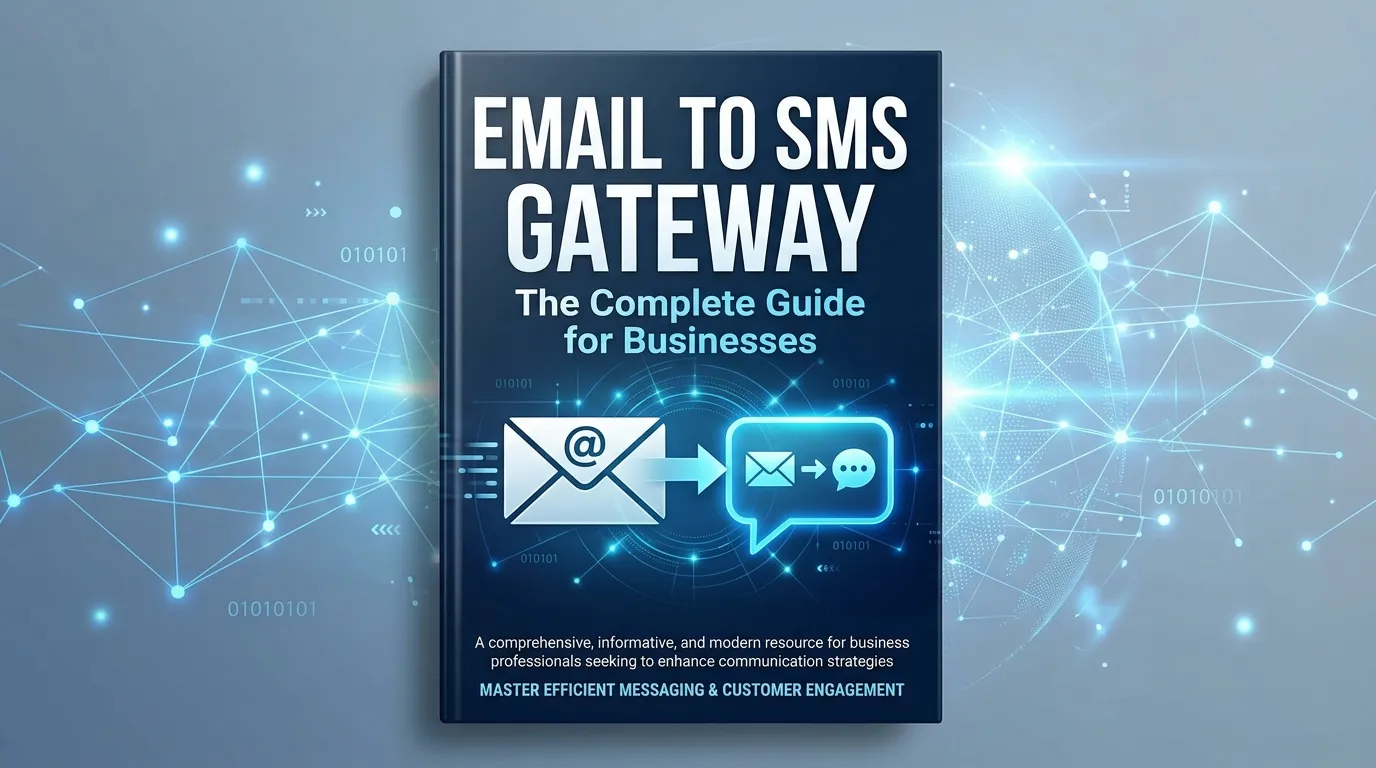
An Email to SMS Gateway allows businesses to convert emails into text messages and deliver them directly to users’ mobile phones in real time. It enables fast communication for alerts, notifications, and marketing by combining the simplicity of email with the high open rates of SMS. With options like SMTP-to-SMS and API integration, organizations can automate messaging, improve response times, and scale communication efficiently.
An email to SMS gateway lets businesses send text messages directly from an email client or application by converting emails into SMS messages. It’s one of the fastest ways to reach customers, staff, or stakeholders in real time—without needing a dedicated SMS platform.
Most people check their phones within minutes of receiving a text. Email? That might wait hours—or longer. For businesses that need to reach people quickly, that gap matters. An email to SMS gateway bridges it, turning a familiar tool (email) into one of the most reliable communication channels available (SMS).
This guide covers everything you need to know: how email to SMS gateways work, who they’re built for, how to integrate them, and what to look for in a provider. Whether you’re a developer building a notification system or a business owner looking to streamline alerts, you’ll find actionable answers here.
What Is an Email to SMS Gateway?
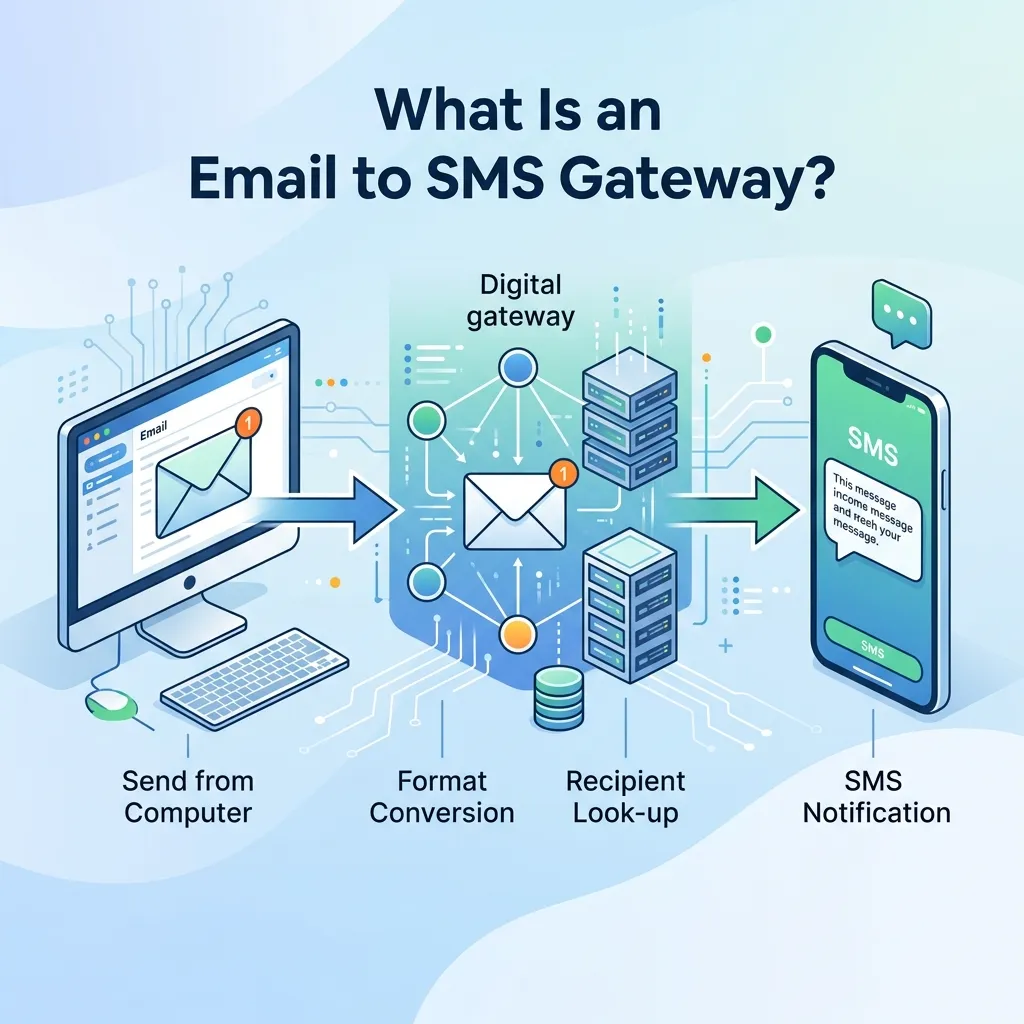
An email to SMS gateway is a service that converts an email message into an SMS and delivers it to a recipient’s mobile phone. The sender composes an email as normal—using any email client or application—and the gateway handles the conversion and delivery.
Most gateways assign a unique email address format to each mobile number. For example, sending an email to 10digits@carrier-gateway.com delivers that message as a text to the corresponding phone number. Enterprise-grade solutions typically use SMTP to SMS gateway protocols, which allows applications to send SMS messages using the same SMTP server settings they’d use for regular email.
The result: faster, more reliable communication with virtually no learning curve for the sender.
How Does an Email to SMS Gateway Work?
The process is straightforward, but a few technical layers make it reliable at scale.
The basic email-to-text conversion process
- A sender composes an email addressed to a mobile number via the gateway’s domain.
- The email to SMS gateway receives the message via SMTP.
- The gateway strips unnecessary formatting (HTML, attachments) and converts the body text into an SMS-compatible format.
- The message is routed to the recipient’s mobile carrier and delivered as a standard SMS.
What is SMTP to SMS gateway routing?
SMTP (Simple Mail Transfer Protocol) is the backbone of email delivery. An SMTP to SMS gateway solution takes advantage of this existing infrastructure to route messages to mobile networks. Applications, servers, and email clients that already send email can trigger SMS delivery without any change to their core setup—just a new outbound email address or API endpoint.
This makes SMTP-to-SMS particularly attractive for automated email to SMS conversion tools, where the triggering system (a CRM, monitoring tool, or database alert) already communicates via email.
Why Businesses Use Email to SMS Gateways
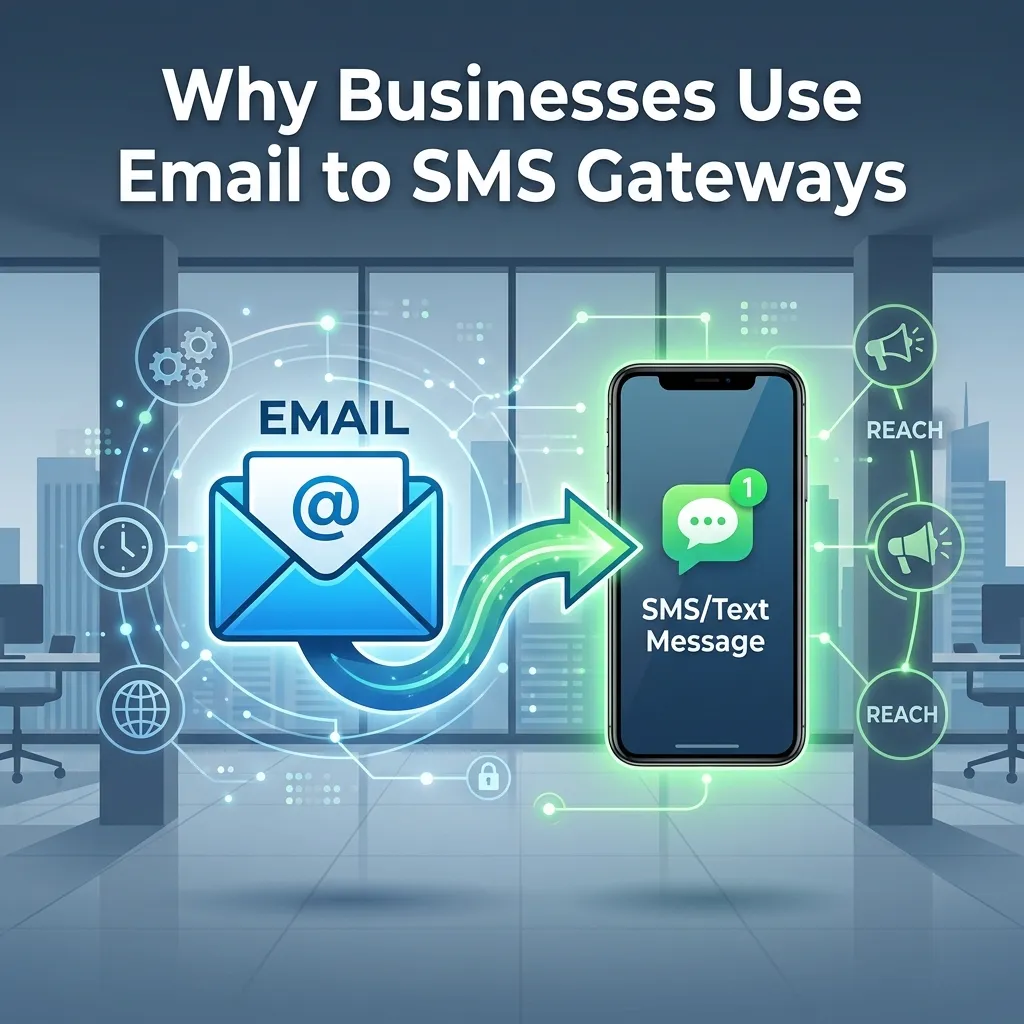
SMS open rates consistently outperform email. According to Gartner, SMS messages have an open rate of around 98%, compared to roughly 20% for email. For time-sensitive communications, that difference is significant.
Common business use cases include:
- Critical alerts and notifications: IT teams use email to SMS alert gateways for business to escalate server downtime or security incidents to on-call staff immediately.
- Customer communications: Appointment reminders, delivery updates, and booking confirmations reach customers faster via SMS.
- Internal operations: HR and operations teams send shift reminders, emergency notices, and policy updates directly to employee phones.
- Marketing campaigns: Bulk email to SMS messaging platforms allow businesses to send promotional messages to large contact lists in seconds.
The underlying appeal is simple: SMS gets seen. Email might not.
Email to SMS API Integration for Developers
For development teams, an email to SMS API offers more control and flexibility than basic gateway email addresses. Rather than routing messages through carrier-specific email domains, an API integration lets developers send SMS messages programmatically—triggering texts from application events, user actions, or scheduled workflows.
What does email to SMS API integration typically involve?
Most providers offer RESTful APIs with clear documentation. A typical integration includes:
- Authentication: API key or OAuth-based access
- Endpoint setup: POST requests to the gateway’s API endpoint with message content, recipient numbers, and sender ID
- Webhook support: Incoming delivery receipts and replies routed back to your application
Providers like Twilio, Sinch, and Vonage offer robust email to SMS API for developers, with SDKs available in Python, Node.js, PHP, Ruby, and more. For teams already using SMTP-based email infrastructure, some providers also support SMTP-to-API bridges that require minimal code changes.
How to choose the right API for your SMS notification system
The right choice depends on your scale, technical stack, and geographic reach:
- Choose a REST API if you need flexibility, want real-time delivery receipts, and are building a custom real-time email to SMS notification system.
- Choose an SMTP bridge if your existing application already routes messages via email and you want to add SMS with minimal redevelopment.
- Choose a bulk platform if you’re managing large contact lists and need campaign management features alongside API access.
Setting Up a Real-Time Email to SMS Notification System
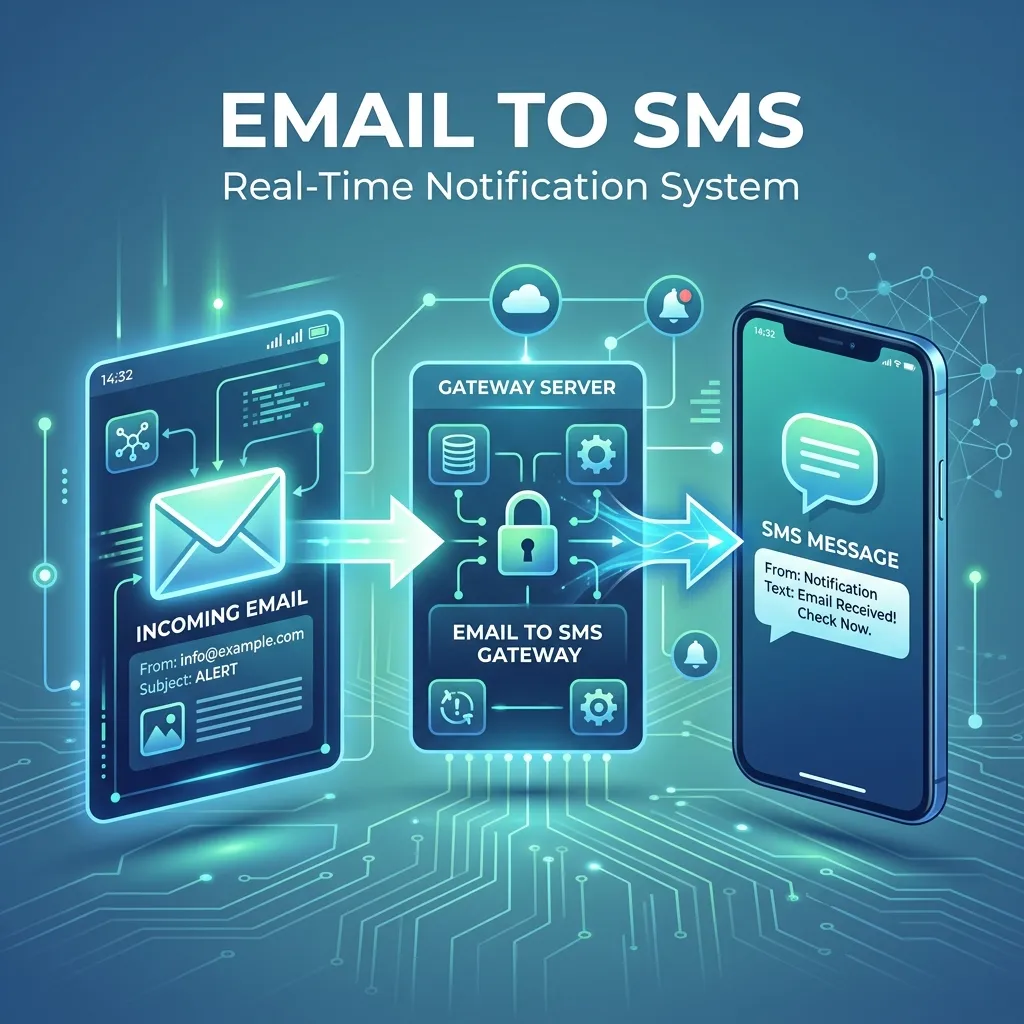
A real-time email to SMS notification system connects your business-critical applications directly to SMS delivery. Common setups include:
Monitoring and alerting: Tools like PagerDuty, Nagios, and Datadog support email-based alerting. By routing those alerts through an SMS gateway, teams receive instant mobile notifications when thresholds are breached—no app required on the recipient’s device.
CRM and helpdesk automation: Platforms like Salesforce and Zendesk can trigger email notifications on ticket creation or status changes. Connecting these to an automated email to SMS conversion tool means customers and agents get real-time updates without relying on push notifications.
E-commerce order updates: Order confirmation, shipping, and delivery notifications are easily automated through an email to mobile SMS forwarding service, keeping customers informed at every stage.
The key technical requirement for real-time delivery is low latency on the gateway side. Look for providers that guarantee sub-10-second delivery for high-priority messages.
Bulk Email to SMS Messaging for Large-Scale Campaigns
A bulk email to SMS messaging platform adds campaign-level features on top of basic gateway functionality. These platforms typically include:
- Contact list management and segmentation
- Message scheduling and throttling
- Compliance tools (opt-in/opt-out management, TCPA/GDPR support)
- Delivery reporting and analytics
For businesses running regular SMS campaigns—retailers, healthcare providers, logistics companies—a dedicated bulk platform offers far more control than a basic gateway. Providers like EZTexting, SimpleTexting, and Textedly focus on this segment, while enterprise solutions from Twilio and Infobip support both bulk messaging and developer-grade API access.
What to Look for in an Email to SMS Service Provider
Not all email to SMS gateway service providers are equal. Here’s what to evaluate before committing to one.
Reliability and uptime
SMS delivery is only valuable if it’s consistent. Look for providers with documented SLAs (service-level agreements) of 99.9% uptime or higher, and transparent delivery success rate reporting.
Global reach
If your audience spans multiple countries, your gateway needs carrier relationships in those regions. Some providers have stronger coverage in North America, while others specialize in Asia-Pacific or European markets. Confirm your target regions are supported before signing up.
Pricing structure
Gateway pricing typically falls into one of three models: per-message fees, monthly subscription tiers, or volume-based credits. For low-volume alerts, per-message pricing keeps costs predictable. For high-volume bulk SMS, subscription or credit bundles usually offer better value.
Compliance and data handling
Depending on your industry and geography, SMS communication may be subject to regulations including TCPA (US), GDPR (EU), and CASL (Canada). A reputable email to SMS gateway service provider will include built-in opt-out handling and data residency options.
Developer documentation
For technical teams, the quality of API documentation matters as much as the features themselves. Look for providers with code examples in multiple languages, sandbox environments for testing, and active developer communities.
Automated Email to SMS Conversion: Common Integration Patterns
Beyond one-off messages, the real power of email to SMS gateways comes from automation. Three integration patterns stand out for business use:
Trigger-based alerts: An application event (e.g., a failed payment, a low inventory threshold) triggers an automated email, which the gateway converts and delivers as an SMS to a pre-configured recipient.
Forwarding rules: Email clients or servers apply rules to forward specific emails—based on sender, subject line, or keywords—to an email to mobile SMS forwarding service. Useful for routing critical vendor or customer emails to a mobile team.
Scheduled broadcasts: A bulk email to SMS platform pulls from a contact list and scheduled message queue to deliver texts at a specified time, handling delivery, throttling, and reporting automatically.
Start Sending Smarter
Email to SMS gateways remove the friction between your existing email infrastructure and the communication channel your audience actually responds to. The setup is relatively straightforward, the ROI is measurable, and the technology is mature enough that most businesses can be up and running within a day.
Start by identifying your primary use case—alerts, customer notifications, or bulk campaigns—and match it to the gateway type that fits best. If you’re a developer building a notification pipeline, prioritize API flexibility and documentation. If you’re running customer-facing campaigns, prioritize a bulk SMS platform with compliance tools built in.
The gap between sending an email and reaching someone in real time has never been smaller.
Frequently Asked Questions
What is an email to SMS gateway?
An email to SMS gateway is a service that converts an email into an SMS message and delivers it to a recipient’s mobile phone. Senders use a formatted email address or an SMTP connection, and the gateway handles conversion and delivery to any mobile number.
How do I send an SMS via email?
Address your email to the recipient’s phone number followed by the carrier’s gateway domain (e.g., 5551234567@txt.att.net for AT&T in the US). For carrier-agnostic delivery, use a third-party email to SMS gateway service that handles routing across all carriers automatically.
What is the difference between an email to SMS API and an SMTP gateway?
An email to SMS API lets developers send SMS messages via HTTP requests to a provider’s endpoint, offering more control and richer features. An SMTP gateway routes messages using standard email server settings. APIs are better for custom integrations; SMTP gateways are easier to set up for systems already using email infrastructure.
Is email to SMS suitable for bulk messaging?
Yes. A bulk email to SMS messaging platform is specifically designed for high-volume sends, with contact management, scheduling, compliance tools, and delivery analytics built in. Basic SMTP gateways are better suited for lower-volume or automated alert use cases.
How much does an email to SMS gateway cost?
Pricing varies by provider and volume. Per-message rates typically range from $0.005 to $0.05 per SMS in the US, depending on the provider. Monthly subscription plans may offer lower per-message rates for businesses sending at scale. Most providers offer free trials or starter tiers.
Can I use an email to SMS gateway for international messaging?
Yes, but coverage varies by provider. Confirm that your chosen email to SMS gateway service provider supports delivery in your target countries and check for any international surcharges before committing to a plan.
What is an Email to SMS Gateway?
An Email to SMS Gateway is a service that converts email messages into SMS and delivers them directly to mobile phones.
How does an Email to SMS Gateway work?
It receives an email via SMTP, converts the content into SMS format, and routes it through mobile carriers to the recipient’s phone.
What is SMTP to SMS gateway?
SMTP to SMS gateway allows businesses to send SMS messages using standard email protocols without needing a separate messaging platform.
Why do businesses use Email to SMS Gateways?
Businesses use them for fast communication, high SMS open rates, and real-time alerts for customers and employees.
Can I send bulk messages using an Email to SMS Gateway?
Yes, bulk email to SMS platforms allow businesses to send large-scale notifications, alerts, and marketing messages.
Is Email to SMS faster than email?
Yes, SMS messages are usually delivered and read within seconds, making them much faster than traditional email.
What is an Email to SMS API?
An Email to SMS API allows developers to integrate SMS sending functionality directly into applications using code.
Is Email to SMS secure?
Yes, most providers use secure gateways, encryption, and compliance standards like GDPR and TCPA for data protection.
Can I send international SMS using an Email to SMS Gateway?
Yes, but availability depends on the provider’s global carrier network and supported countries.
What are common use cases for Email to SMS Gateways?
They are used for alerts, OTPs, appointment reminders, customer notifications, and internal business communications.