
A transactional SMS API lets businesses send time-sensitive, automated text messages—like OTPs, order confirmations, and alerts—directly from their applications. It connects your software to a mobile network through an SMS gateway, delivering critical messages in real time with high reliability and strong security.
Text messages still command attention in a way few other channels can. Open rates for SMS hover around 98%, and most messages are read within minutes of arriving. For businesses sending verification codes, shipping updates, or fraud alerts, that speed isn’t a nice-to-have—it’s the whole point.
That’s where a transactional SMS API comes in. Instead of manually sending texts or relying on slow, error-prone systems, you can plug a messaging service directly into your app, website, or platform. When a customer signs up, makes a purchase, or triggers a security check, the right message goes out automatically.
This guide breaks down how transactional SMS APIs work, what to look for in a provider, and how to integrate one securely. Whether you’re handling two-factor authentication or sending millions of real-time notifications, you’ll learn how to choose the right solution for your needs.
What is a transactional SMS messaging API?
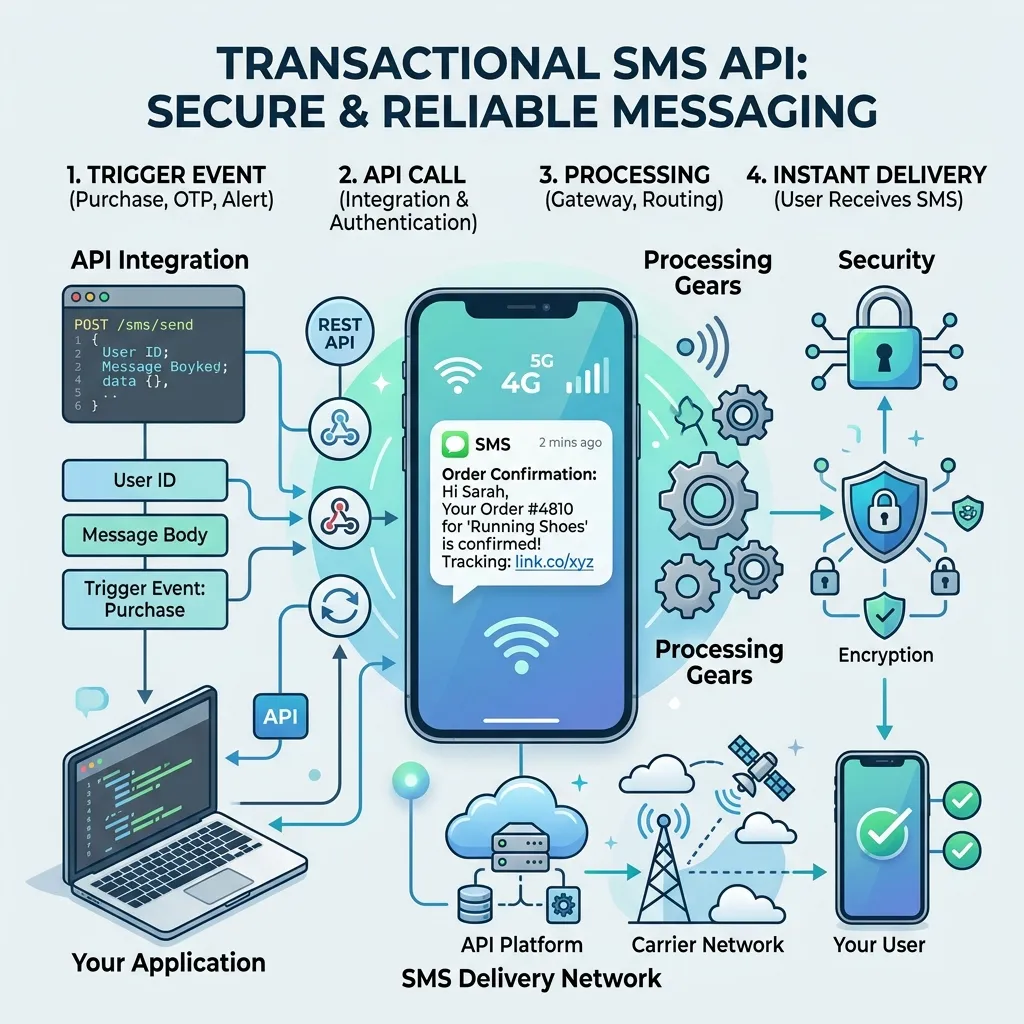
A transactional SMS messaging API is a tool that allows software applications to send automated, non-promotional text messages programmatically. These messages are triggered by a specific user action or event—not by a marketing campaign.
Common examples include:
- One-time passwords (OTPs) for login
- Order and payment confirmations
- Appointment reminders
- Delivery and shipping updates
- Account activity and security alerts
The “API” part stands for application programming interface. In plain terms, it’s a bridge that lets your system talk to an SMS provider’s system. Your application sends a request—”text this number this message”—and the provider routes it through a mobile network to the recipient’s phone.
Unlike promotional SMS, transactional messages are tied to an existing relationship between the business and the customer. Because of this, they often face fewer regulatory restrictions and can be sent at any time of day in many regions.
How does an SMS API for OTP verification work?
An SMS API for OTP verification sends a unique, temporary code to a user’s phone to confirm their identity. The process is fast and happens in just a few steps.
- A user requests access. They enter their phone number during signup, login, or a sensitive transaction.
- Your system generates a code. The application creates a random, single-use OTP and stores it temporarily.
- The API sends the message. Your system calls the SMS API, which delivers the code to the user’s phone within seconds.
- The user enters the code. Your system checks it against the stored value and grants access if it matches.
OTP verification is one of the most popular uses of transactional SMS because it adds a strong layer of security without much friction. The code expires quickly—often within five to ten minutes—which limits the window for misuse.
For high-traffic apps, a reliable OTP delivery system is critical. A delayed or failed code means a frustrated user, an abandoned signup, or a blocked transaction.
Why use an automated transactional SMS service?

An automated transactional SMS service removes manual work from your messaging. Once you set up the triggers, messages send themselves based on real-time events.
The benefits add up quickly:
- Speed: Messages go out the moment an event happens, with no human delay.
- Consistency: Every customer gets the same accurate, well-formatted message.
- Scale: Automation handles ten messages or ten million with the same ease.
- Fewer errors: Removing manual steps cuts down on typos and missed sends.
Consider an e-commerce store. When a customer places an order, an automated service can instantly send a confirmation. When the package ships, another message goes out with tracking details. None of this requires staff to lift a finger.
This kind of automation frees up your team to focus on higher-value work while keeping customers informed at every step.
What to look for in a bulk transactional SMS API provider
Choosing a bulk transactional SMS API provider matters more than many businesses realize. The right partner affects delivery rates, costs, and customer trust. Here are the key factors to weigh.
Delivery rates and network reach
Look for a provider with strong relationships with mobile carriers and direct routes to networks. Higher delivery rates mean more of your messages actually reach phones. If you operate internationally, confirm the provider covers the countries where your customers live.
Pricing and transparency
Pricing models vary—some charge per message, others offer volume tiers. Choose a provider with clear, predictable pricing and no hidden fees. For high-volume senders, even a small per-message difference adds up fast.
Reliability and uptime
Check the provider’s uptime guarantees, ideally backed by a service-level agreement (SLA). For transactional messages like OTPs, downtime directly hurts your users and revenue.
Developer-friendly documentation
A good API comes with clear documentation, code samples, and SDKs for popular programming languages. The easier the integration, the faster you can go live.
Choose a provider with global carrier coverage if you serve international customers; pick one with strong local routes if your audience is concentrated in a single region.
How does an SMS gateway API for businesses improve communication?
An SMS gateway API for businesses acts as the channel between your software and mobile carrier networks. It translates your application’s message requests into a format that carriers accept, then routes them to the right destination.
This gateway is what makes large-scale, reliable messaging possible. Without it, your business would have to manage complex carrier connections on its own—a costly and technical undertaking.
A quality gateway API improves communication in several ways:
- It manages routing to find the fastest, most reliable path for each message.
- It handles delivery reports so you know which messages arrived.
- It supports two-way messaging, letting customers reply when needed.
- It scales automatically during traffic spikes, like a flash sale or product launch.
For businesses, this means dependable communication without the burden of building telecom infrastructure from scratch.
Why does a real-time SMS notification API matter?
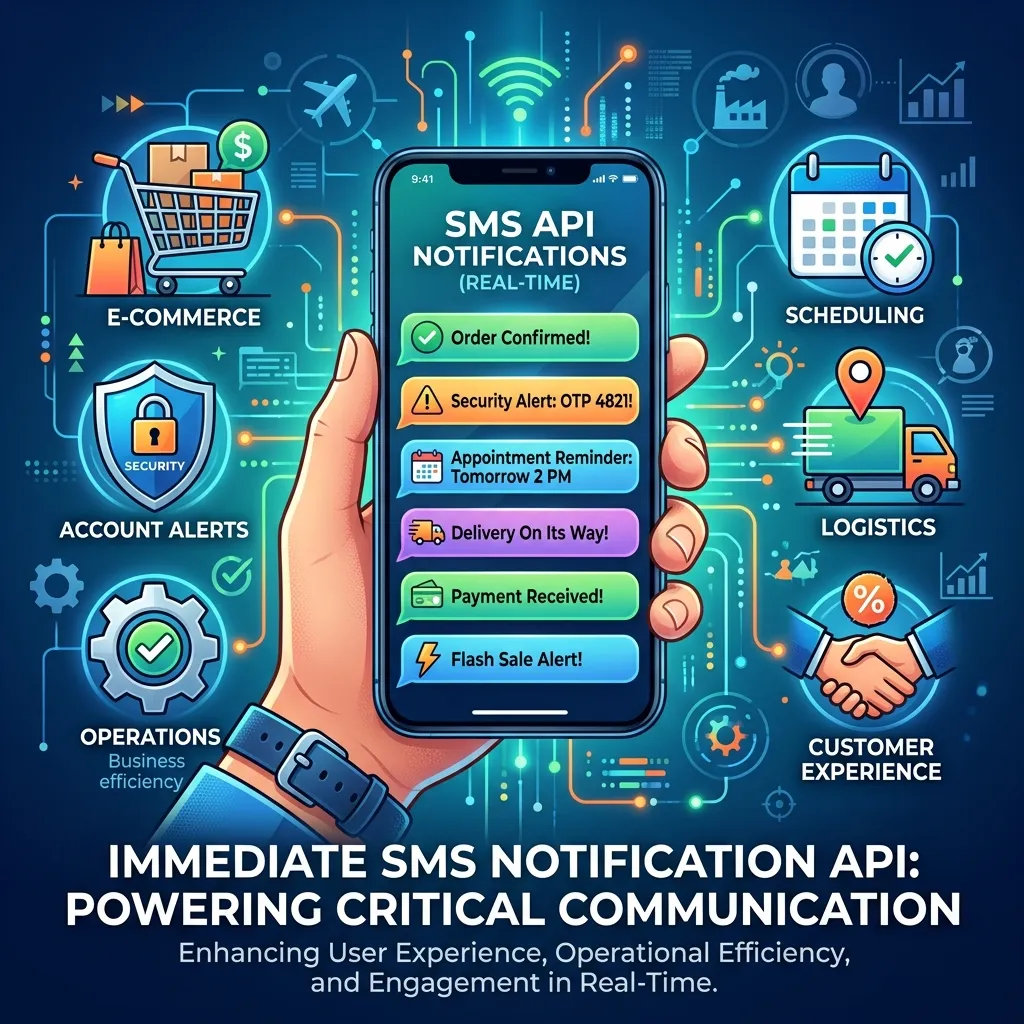
A real-time SMS notification API delivers messages the instant an event occurs. For many use cases, timing is everything.
Think about a bank detecting a suspicious transaction. A fraud alert sent in real time lets the customer act immediately—blocking a charge before money disappears. A delay of even a few minutes could mean a successful theft.
The same urgency applies to:
- Delivery notifications when a driver is minutes away
- Appointment reminders sent at the right interval
- Stock alerts when a wished-for item comes back in stock
- System outage warnings for IT teams
Real-time delivery turns SMS from a simple message channel into a tool that drives action. The faster the notification, the more useful it becomes.
How to ensure secure SMS API integration
Security is non-negotiable when sending sensitive data like verification codes and account alerts. A secure SMS API integration protects both your business and your customers.
Follow these best practices:
- Use API keys and authentication. Keep your API credentials private and rotate them regularly. Never expose keys in client-side code.
- Encrypt data in transit. Make sure all communication with the API uses HTTPS and TLS encryption.
- Set rate limits. Cap how many messages can be triggered from a single account or IP to block abuse and fraud.
- Validate inputs. Sanitize phone numbers and message content to prevent injection attacks.
- Monitor for unusual activity. Watch for spikes in OTP requests, which can signal a brute-force attempt.
A secure setup keeps fraudsters out and maintains the trust your customers place in your service.
How does a two-factor authentication SMS API protect accounts?
A two-factor authentication (2FA) SMS API adds a second layer of security beyond a password. Even if someone steals a user’s password, they can’t log in without the code sent to the user’s phone.
Here’s why this matters: passwords alone are weak. People reuse them, choose simple ones, and fall for phishing scams. A 2FA SMS API closes that gap by requiring something the user physically has—their phone.
The flow is simple. After entering a correct password, the user receives a one-time code via SMS. They enter it to complete the login. Without that code, access is denied.
While newer methods like authenticator apps exist, SMS-based 2FA remains popular because nearly everyone has a phone that receives texts—no extra app required. For businesses, it’s an accessible way to dramatically improve account security.
What are the benefits of enterprise SMS API solutions?
Enterprise SMS API solutions are built for organizations sending high volumes of transactional messages with strict requirements around reliability, security, and compliance.
These solutions typically offer:
- High throughput: The capacity to send millions of messages without slowdowns.
- Dedicated support: Account managers and priority technical help.
- Advanced analytics: Detailed reporting on delivery, response, and engagement.
- Compliance tools: Features that help meet regulations like GDPR and regional telecom rules.
- Custom routing: Optimized paths for specific regions or message types.
A growing fintech company, for example, might rely on an enterprise solution to send OTPs across dozens of countries while meeting strict financial regulations. The reliability and compliance features justify the investment for organizations where messaging is mission-critical.
Choose an enterprise solution if you send high volumes, operate across borders, or work in a regulated industry. A standard plan often suits smaller businesses with simpler needs.
Putting your transactional SMS strategy into action
A transactional SMS API turns critical messages—verification codes, order updates, fraud alerts—into automated, reliable communication that reaches customers in seconds. The right setup improves security, boosts customer trust, and scales with your business.
Start by mapping the events that should trigger a text: signups, purchases, shipments, security checks. Then choose a provider that matches your volume, reach, and security needs. Test your integration thoroughly before going live, and monitor delivery rates once you’re up and running.
When you’re ready, reach out to a transactional SMS API provider to request a demo or start a free trial. Getting your first messages flowing is often quicker than you’d expect.
Frequently asked questions
What’s the difference between transactional and promotional SMS?
Transactional SMS messages are triggered by a user action and contain information the customer expects—like an OTP or order confirmation. Promotional SMS messages market products or offers. Transactional messages usually face fewer sending restrictions because they relate to an existing transaction.
How much does a transactional SMS API cost?
Costs vary by provider and region, and most charge per message sent. High-volume senders often get lower per-message rates through tiered pricing. Always check for setup fees, minimum commitments, and the rates for the specific countries you’ll be texting.
How fast are transactional SMS messages delivered?
Most transactional messages arrive within seconds of being triggered. Actual speed depends on the provider’s network routes, carrier performance, and the recipient’s location. For time-sensitive use cases like OTPs, choose a provider with strong delivery rates and real-time routing.
Is SMS-based two-factor authentication secure?
SMS-based 2FA is far more secure than passwords alone and remains widely used because it’s accessible to almost everyone. However, it’s vulnerable to SIM-swapping attacks. For very high-security needs, pair it with other measures or consider authenticator apps as an additional option.
Can a transactional SMS API send messages internationally?
Yes. Most providers support international messaging, but coverage and pricing vary by country. If you serve a global audience, choose a provider with broad carrier relationships and direct routes to the regions where your customers live.