
An SMS API gateway enables applications to send and receive text messages through software instead of manual texting. Businesses use it for notifications, OTP verification, marketing campaigns, customer support, and automated messaging. The right SMS API gateway combines reliable delivery, easy integration, scalability, and security to help organizations communicate efficiently with customers worldwide.
An SMS API gateway is a service that lets applications send and receive text messages programmatically. Developers connect their software to the gateway through code, which then routes messages to mobile carriers worldwide. Businesses use SMS API gateways for alerts, marketing, one-time passwords, and customer support—all without manually sending texts.
Text messages still command attention like few other channels. Open rates for SMS hover around 98%, and most messages are read within minutes of arriving. That kind of reach explains why companies of every size want a reliable way to send texts directly from their software.
That’s where an SMS API gateway comes in. Instead of typing messages on a phone, your application sends a simple request to the gateway, which handles the heavy lifting of delivering that text to the right carrier and the right device. Whether you need to confirm an order, send a shipping update, or verify a login, the process happens in seconds.
This guide breaks down everything you need to know about SMS API gateways. You’ll learn how the core technology works, the different types of services available, and how to choose the right solution for your needs. By the end, you’ll understand the building blocks—from bulk messaging to two-way conversations—so you can make a confident decision.
What is an SMS Messaging API?
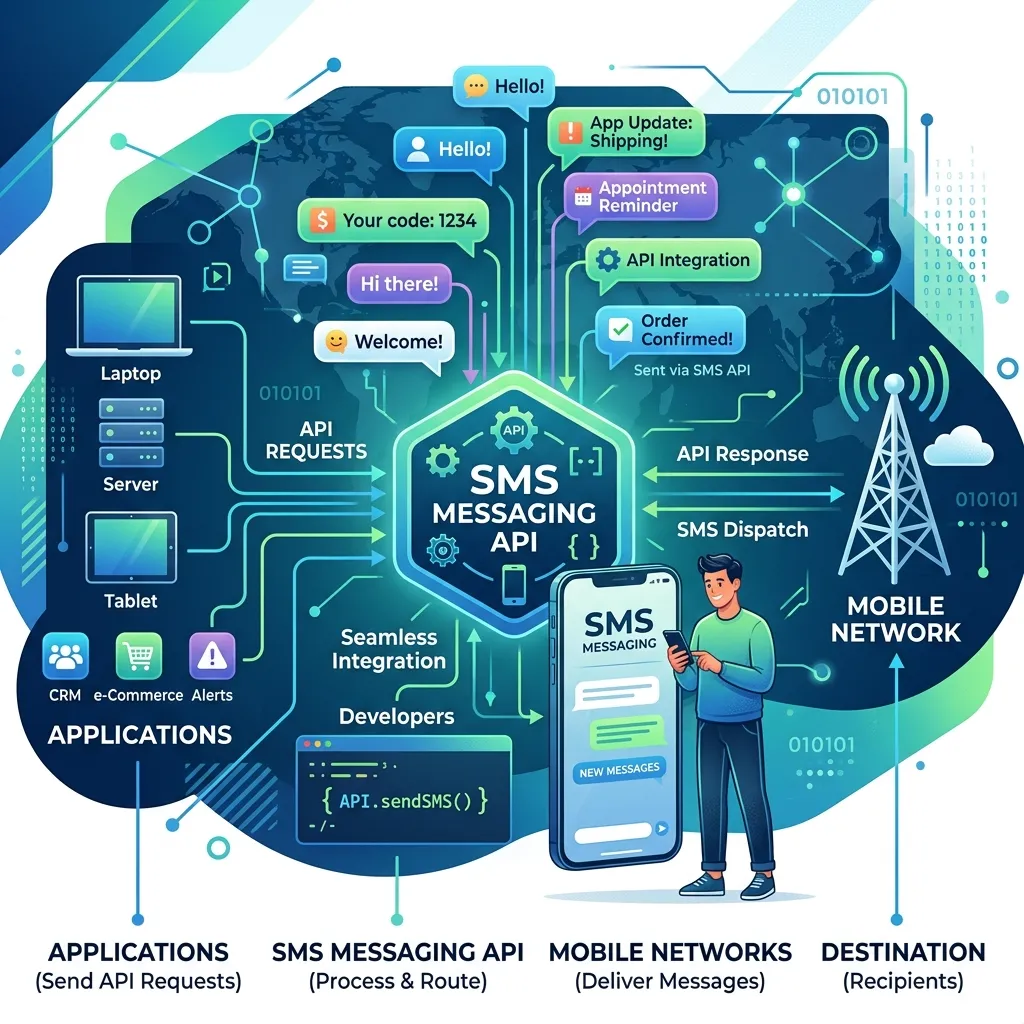
An SMS messaging API is a set of rules and tools that lets one piece of software talk to another to send text messages. API stands for “application programming interface,” which is just a structured way for programs to communicate.
When your application wants to send a text, it sends a request to the SMS API. That request includes details like the recipient’s phone number and the message content. The API processes the request and passes it to the gateway, which delivers the message to the mobile network.
The beauty of an SMS messaging API is its simplicity. Developers don’t need to understand the complex world of telecom carriers or messaging protocols. They write a few lines of code, and the API takes care of the rest. Most providers offer documentation, code samples, and software development kits (SDKs) for popular programming languages like Python, Java, and PHP.
How Does a Bulk SMS Gateway Work?
A bulk SMS gateway lets you send thousands—or even millions—of messages at once. This is essential for businesses running large campaigns, sending event reminders, or alerting customers about service outages.
Here’s the basic flow:
- Upload or generate your contact list. You provide the phone numbers you want to reach.
- Compose your message. This can be a single message sent to everyone or personalized texts with custom fields like names.
- Send the batch. The gateway distributes the messages across carrier networks efficiently.
- Track delivery. You receive reports showing which messages were delivered, failed, or are still pending.
A good bulk SMS gateway manages throughput carefully. Sending too many messages too quickly can trigger carrier filters, so quality gateways spread the load to maximize delivery rates. They also handle compliance, helping you respect opt-out requests and local regulations.
What is an SMS Integration API?
An SMS integration API connects text messaging to the tools you already use. Rather than working as a standalone system, it plugs into your existing software stack—customer relationship management (CRM) platforms, e-commerce systems, help desks, and more.
For example, a retailer might integrate SMS with their order management system. When an order ships, the system automatically triggers a text to the customer. No one has to send anything manually.
Integration APIs typically use webhooks and REST endpoints to communicate. A webhook is a way for one system to notify another when something happens. When a customer replies to a text, the SMS integration API can send that reply straight into your help desk as a new ticket.
Choose an SMS integration API if you want messaging woven into your daily workflows rather than running as a separate tool. This matters most when your team already relies on specific software and wants to avoid switching between apps.
Transactional SMS Service vs. Promotional SMS
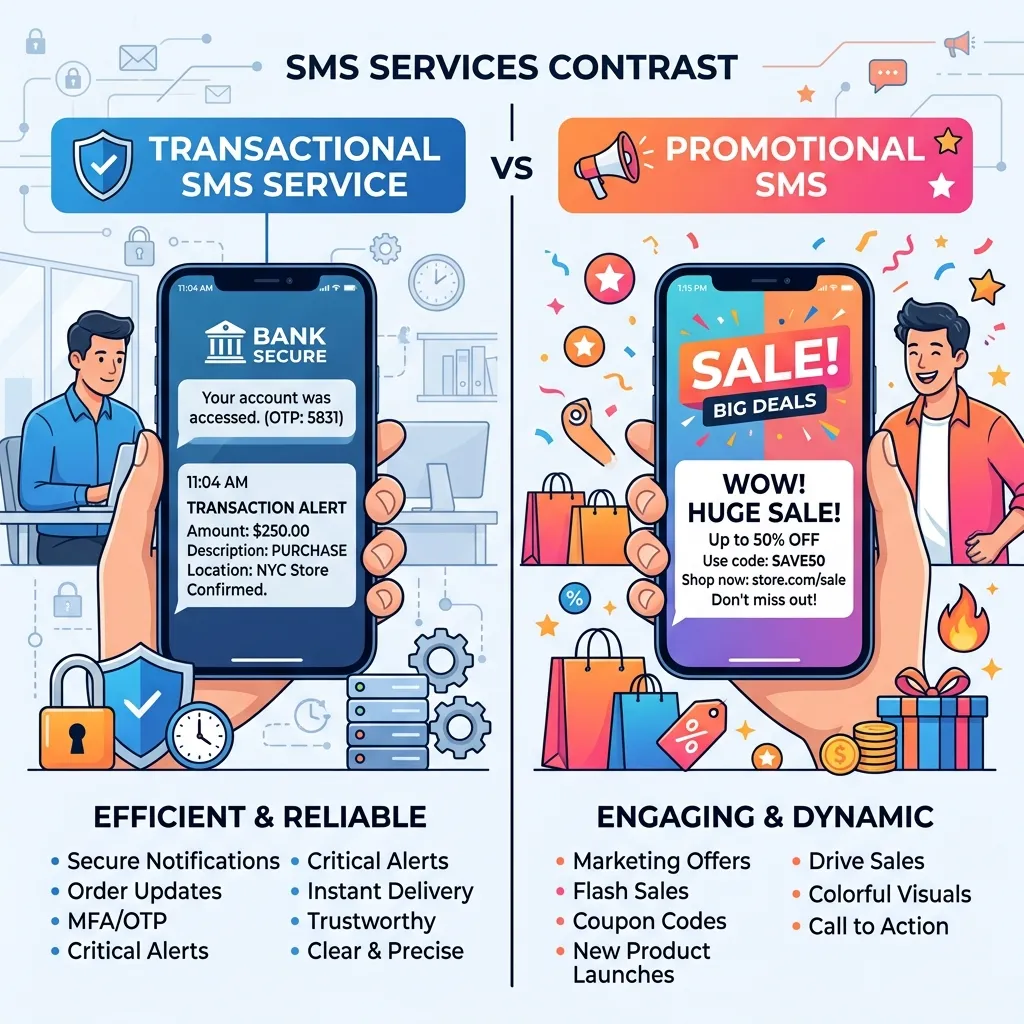
A transactional SMS service sends messages triggered by a user’s action or account activity. Think order confirmations, password resets, appointment reminders, and shipping updates. These messages carry important information the recipient expects and often needs.
Promotional SMS, by contrast, focuses on marketing—sales announcements, discount codes, and product launches. The two categories matter because many countries regulate them differently.
Here’s how to think about the distinction:
- Choose a transactional SMS service when the message is essential and tied to a specific user action. These messages often face fewer restrictions and can be sent at any time.
- Use promotional messaging for marketing campaigns. These usually require explicit consent and must respect quiet hours and opt-out rules.
Mixing the two can hurt your delivery rates and even get your sender ID flagged. Many businesses keep separate channels for each type to stay compliant and maintain trust.
What is an SMS Notification API?
An SMS notification API specializes in sending automated alerts. These are short, timely messages that keep people informed—a fraud alert from a bank, a flight delay notice, or a reminder that a bill is due.
Notifications work best when they’re immediate and relevant. An SMS notification API connects to your monitoring or event system and fires off a text the moment something important happens. Speed matters here. A delayed fraud alert is far less useful than an instant one.
Many notification APIs support templates, so you can pre-write message formats with placeholders for dynamic data. When an event triggers, the API fills in the blanks and sends the text. This keeps your messages consistent and saves development time.
How Does a Two-Way SMS API Enable Conversations?
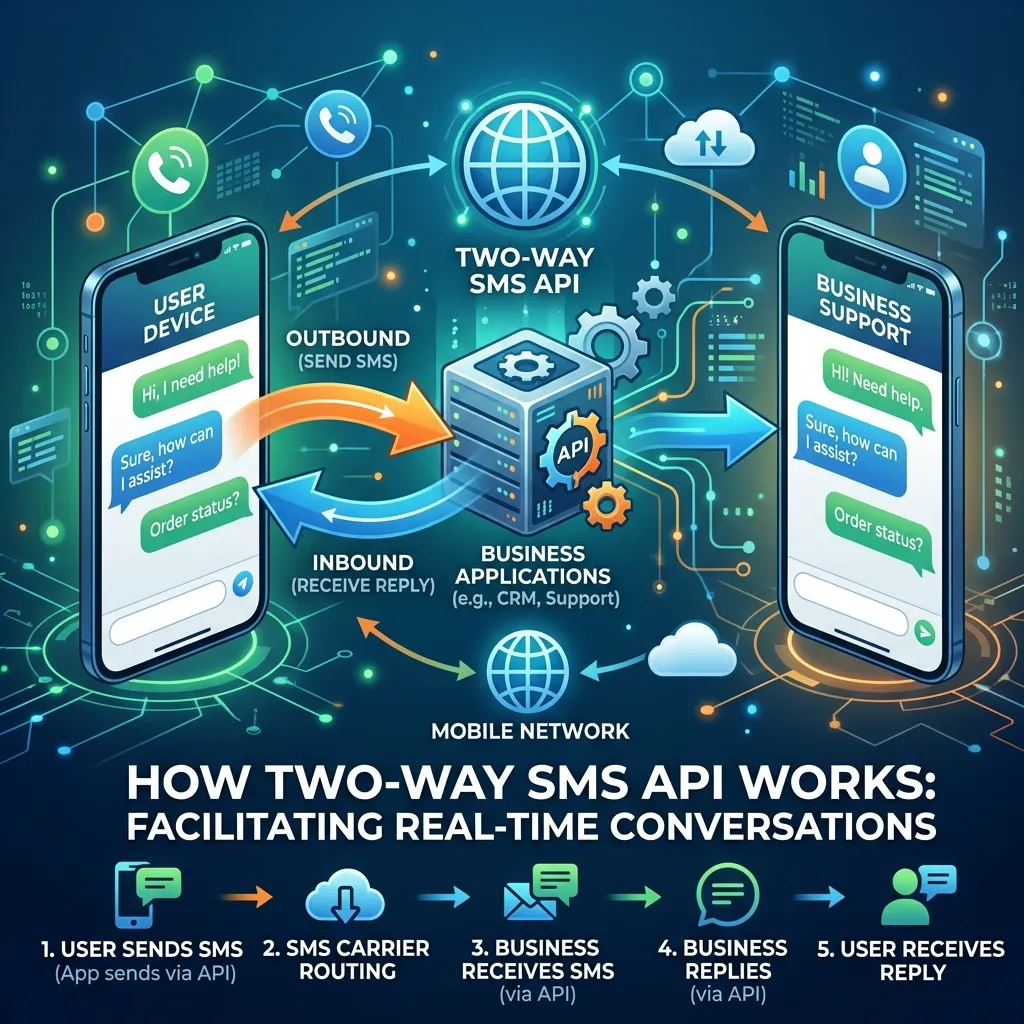
A two-way SMS API lets you both send and receive messages. This turns texting from a one-direction broadcast into a real conversation between your business and your customers.
With a two-way SMS API, customers can reply to your texts, and your system captures those replies. Common uses include:
- Customer support. People text questions and get answers, all over SMS.
- Appointment confirmations. A customer texts “YES” to confirm or “NO” to cancel.
- Surveys and polls. Recipients reply with their answers, which feed into your analytics.
- Lead qualification. Sales teams chat with prospects through automated and live texting.
To receive messages, you typically need a dedicated phone number, a short code, or a toll-free number. The two-way SMS API routes incoming texts to your application, where you can process them automatically or hand them to a human agent.
Why Use an OTP SMS Gateway for Authentication?
An OTP SMS gateway sends one-time passwords—those short codes you receive when logging into an account or verifying your identity. OTP stands for “one-time password,” and it’s a cornerstone of two-factor authentication (2FA).
Security is the main reason to use an OTP SMS gateway. By requiring a code sent to a user’s phone, you add a layer of protection beyond just a username and password. Even if someone steals a password, they can’t log in without the device that receives the code.
A strong OTP SMS gateway prioritizes speed and reliability. A verification code that arrives two minutes late frustrates users and may expire before they can use it. Look for gateways that offer high-priority routing for OTP traffic, ensuring codes land within seconds. Many also support fallback options, sending a voice call if a text fails to deliver.
What Makes a Good SMS Delivery Platform?
An SMS delivery platform is the broader system that manages how your messages reach their destination. It handles routing, carrier connections, retries, and reporting all in one place.
Several factors separate a great platform from a mediocre one:
- Delivery rates. The percentage of messages that actually reach phones. Higher is better.
- Global reach. Strong connections to carriers in the countries you serve.
- Smart routing. The platform picks the best path for each message, balancing cost and reliability.
- Detailed analytics. Clear reports on delivery, failures, and engagement.
- Redundancy. Backup routes so messages still go through if one carrier path fails.
The best SMS delivery platforms maintain direct relationships with carriers rather than relying on long chains of intermediaries. Fewer hops mean faster delivery and fewer failures.
Enterprise SMS Solutions: What to Look For
Enterprise SMS solutions are built for large organizations with high message volumes and strict requirements. They go beyond basic sending to address security, scale, and compliance at a corporate level.
Key features of enterprise SMS solutions include:
- Scalability. The ability to send millions of messages without slowing down.
- Security and compliance. Support for regulations like GDPR, HIPAA, and TCPA, plus features like data encryption.
- Dedicated support. Account managers and technical teams who respond quickly when issues arise.
- Service level agreements (SLAs). Written guarantees on uptime and delivery performance.
- Role-based access. Controls that let large teams manage messaging safely.
Choose enterprise SMS solutions if your organization sends high volumes, operates in regulated industries, or needs guaranteed reliability. Smaller businesses can usually start with a standard plan and upgrade as they grow.
What is a Programmable SMS API?
A programmable SMS API gives developers full control over messaging through code. The word “programmable” means you can customize nearly every aspect of how messages are sent, received, and processed.
With a programmable SMS API, you decide the logic. You might send a text only when a customer’s cart sits idle for an hour, or route incoming messages based on keywords. The flexibility makes it ideal for building custom applications and unique workflows.
Programmable SMS APIs usually offer:
- REST endpoints for sending and receiving messages.
- Webhooks that notify your app of incoming texts and status changes.
- SDKs and libraries for popular programming languages.
- Detailed documentation with code examples to speed up development.
This is the right choice if your team has development resources and wants a tailored solution. If you’d rather avoid coding, look for platforms with no-code or low-code tools instead.
How to Choose the Right SMS API Gateway
Picking the right SMS API gateway depends on your goals. Start by answering a few questions:
- What’s your use case? OTP codes need speed. Marketing campaigns need bulk capacity. Support needs two-way messaging.
- Where are your users? Make sure the gateway has strong carrier connections in those regions.
- What’s your volume? A small business has different needs than an enterprise sending millions of texts.
- Do you have developers? Programmable APIs need coding skills, while no-code platforms don’t.
- What’s your budget? Compare pricing per message and watch for hidden fees on features like delivery reports.
Test a few providers before committing. Most offer free trials or credits, so you can measure delivery rates and ease of integration firsthand.
Putting Your SMS Strategy into Action
An SMS API gateway opens the door to fast, reliable communication with customers wherever they are. From a simple bulk SMS gateway for campaigns to a sophisticated programmable SMS API for custom workflows, there’s a solution to match nearly any need.
The right choice comes down to your specific goals—speed for OTP codes, scale for enterprise messaging, or flexibility for two-way conversations. Map your requirements first, then test a couple of providers to see which delivers the best results for your audience.
Ready to get started? Sign up for a free trial with an SMS provider, send a few test messages, and watch how quickly text becomes one of your most effective channels.
Frequently Asked Questions
How much does an SMS API gateway cost?
Pricing usually works on a pay-per-message model, with rates varying by country and message type. Many providers charge a fraction of a cent to a few cents per text. Some add monthly fees for dedicated phone numbers or premium features like high-priority OTP routing. Always check for volume discounts if you send large batches.
How long does it take to integrate an SMS API?
A basic integration can take just a few hours if the provider offers clear documentation and an SDK for your programming language. More complex setups—like two-way messaging with custom routing—may take a few days. No-code platforms can have you sending messages in minutes.
What’s the difference between a short code, long code, and toll-free number?
A short code is a 5-6 digit number built for high-volume messaging and fast delivery. A long code is a standard 10-digit phone number suited to lower volumes and personal conversations. A toll-free number supports two-way messaging at higher volumes and works well for customer support. Your choice depends on volume and use case.
Is SMS secure enough for sending OTP codes?
SMS-based OTP adds a meaningful layer of security beyond passwords alone, and it’s widely used across banking and online services. That said, it’s not foolproof—SIM-swapping attacks exist. For highly sensitive accounts, pair SMS OTP with other methods like authenticator apps for stronger protection.
Can I send SMS messages internationally?
Yes. Most SMS API gateways support international delivery, but reach and reliability vary by provider. Look for one with direct carrier connections in the countries you serve. Keep in mind that each country has its own regulations on sender IDs, content, and consent.