
Cheap OTP SMS providers help businesses send one-time passwords at a low cost while maintaining reliable delivery and strong security. The best providers offer affordable pricing, fast OTP delivery, global coverage, developer-friendly APIs, and transparent billing. Choosing the right provider helps reduce costs, improve user authentication, and ensure a smooth verification experience.
A cheap OTP SMS provider delivers one-time passwords reliably while keeping per-message costs low. The best budget options balance affordable pricing with high delivery rates, strong global coverage, and a developer-friendly API. When choosing a cheap OTP SMS provider, look for transparent pricing, pay-as-you-go plans, and proven uptime before committing.
Sending one-time passwords sounds simple. A user types in their phone number, a six-digit code lands on their screen, and they log in. But behind that tiny message sits a web of carrier fees, routing decisions, and delivery rates that can quietly drain your budget.
If you’re sending thousands of verification codes a month, finding the right cheap OTP SMS provider becomes critical. The price per message matters, but so does delivery speed and reliability—a code that arrives two minutes late is a code that frustrates customers and triggers support tickets. The challenge is choosing a cheap OTP SMS provider that remains affordable without sacrificing performance, security, or global reach.
This guide breaks down what to look for in a cheap OTP SMS provider, how pricing actually works, and the features that separate a smart bargain from a costly mistake. By the end, you’ll know how to compare providers with confidence and select a solution that fits both your budget and your authentication needs.
What is an OTP SMS provider?
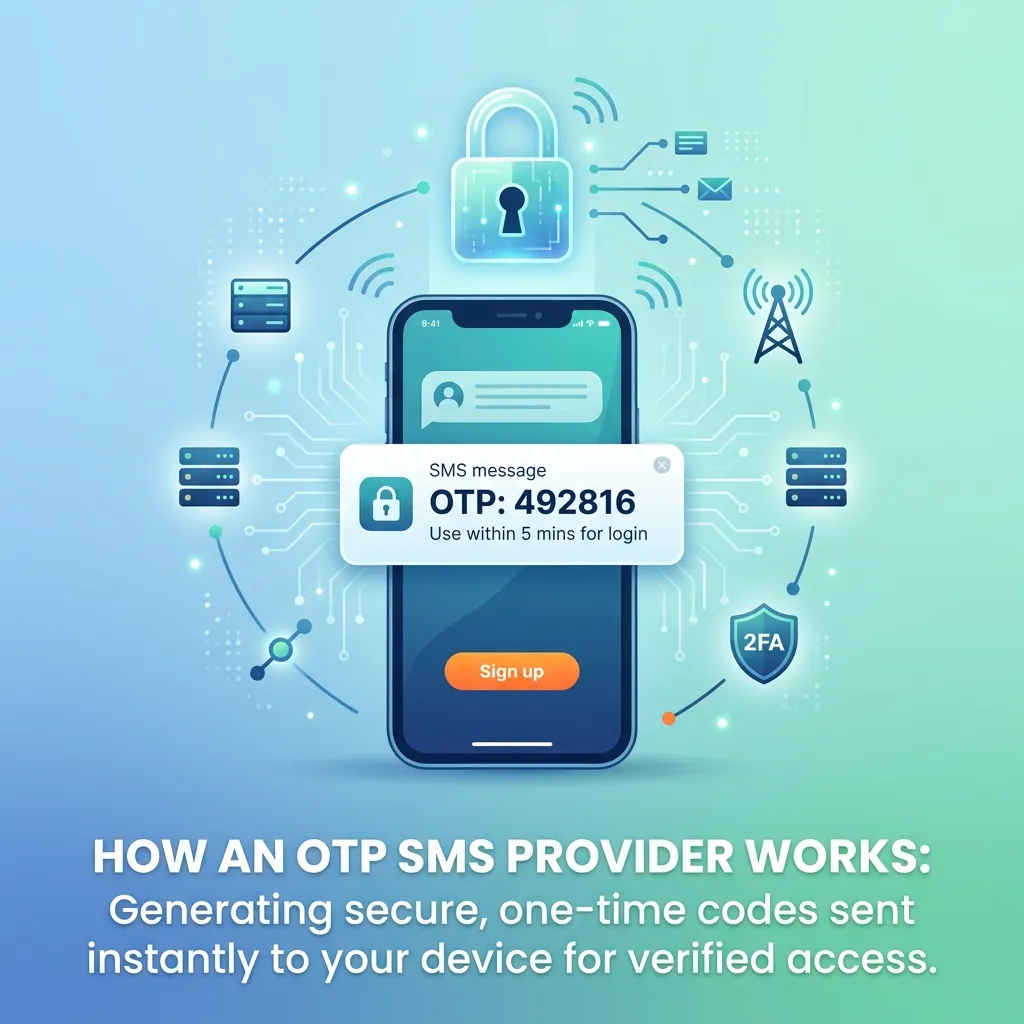
An OTP SMS provider is a service that sends one-time passwords (OTPs) to users via text message, usually for login verification or two-factor authentication. When you log into a banking app and receive a code by text, that code traveled through an OTP messaging platform.
These services typically run on a transactional SMS gateway—a system built to deliver time-sensitive, high-priority messages quickly. Unlike marketing texts, OTP messages need to arrive within seconds, so providers route them through premium pathways to carriers.
Most providers offer an OTP SMS API, which lets developers connect the service directly to their app or website. The API handles code generation, delivery, and sometimes verification, so your team doesn’t have to build that infrastructure from scratch.
How does cheap OTP SMS pricing actually work?
SMS pricing rarely comes as a flat rate. Understanding the structure helps you avoid surprises on your bill.
Per-message pricing and country rates
Most providers charge per message sent, and the rate changes depending on the destination country. A text to a US number might cost a fraction of a cent, while the same message to a number in a high-cost region could be ten times more expensive. If your users are spread across multiple countries, check the rates for each one rather than relying on a single advertised price.
Pay-as-you-go vs. monthly plans
A low-cost SMS verification provider will usually offer two billing models:
- Pay-as-you-go: You buy credits and spend them as you send messages. This works well for startups and apps with unpredictable volume.
- Monthly or volume plans: You commit to a set number of messages for a discounted rate. These suit established businesses with steady, high-volume needs.
If you’re just starting out, pay-as-you-go keeps your costs flexible. Once your volume stabilizes, a committed plan often brings the per-message price down significantly.
Hidden costs to watch for
Cheap headline rates can hide extra fees. Watch for charges on number rental, API access, dedicated sender IDs, or premium support. A budget-friendly SMS API should be upfront about all of these. Read the full pricing page before you sign up, and ask the sales team directly if anything looks vague.
What features matter most in an affordable OTP SMS service?
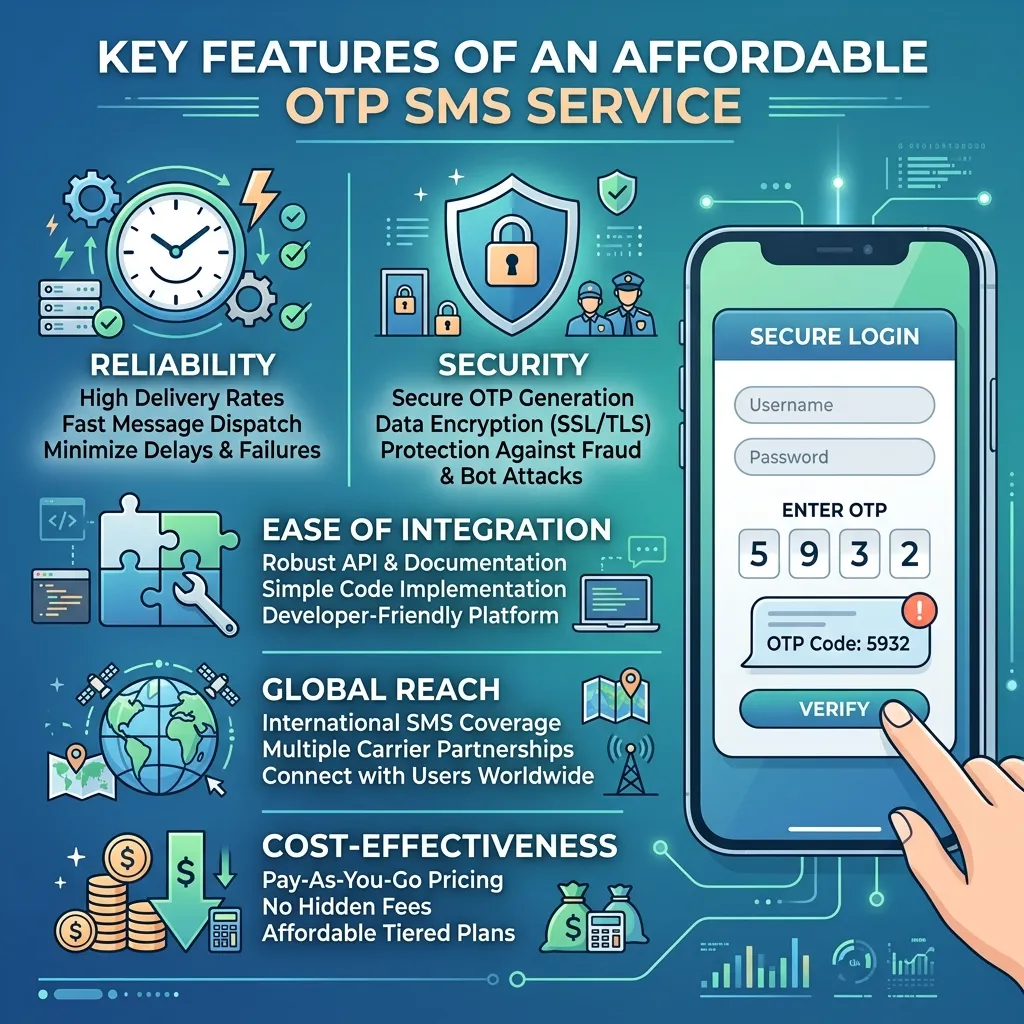
Price is only half the equation. A provider that’s cheap but unreliable will cost you more in lost users and support time. Here are the features worth prioritizing.
High delivery rates
Delivery rate is the percentage of messages that actually reach their destination. For OTP traffic, this number needs to be high—ideally above 95%. A failed delivery means a locked-out user and a frustrated customer. Ask any provider for their delivery statistics, especially in the regions where your users live.
Fast delivery speed
OTP codes expire fast, often within five minutes. A secure OTP delivery service should get messages to users in seconds, not minutes. Providers that route through direct carrier connections tend to be faster than those using cheaper, indirect routes.
Global coverage
If your users are international, you need a two-factor authentication SMS provider with broad reach. Check that the provider supports every country where you operate, and confirm that delivery is reliable in those regions—not just technically possible.
A developer-friendly API
A well-documented OTP SMS API saves your engineering team hours. Look for clear documentation, code samples in popular languages, SDKs, and a sandbox environment for testing. Some providers also offer a built-in verification API that handles code generation and matching, which removes a chunk of work from your plate.
Security and compliance
OTP messages are part of your security stack, so the provider should be too. Look for encryption in transit, compliance with regulations like GDPR, and protections against fraud such as SMS pumping—a scam where bad actors trigger huge volumes of OTP requests to inflate traffic to premium numbers.
When should you use a bulk OTP SMS gateway?
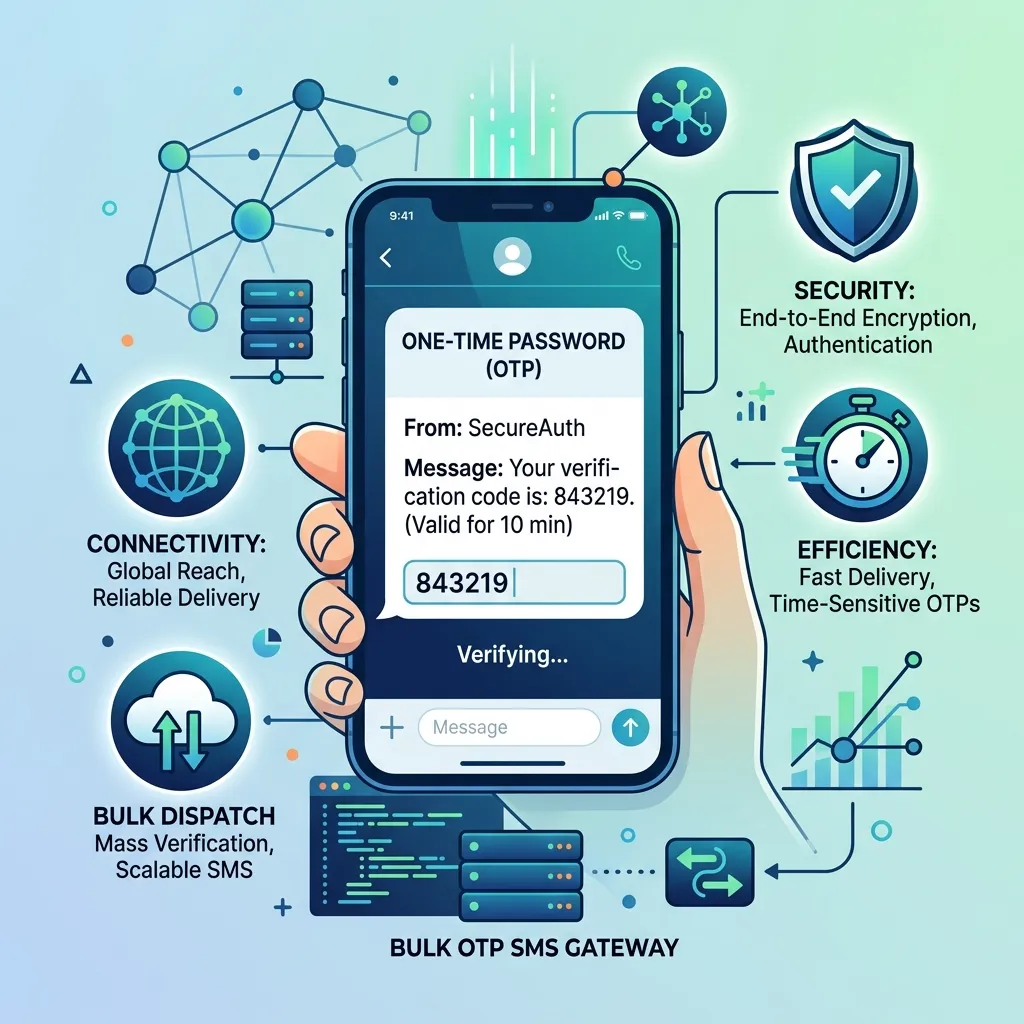
A bulk OTP SMS gateway is built to send large volumes of verification messages at once. This matters when your app grows beyond a few hundred users.
Consider a bulk gateway if any of these apply:
- You’re onboarding thousands of new users a month, each requiring verification.
- You run periodic campaigns or events that spike login traffic.
- You need consistent performance during peak hours without delivery slowdowns.
Bulk gateways often come with volume discounts, so the more you send, the less each message costs. They also tend to include better infrastructure for handling traffic spikes, which keeps delivery fast even under load.
How do you compare OTP SMS providers fairly?
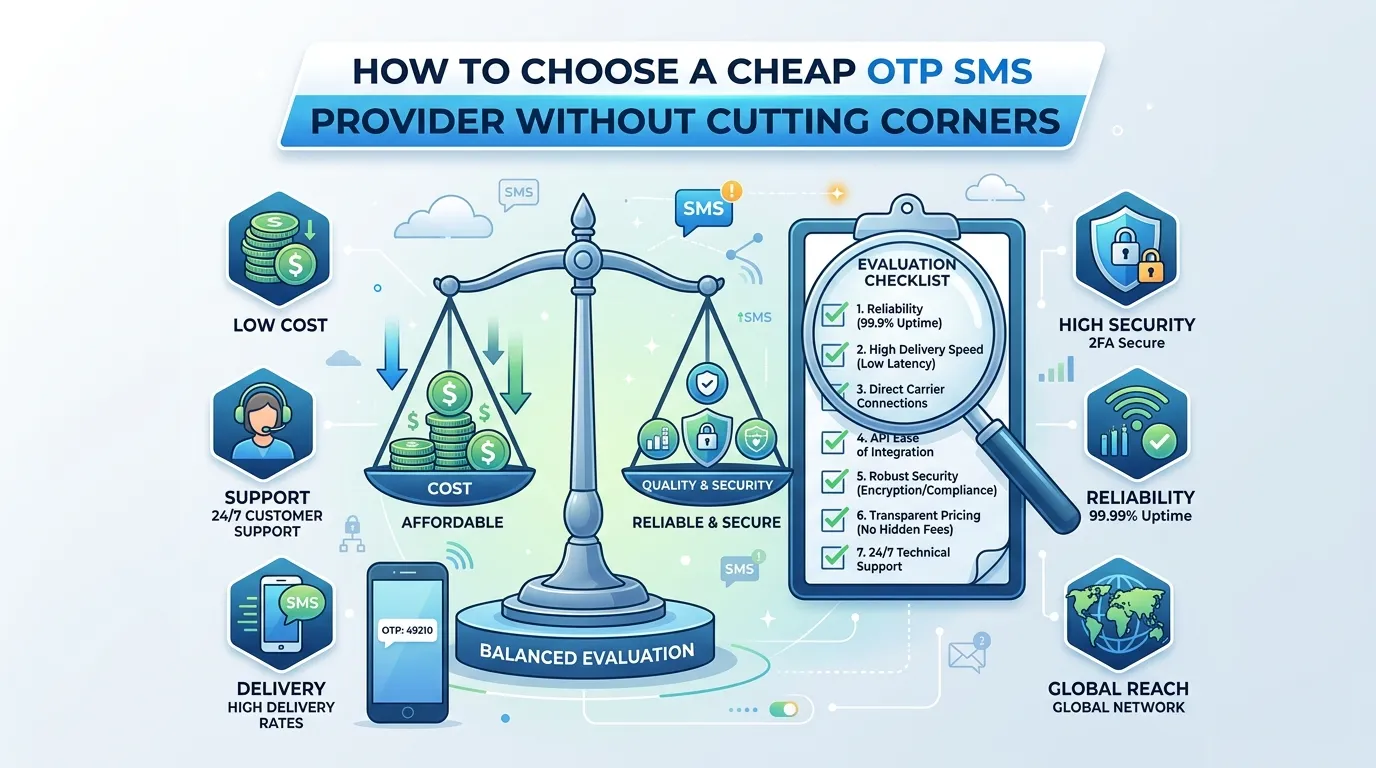
With so many options, a structured comparison saves time and money. Use these criteria as a checklist.
- Price per message in your target countries, not just the cheapest advertised rate.
- Delivery rate and speed backed by real statistics, ideally with a free trial to test.
- API quality, including documentation, SDKs, and a sandbox.
- Coverage in every region where your users live.
- Support quality, especially response times when delivery fails.
- Security features like fraud protection and compliance certifications.
- Transparent billing with no surprise fees.
A good way to test a provider is to run a small pilot. Send a few hundred messages across your key countries, measure the delivery rate and speed, and check how the API feels to work with. Real-world results tell you far more than a pricing page.
Choosing based on your situation
The right SMS authentication service depends on your needs:
- Choose pay-as-you-go pricing if your volume is low or unpredictable and flexibility matters more than the lowest possible rate.
- Choose a volume plan if you send high, steady traffic and want the cheapest per-message cost.
- Choose a provider with strong global routes if international delivery matters more than a rock-bottom domestic price.
- Choose a provider with a verification API if you want to minimize the code your team has to build and maintain.
Common mistakes when picking a cheap provider
The lowest price isn’t always the best deal. A few traps catch businesses out:
- Chasing the cheapest rate and ending up with poor delivery in your key markets.
- Ignoring delivery speed, which leads to expired codes and locked-out users.
- Overlooking fraud protection, which can result in massive surprise bills from SMS pumping attacks.
- Skipping the free trial, so you discover reliability problems only after you’ve committed.
Avoiding these mistakes usually costs nothing—it just takes a little extra research before you commit.
Making the smart choice for your budget and your users
A cheap OTP SMS provider doesn’t have to mean a risky one. The smartest choice balances low per-message costs with the reliability, speed, and security your users expect. Start by mapping out where your users are and how many messages you’ll send, then compare providers on delivery rate, coverage, and total cost—not just the headline price.
Run a small pilot before you commit. A short test across your key countries will reveal far more than any sales pitch, and it protects you from signing up for a service that looks affordable but fails when it counts.
Take the next step by shortlisting two or three providers that fit your criteria, requesting trial credits, and testing them against the checklist above. The few hours you spend now will save you money and headaches down the line.
Frequently asked questions
What is the cheapest way to send OTP SMS?
The cheapest approach is usually a pay-as-you-go provider with low per-message rates in your target countries, combined with volume discounts once your traffic grows. Always factor in delivery rate—a slightly higher rate with better delivery often costs less overall than a cheap provider with frequent failures.
Are cheap OTP SMS providers reliable?
They can be, but reliability varies. Some budget providers cut costs by using indirect carrier routes, which lowers delivery rates and speed. The most reliable cheap providers maintain direct carrier connections and publish their delivery statistics. Always test with a free trial before committing.
What’s the difference between transactional SMS and OTP SMS?
Transactional SMS covers any non-marketing message triggered by a user action, such as order confirmations or alerts. OTP SMS is a specific type of transactional message that delivers one-time passwords for verification. Both run through a transactional SMS gateway built for fast, high-priority delivery.
Do I need an API to send OTP SMS?
Not always, but an OTP SMS API is the standard way to integrate verification into an app or website. The API automates code generation and delivery so your team doesn’t manage it manually. Some providers also offer dashboards for sending messages without code, which suits smaller, manual workflows.
How can I avoid SMS pumping fraud?
Choose a provider with built-in fraud protection, set rate limits on OTP requests per user, and monitor for unusual spikes in traffic to specific countries. SMS pumping inflates your bill by triggering fake OTP requests, so early detection and a provider that actively blocks suspicious traffic are your best defenses.