
An SMS marketing funnel guides subscribers from first opt-in to repeat purchase using timed, automated text messages. The core stages are lead generation, nurturing, conversion, and retention. Done well, it pairs high open rates (around 98%) with personalized, well-timed messages to turn casual subscribers into loyal customers.
Email gets opened maybe one in five times. A text message? Almost every single one gets read—usually within minutes. That gap is exactly why smart marketers are pouring energy into SMS, and specifically into building a structured SMS marketing funnel rather than blasting random promo codes whenever sales dip.
A funnel gives your text message marketing strategy a backbone. Instead of treating every subscriber the same, you meet people where they are: a brand-new lead needs different messaging than a loyal customer who’s bought five times. This post walks through each stage of the SMS customer journey, shows you how to automate it, and shares practical tips for optimizing conversions along the way.
By the end, you’ll know how to capture leads, nurture them with the right messages, drive sales, and keep customers coming back—all through a channel people actually pay attention to.
What Is an SMS Marketing Funnel?

An SMS marketing funnel is a structured sequence of text messages that moves a subscriber from initial interest to purchase and beyond. Think of it as a mobile marketing funnel built around the way people actually use their phones—quick, personal, and immediate.
The funnel mirrors the classic customer journey but adapts it for the unique strengths of texting. Where email campaigns can stretch across weeks, SMS sequences often play out in days or even hours. Every message is short, direct, and designed to prompt a single clear action.
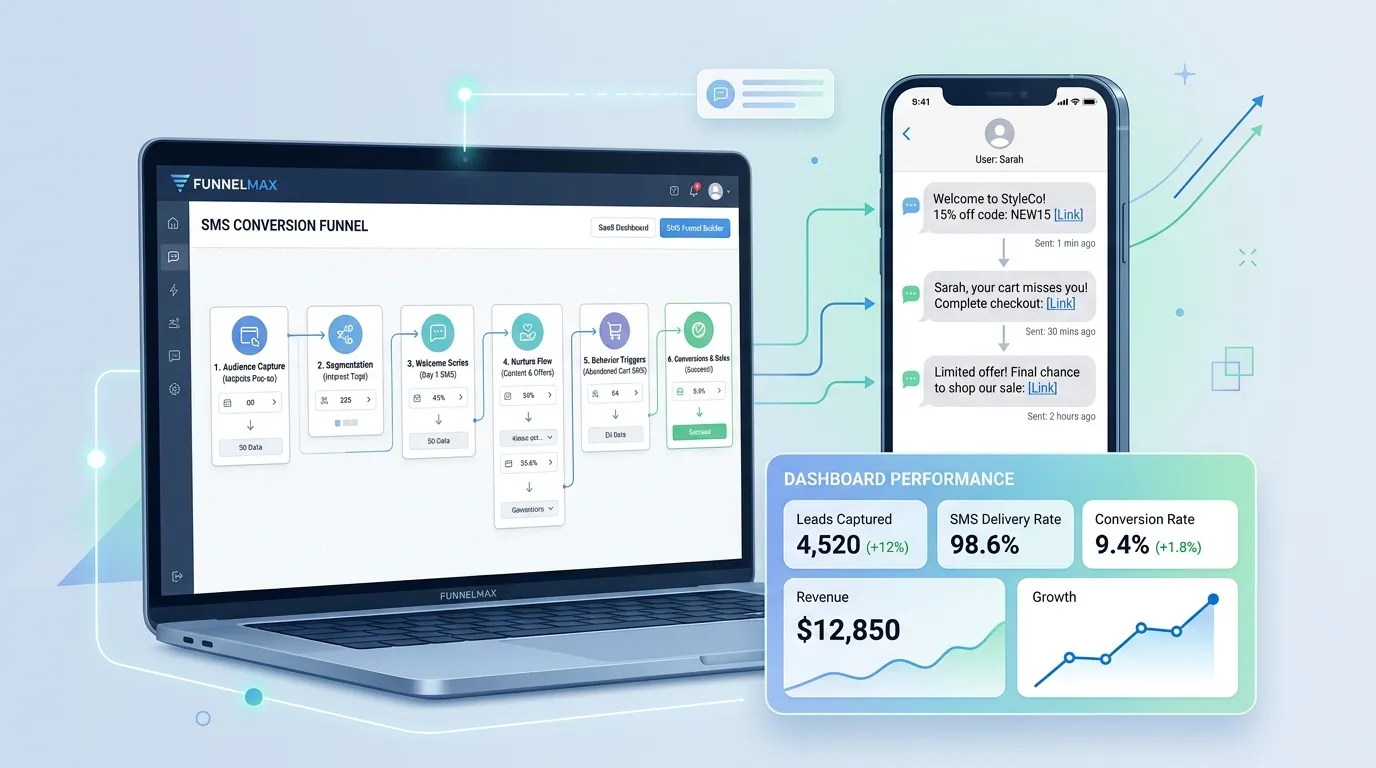
A typical SMS conversion funnel has four stages:
- Lead generation: Growing your subscriber list with opted-in contacts.
- Nurturing: Building trust and interest through valuable, relevant texts.
- Conversion: Prompting the sale with offers, reminders, and urgency.
- Retention: Keeping customers engaged so they buy again.
Each stage calls for a different tone and goal. Get the sequence right, and you create a smooth path from “who is this?” to “take my money.”
Why SMS Belongs in Your Marketing Strategy
The numbers make a strong case. SMS open rates hover around 98%, and most texts are read within three minutes of arriving. Compare that to email, where open rates often sit between 20% and 30%, and you can see why SMS commands attention.
Speed is the other advantage. When you need a fast response—a flash sale, a cart reminder, a restock alert—text delivers it. People keep their phones within arm’s reach almost all day, so your message lands at the moment it matters.
That said, SMS works best alongside other channels, not in isolation. Email is great for longer storytelling and detailed content. SMS shines for time-sensitive, high-priority nudges. A strong mobile marketing funnel uses both, letting each channel do what it does best.
Stage 1: SMS Lead Generation Strategy
You can’t nurture subscribers you don’t have. The first job of any funnel is capturing opted-in contacts—and consent matters here, both legally and for trust. Always get clear permission before sending marketing texts.
Here are proven ways to grow your list:
- Keyword opt-ins: Invite people to text a word like “JOIN” to a short code. It’s quick, low-friction, and works well on signage, packaging, and social posts.
- Website pop-ups: Add a mobile number field to your sign-up forms, paired with an incentive.
- Checkout opt-ins: Offer customers the chance to subscribe during purchase for order updates and exclusive deals.
- Lead magnets: Trade a discount, free guide, or early access for a phone number.
The strongest SMS lead generation strategy gives people a clear reason to hand over their number. “Get 15% off your first order” beats “Sign up for updates” every time. Make the value obvious and immediate.
Stage 2: SMS Lead Nurturing Funnel
Once someone opts in, resist the urge to sell right away. The nurturing stage is about building a relationship. A well-designed SMS lead nurturing funnel earns trust before it asks for anything.
Start with a warm welcome. Your first text should thank the subscriber, deliver any promised incentive, and set expectations for what they’ll receive. This sets the tone for the whole relationship.
From there, focus on value. Share helpful tips, product education, behind-the-scenes content, or early access to new arrivals. The goal is to make subscribers glad they joined—not annoyed every time their phone buzzes.
Personalization makes a big difference at this stage. Use the subscriber’s name, reference past behavior, and segment your list so messages stay relevant. Someone who browsed running shoes shouldn’t get the same texts as someone who bought kitchenware.
A sample nurturing sequence might look like this:
- Day 0: Welcome text with the promised discount.
- Day 2: A helpful tip or product highlight related to their interest.
- Day 5: Social proof—a customer review or popular product callout.
- Day 8: A gentle nudge toward a first purchase.
Spacing matters. Too many texts feel pushy; too few and people forget you. Test your timing and watch how subscribers respond.
Stage 3: SMS Conversion Funnel
Now comes the sale. By this point, your subscribers know your brand and trust you a little. The conversion stage of your SMS sales funnel turns that goodwill into revenue.
The most effective conversion tactics include:
- Limited-time offers: Urgency drives action. “20% off—today only” prompts faster decisions than an open-ended deal.
- Cart abandonment reminders: A quick text nudging someone back to their cart can recover sales that would otherwise vanish.
- Exclusive subscriber deals: Make texters feel special with offers they can’t get elsewhere.
- Restock and back-in-stock alerts: Tell interested subscribers the moment a wanted item returns.
Keep your call to action crystal clear. Every conversion text should point to one action—tap to shop, claim the code, complete the order. Confusion kills conversions, so don’t crowd the message with multiple asks.
A direct link to checkout removes friction. The fewer taps between reading the text and finishing the purchase, the higher your conversion rate climbs.
Stage 4: SMS Customer Engagement Funnel
The funnel doesn’t end at the sale. Retaining a customer costs far less than acquiring a new one, which makes the post-purchase stage some of the most valuable real estate in your SMS customer journey.
A strong SMS customer engagement funnel keeps the relationship alive after checkout. Send order confirmations and shipping updates to reassure buyers. Follow up after delivery to ask how things went or request a review. These touches show you care beyond the transaction.
From there, deepen loyalty:
- Replenishment reminders: For consumable products, a well-timed “running low?” text drives repeat orders.
- Loyalty rewards: Give subscribers points, early access, or VIP perks for sticking around.
- Win-back campaigns: Re-engage lapsed customers with a special offer or a simple “we miss you.”
Engaged customers buy more often and spread the word. Treat retention as a continuous loop, not a one-time afterthought.
How to Automate Your SMS Marketing Workflow

Automated SMS campaigns are what make this whole funnel scalable. You can’t manually text thousands of subscribers at the right moment—but software can.
An SMS marketing automation workflow uses triggers to send the right message at the right time. A trigger is simply an action or event that kicks off a message. Common examples include:
- A new subscriber joining your list (triggers the welcome sequence).
- A cart left unattended (triggers an abandonment reminder).
- A purchase completed (triggers order confirmation and follow-ups).
- A period of inactivity (triggers a win-back campaign).
To set up your automation, start by mapping each funnel stage to a specific trigger and message. Then build your sequences inside an SMS platform, set the timing, and let the system handle delivery.
The beauty of automation is consistency. Every subscriber gets a thoughtful, well-timed experience without you lifting a finger after setup. That frees you to focus on strategy and creative rather than manual sending.
SMS Sales Funnel Optimization Tips
Building the funnel is step one. Improving it is ongoing work. Here’s how to sharpen your SMS sales funnel optimization over time:
- Test your timing. Experiment with send times and days to find when your audience responds best.
- A/B test your copy. Try different offers, CTAs, and message lengths to see what drives more taps.
- Watch your metrics. Track opt-in rates, click-through rates, conversion rates, and opt-out rates to spot weak points.
- Segment more deeply. The more relevant your messages, the better they perform. Refine your segments as you learn.
- Mind your frequency. A rising opt-out rate is a clear signal you’re texting too much. Pull back and re-test.
Small, steady improvements compound. A funnel that converts a little better each month adds up to meaningful growth over a year.
Common SMS Marketing Mistakes to Avoid
Even a well-built funnel can stumble. Watch out for these pitfalls:
- Texting without consent. Always get clear opt-in. It’s the law in many places and the foundation of trust.
- Over-messaging. Bombarding subscribers is the fastest way to earn an opt-out.
- Ignoring timing. A 2 a.m. text annoys people. Respect time zones and reasonable hours.
- Forgetting an opt-out option. Make leaving easy. A simple “Reply STOP to unsubscribe” keeps you compliant and respectful.
- Sending generic blasts. One-size-fits-all messages waste the personal nature of SMS. Segment and personalize.
Avoiding these mistakes keeps your list healthy and your funnel humming.
Start Building Your SMS Funnel Today
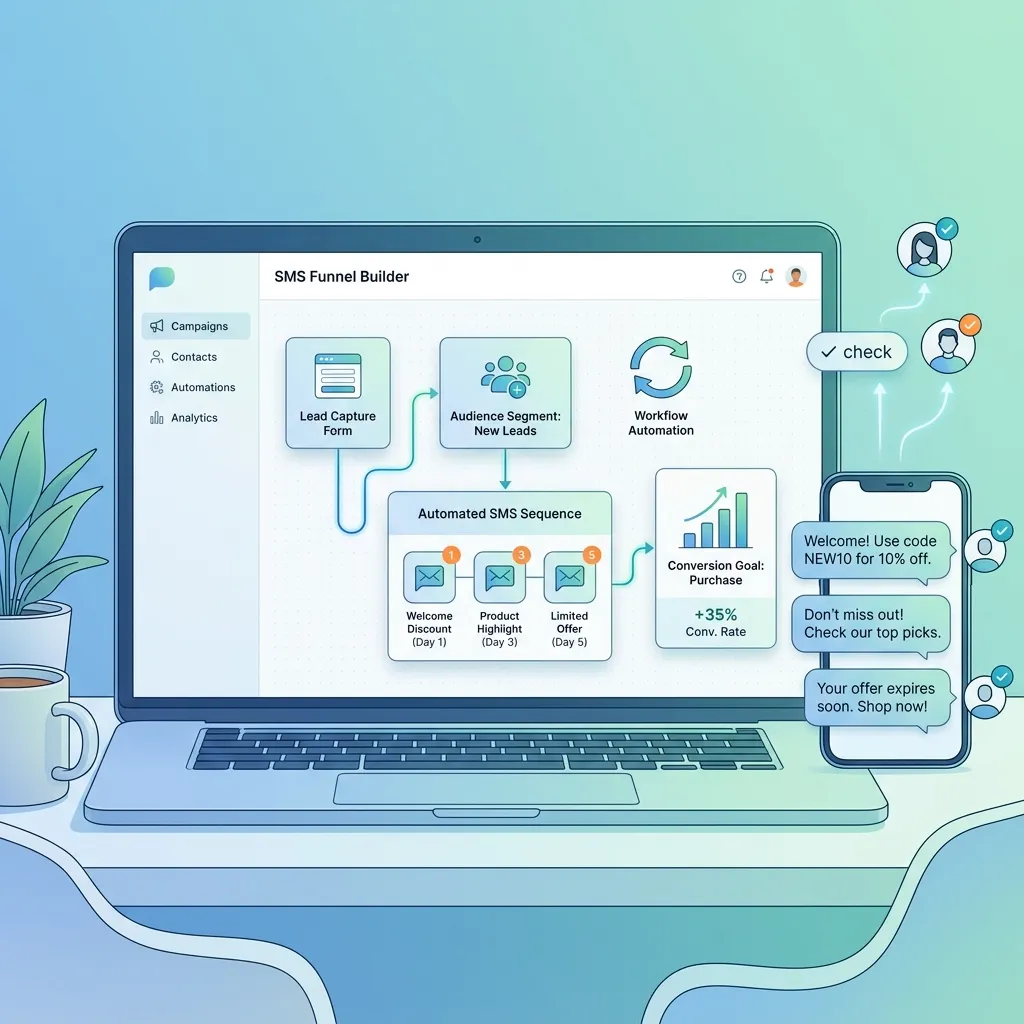
A well-structured SMS marketing funnel turns a high-attention channel into a reliable engine for growth. By moving subscribers through lead generation, nurturing, conversion, and retention—and automating the whole thing—you create a customer journey that feels personal at scale.
Start small. Pick one stage, build a single automated sequence, and measure the results. Maybe that’s a welcome series for new subscribers or a cart abandonment reminder. Once it’s working, expand to the next stage and keep refining.
The brands winning with SMS aren’t the ones sending the most texts. They’re the ones sending the right text at the right moment. Map your funnel, automate your workflow, and watch a channel people actually read go to work for your business.
Frequently Asked Questions
What is an SMS marketing funnel?
An SMS marketing funnel is a structured sequence of automated text messages that guides subscribers from their first opt-in through to purchase and repeat business. It typically has four stages: lead generation, nurturing, conversion, and retention.
How is an SMS funnel different from an email funnel?
SMS funnels move faster and feel more personal. Texts have open rates around 98% and are usually read within minutes, while email open rates sit between 20% and 30%. SMS suits short, urgent, time-sensitive messages; email is better for longer, detailed content. Most strong strategies use both together.
How often should I send marketing texts?
There’s no single right number, but frequency should match your audience’s tolerance. Watch your opt-out rate closely—if it climbs, you’re texting too much. Many brands land somewhere between four and eight messages a month, but testing your own list is the only way to know for sure.
Do I need consent to send marketing SMS?
Yes. In many countries, sending marketing texts without clear opt-in consent is illegal. Beyond the legal requirement, getting permission builds trust and keeps your list full of people who actually want to hear from you. Always include an easy opt-out, such as “Reply STOP to unsubscribe.”
What tools do I need to automate an SMS funnel?
You’ll need an SMS marketing platform that supports automation triggers, list segmentation, and analytics. These tools let you map each funnel stage to a trigger—like a new sign-up or an abandoned cart—and send the right message automatically, so your funnel runs without manual effort.
What is an SMS marketing funnel and how does it work?
An SMS marketing funnel is a step-by-step system that uses automated text messages to guide subscribers from initial opt-in to purchase and long-term engagement.
Why is an SMS marketing funnel important for businesses?
An SMS marketing funnel helps businesses turn subscribers into customers by delivering timely, personalized messages that improve engagement and conversions.
How do I build an SMS marketing funnel from scratch?
To build an SMS marketing funnel, start with lead generation, set up a welcome sequence, create nurturing messages, and add conversion and retention campaigns.
What are the stages of an SMS marketing funnel?
The main stages of an SMS marketing funnel include lead generation, nurturing, conversion, and customer retention.
How does an SMS marketing funnel improve conversions?
An SMS marketing funnel improves conversions by sending highly targeted messages with strong open rates and clear calls-to-action that drive quick responses.
What tools are used in an SMS marketing funnel?
An SMS marketing funnel typically uses automation platforms that support messaging workflows, segmentation, scheduling, and performance tracking.
How often should messages be sent in an SMS marketing funnel?
In an SMS marketing funnel, message frequency should be balanced—enough to stay engaged but not so much that it increases opt-outs.
Can small businesses use an SMS marketing funnel effectively?
Yes, even small businesses can use an SMS marketing funnel to generate leads, nurture customers, and increase repeat purchases at low cost.
What makes an SMS marketing funnel successful?
A successful SMS marketing funnel relies on personalization, proper timing, segmentation, and valuable content that matches user intent.
How do you measure success in an SMS marketing funnel?
You measure an SMS marketing funnel using metrics like opt-in rate, click-through rate, conversion rate, and customer retention rate.