
Choosing the right SMS marketing service for eCommerce means finding a platform that fits your store, integrates with your eCommerce platform, supports automation, ensures compliance, and delivers measurable ROI. By comparing features, pricing, deliverability, and scalability, you can invest in an SMS solution that drives long-term customer engagement and sales.
Choosing the right SMS marketing service for eCommerce depends on your store’s size, platform integrations, automation needs, and budget. Key factors include Shopify compatibility, transactional and promotional messaging capabilities, automation workflows, compliance tools, and measurable ROI. This guide breaks down everything you need to evaluate before committing to a platform.
SMS marketing delivers a 98% open rate—compared to roughly 20% for email—making it one of the highest-performing channels available to eCommerce brands. But with dozens of platforms on the market, picking the right one isn’t straightforward. The wrong choice can mean poor deliverability, clunky integrations, and wasted ad spend.
This guide walks you through every factor that matters when selecting an SMS marketing service for your online store: from must-have features and platform integrations to automation capabilities, pricing structures, and how to calculate ROI. Whether you’re running a Shopify store with 500 customers or a multi-channel operation with hundreds of thousands of subscribers, the framework here applies.
By the end, you’ll know exactly what to look for—and what to avoid—when comparing eCommerce SMS marketing platforms.
What Is an eCommerce SMS Marketing Platform?
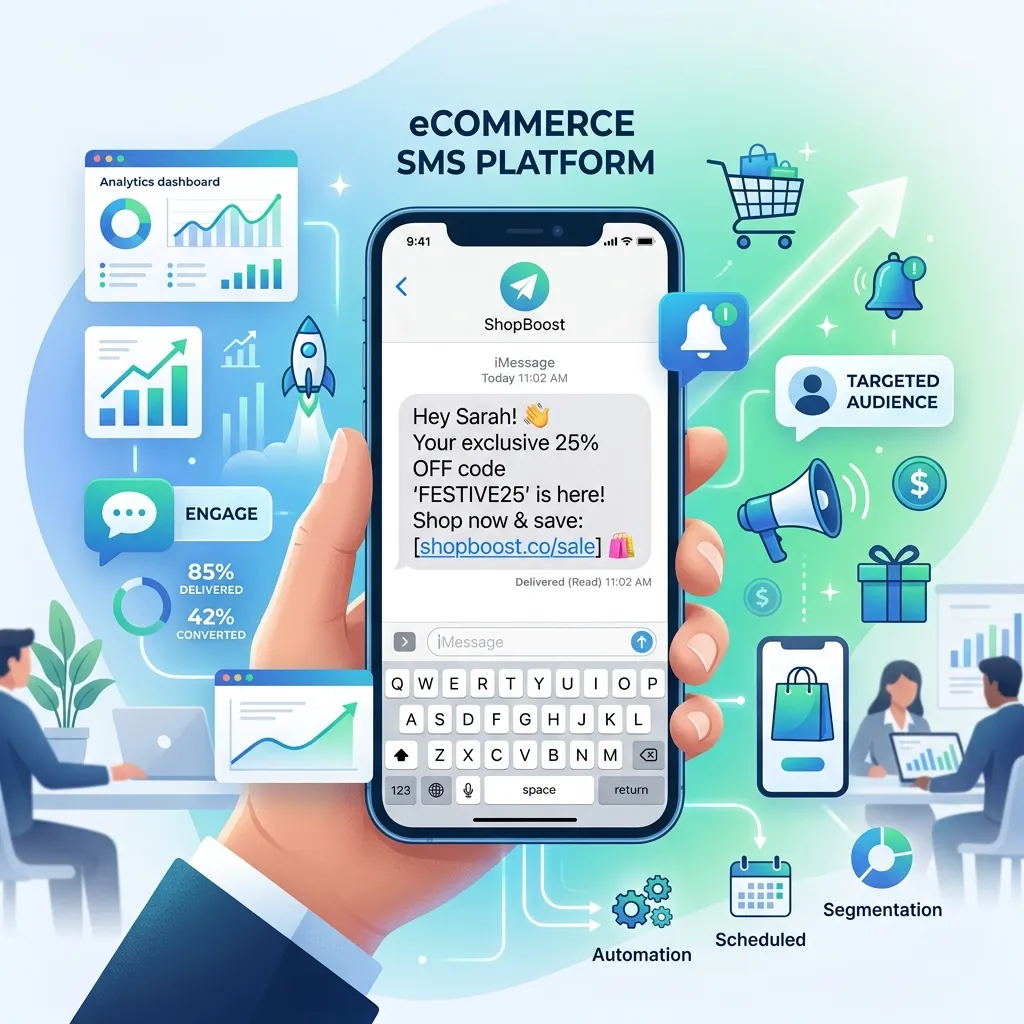
An eCommerce SMS marketing platform is software that lets online retailers send text messages to customers at scale. These messages fall into two broad categories:
- Promotional SMS: Campaigns, flash sales, product launches, and discount codes sent to opted-in subscribers.
- Transactional SMS: Automated messages triggered by customer actions—order confirmations, shipping updates, delivery alerts, and abandoned cart reminders.
The best SMS marketing software for online stores handles both categories from a single dashboard, with built-in compliance tools, audience segmentation, and performance analytics.
What Are the Core SMS Marketing Features Every eCommerce Business Needs?
Before comparing platforms, it helps to know which features are non-negotiable versus nice-to-have.
Opt-in and compliance management
Every legitimate SMS marketing service builds opt-in tools directly into the platform. In the US, the Telephone Consumer Protection Act (TCPA) requires explicit written consent before sending marketing texts. In the EU, GDPR applies. A good platform automates compliance: it captures consent at checkout or via a sign-up form, maintains an opt-in record, and handles unsubscribes instantly.
If a platform doesn’t have built-in compliance tools, walk away.
Segmentation and personalization
Sending the same message to your entire list is a fast way to inflate unsubscribes. Look for platforms that let you segment by purchase history, browsing behavior, geographic location, customer lifetime value, and engagement recency. Personalization tokens—like inserting a customer’s first name or the product they viewed—consistently outperform generic blasts.
Two-way messaging
Customers increasingly expect to reply to texts and get a real response. Two-way SMS allows your team to handle support queries, answer pre-purchase questions, and build relationships that improve retention. Not all bulk SMS services for eCommerce offer this, so confirm it’s included before signing up.
Analytics and reporting
You can’t optimize what you don’t measure. Every platform should offer click-through rates, conversion tracking, revenue attribution, and unsubscribe rates per campaign. More advanced platforms tie SMS revenue directly to individual contacts, giving you a clear picture of customer-level ROI.
How Does Shopify SMS Marketing Integration Work—and Why Does It Matter?
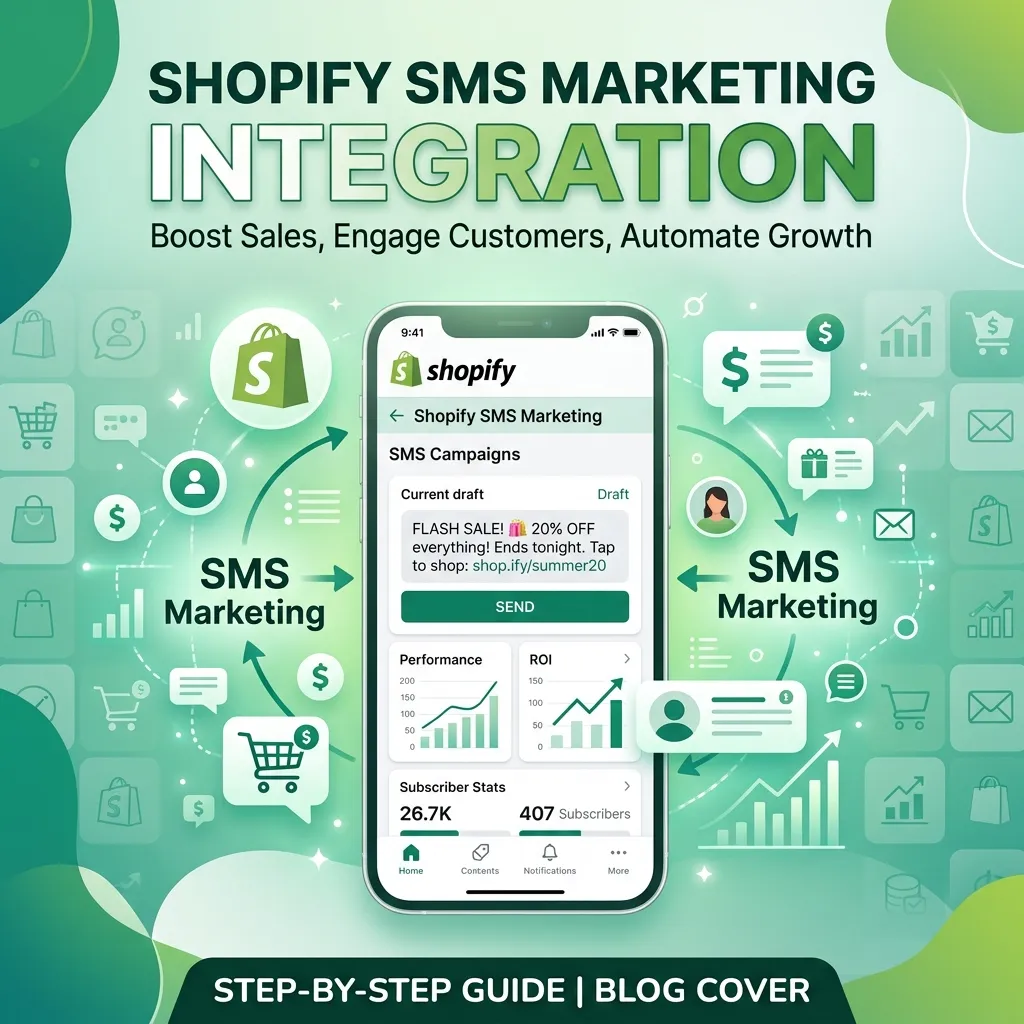
For Shopify merchants, native integration is one of the most important selection criteria. A deep Shopify SMS marketing integration means the platform can:
- Sync your customer and order data in real time
- Trigger automations based on Shopify events (purchases, cart abandonment, product views)
- Pull product images and links directly into messages
- Apply discount codes generated inside Shopify
Platforms with official Shopify app listings—like Klaviyo, Postscript, and Attentive—typically offer the most seamless integrations. Postscript, for instance, was built specifically for Shopify and includes features like subscriber attribution directly tied to Shopify customer profiles.
If you’re on WooCommerce, BigCommerce, or Magento, verify that the platform you’re evaluating has a dedicated integration for your stack. A generic API connection can work, but it often requires developer time to configure and maintain.
What SMS Automation Features Should eCommerce Stores Prioritize?
SMS automation for eCommerce is where you’ll generate the majority of your SMS revenue with the least ongoing effort. Here’s a breakdown of the automation flows worth prioritizing:
Abandoned cart recovery
Abandoned cart SMS sequences are the highest-ROI automation available to most eCommerce stores. A well-timed text—sent 15 to 30 minutes after abandonment—can recover sales that would otherwise be lost permanently. Look for platforms that let you customize timing, message copy, and whether to include a discount code.
Post-purchase flows
The period immediately after a purchase is the best time to build loyalty. Automated post-purchase SMS sequences can include:
- Order confirmation and shipping updates (transactional SMS)
- Cross-sell recommendations based on what was purchased
- Review requests sent after delivery
- Loyalty program invitations
Welcome series
New subscribers convert best when engaged immediately. A two- or three-message welcome series—introducing your brand, delivering a promised discount, and following up if unused—sets the tone and captures high-intent buyers while your brand is still top of mind.
Win-back campaigns
For customers who haven’t purchased in 60, 90, or 180 days, automated win-back SMS sequences can re-engage lapsed buyers without manual effort.
What Is the Difference Between Transactional and Promotional SMS Services for eCommerce?
This distinction matters more than most store owners realize—both from a compliance and deliverability standpoint.
Transactional SMS is triggered by a customer action. Because the customer initiated the transaction, these messages often have different consent requirements and typically see higher engagement. Most eCommerce platforms handle transactional SMS through their order management system, but a dedicated transactional SMS service for eCommerce gives you more control over timing, formatting, and fallback logic.
Promotional SMS requires explicit marketing opt-in. These messages are sent to your subscriber list and must include clear opt-out instructions (e.g., “Reply STOP to unsubscribe”).
Some platforms bundle both into one tool. Others specialize in one or the other. If you need both—and most eCommerce businesses do—look for a unified platform that manages consent separately for each message type.
How Do You Evaluate Bulk SMS Services for eCommerce at Scale?
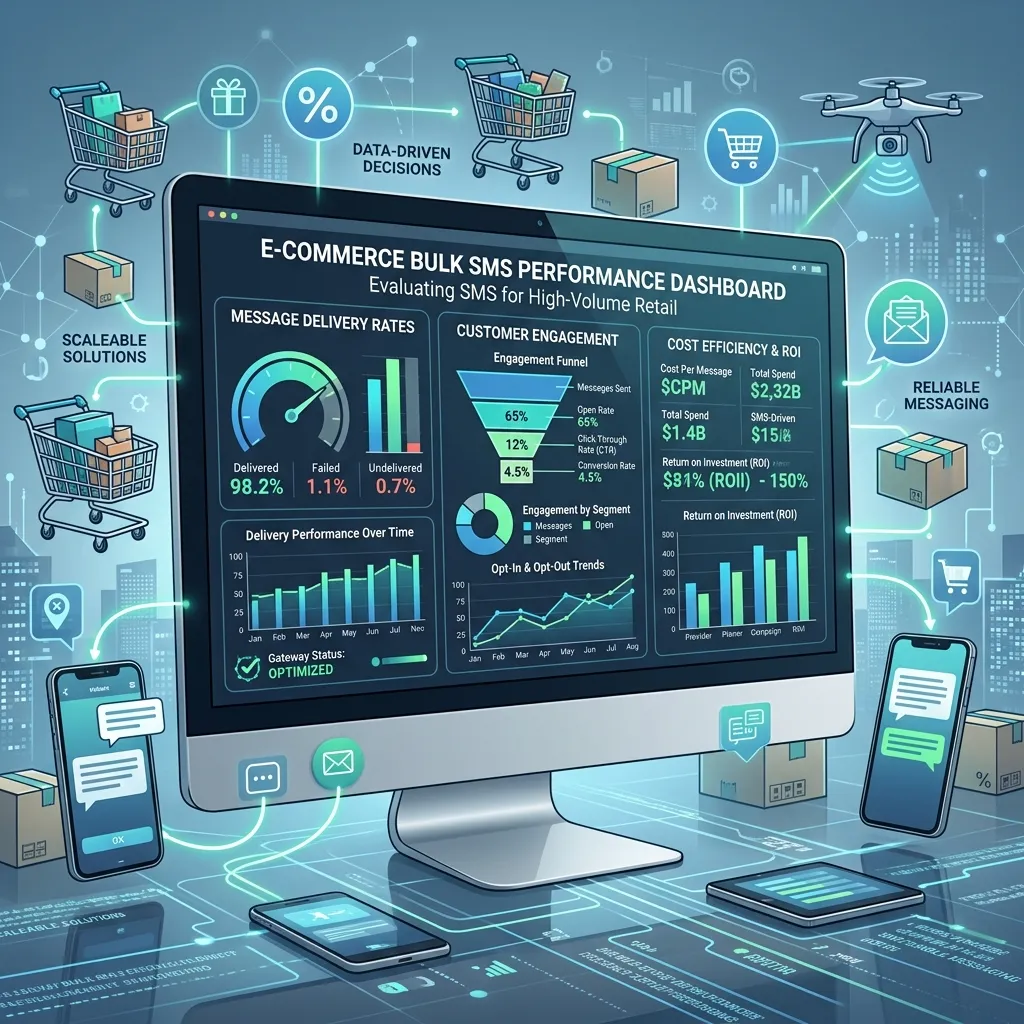
For high-volume retailers, infrastructure and deliverability become critical. Here’s what to assess:
Carrier relationships and deliverability
Not all bulk SMS services route messages through the same carrier networks. Tier-1 carrier relationships result in faster delivery, higher deliverability rates, and fewer messages being flagged as spam. Ask prospective vendors about their carrier relationships and average delivery speeds.
Dedicated shortcodes vs. shared shortcodes
A dedicated shortcode (e.g., 12345) is associated exclusively with your brand. This protects your sender reputation, reduces the risk of being filtered, and allows for brand recognition over time. Shared shortcodes are cheaper but mean your messages share infrastructure with other senders—if one sender behaves badly, it can affect your deliverability.
For brands sending more than 10,000 messages per month, dedicated shortcodes are generally worth the additional cost.
Throughput and scaling
If you’re running a Black Friday flash sale, you need to send tens of thousands of messages in a short window. Check each platform’s message throughput limits and whether they offer burst capacity for peak sending periods.
How Do You Calculate SMS Marketing ROI for Online Retailers?
Understanding SMS marketing ROI for online retailers helps you justify the investment—and benchmark performance over time.
A straightforward formula:
SMS ROI = (Revenue attributed to SMS – Total SMS costs) / Total SMS costs × 100
For example, if your SMS campaigns and automations generated $15,000 in revenue last month, and your total platform and messaging costs were $1,200, your ROI is approximately 1,150%.
When evaluating platforms, look for those that offer revenue attribution reporting—specifically, the ability to track which text messages led to purchases, and at what conversion rate. Platforms like Attentive and Klaviyo offer this natively.
Industry benchmarks worth knowing:
- Average SMS click-through rate for eCommerce: 10–20% (compared to 2–3% for email)
- Average abandoned cart SMS recovery rate: 5–10%
- Average revenue per SMS sent: $0.09–$0.30, depending on vertical and list quality
What Should You Look for When Choosing an SMS Marketing Provider?
Narrowing down your shortlist comes down to a few final criteria:
Pricing model: Most SMS marketing platforms charge per message sent, per contact, or a combination. Per-contact models are more predictable; per-message models scale better for lower-frequency senders. Calculate your estimated monthly cost under each structure before committing.
Customer support: When a campaign fails or a compliance issue arises, you need responsive support. Look for platforms offering live chat and dedicated account management for higher-tier plans.
Growth trajectory: Choose a platform that can scale with you. Switching SMS providers after you’ve built large subscriber lists, complex automations, and compliance records is expensive and disruptive.
Reputation and reviews: Check G2, Capterra, and Shopify app store reviews. Pay particular attention to complaints about deliverability, billing transparency, and customer service responsiveness.
The Bottom Line: Finding the Right SMS Marketing Service for Your Store
There’s no single best SMS marketing service for eCommerce—the right choice depends on your platform, list size, automation needs, and growth goals. But the framework is consistent: start with integration compatibility, verify compliance tools, assess automation depth, and stress-test deliverability before committing.
For Shopify merchants, Postscript and Klaviyo consistently rank among the strongest options. For multi-platform retailers, Attentive and Yotpo SMS offer broader native integrations. For brands prioritizing budget, platforms like SMSBump (now part of Yotpo) offer a competitive entry point.
Start by requesting a demo from two or three shortlisted platforms. Ask each one specifically how they handle TCPA compliance, what their average deliverability rate is, and how revenue attribution works in their analytics dashboard. The answers will tell you everything you need to know.
Frequently Asked Questions
What is the best SMS marketing service for eCommerce?
There’s no single best option—it depends on your platform and needs. Postscript is widely regarded as the best Shopify SMS marketing tool. Klaviyo is strong for brands already using it for email. Attentive suits larger retailers with more complex multi-channel needs.
How do I choose between a bulk SMS service and a full SMS marketing platform?
A bulk SMS service is best for simple one-way broadcasts. A full SMS marketing platform includes automation, segmentation, compliance tools, and revenue attribution—all of which are essential for eCommerce growth. Most online retailers benefit from the latter.
Is SMS marketing legal for eCommerce businesses?
Yes, but only with explicit consent. In the US, the TCPA requires written opt-in before sending marketing SMS. In the EU and UK, GDPR applies. Any reputable SMS marketing software for online stores will include built-in compliance and opt-out management.
What SMS open rate should eCommerce stores expect?
SMS open rates typically average 98%, compared to approximately 20% for email marketing. Click-through rates for eCommerce SMS campaigns generally range from 10–20%.
How much does SMS marketing cost for online stores?
Costs vary by platform and usage. Most platforms charge between $0.01–$0.05 per message sent, with monthly platform fees ranging from $20 to several hundred dollars depending on list size and features. Calculate your cost per message against expected revenue per message to determine ROI before committing.
How does SMS automation for eCommerce differ from email automation?
SMS automation delivers messages via text rather than email, with significantly higher open and response rates. Automations like abandoned cart recovery, post-purchase follow-ups, and win-back campaigns work similarly to email flows—but with much shorter copy and faster customer response times.