
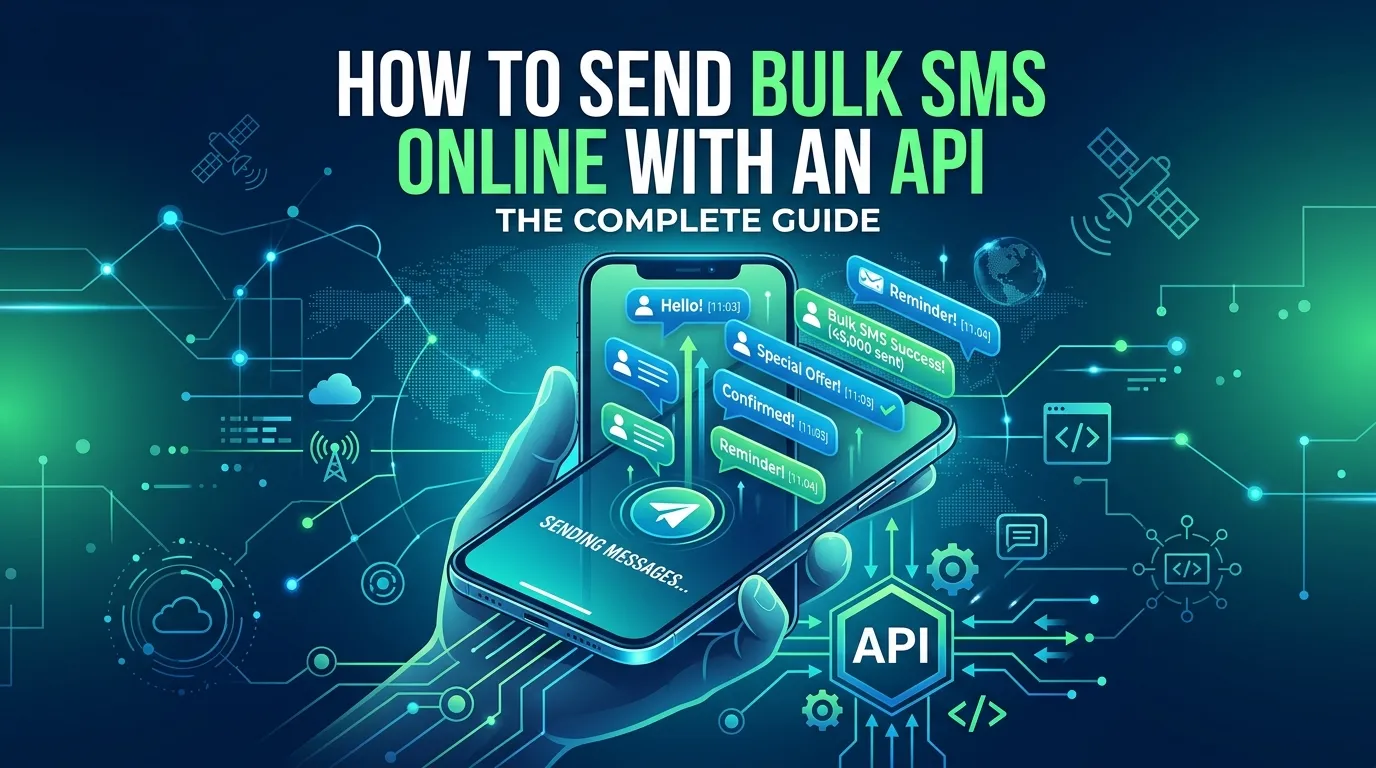
To send bulk SMS online with an API, you connect your application to a bulk SMS API provider using an API key, format your messages and recipient list, then send requests to the provider’s SMS gateway. This lets businesses deliver thousands of texts—marketing campaigns, alerts, or one-time passwords—automatically and at scale.
Text messages get read. In fact, SMS open rates hover around 98%, far higher than email. That single statistic explains why so many businesses are turning to a bulk SMS API to reach customers directly on their phones.
But choosing the right setup can feel overwhelming. Should you use a simple SMS gateway API or a full online SMS marketing platform? What’s the difference between transactional and promotional messages? And how do you automate the whole thing without writing endless code?
This guide breaks it all down. You’ll learn how bulk SMS APIs work, the key features to look for in a provider, and how to match the right tool to your business needs. By the end, you’ll know exactly how to start sending texts at scale—whether you’re firing off shipping notifications or running a nationwide marketing campaign.
What is a bulk SMS API and how does it work?
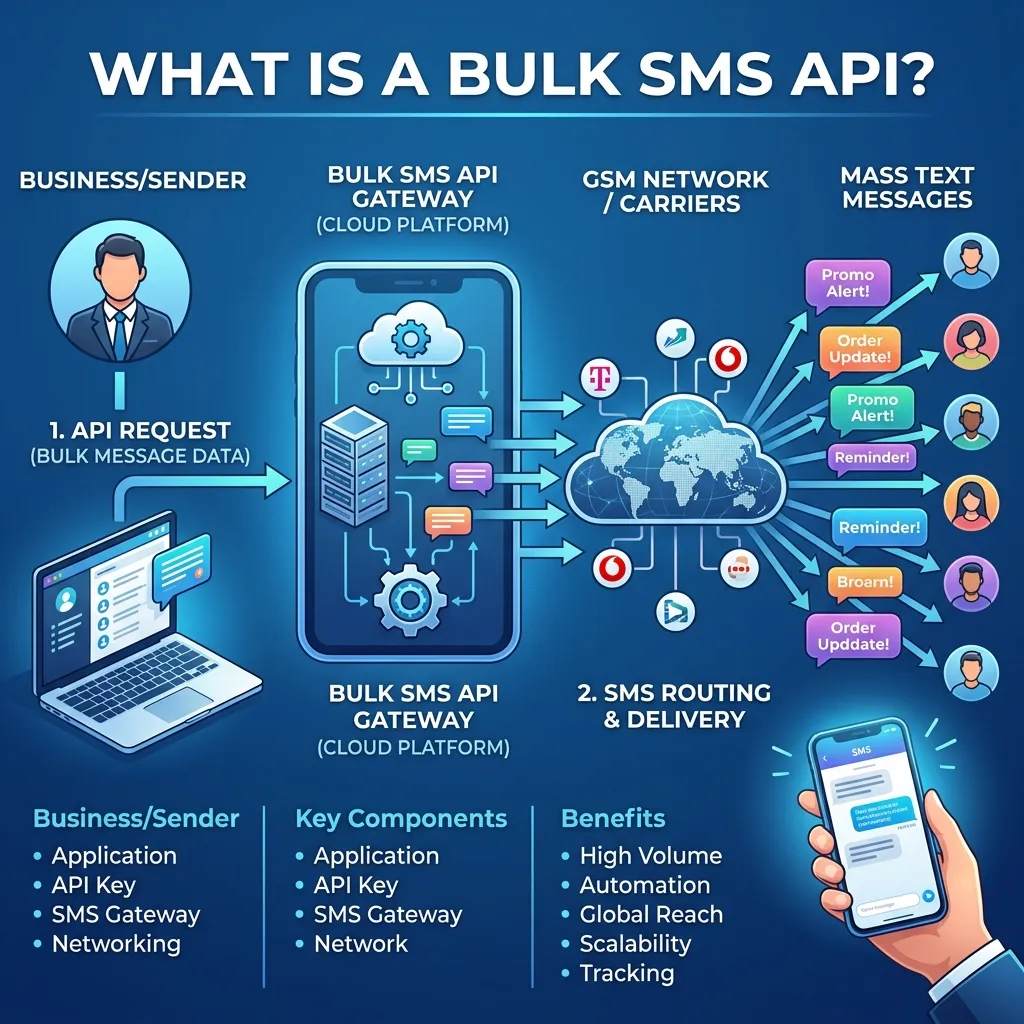
A bulk SMS API is a piece of software that lets your application send large volumes of text messages programmatically. Instead of typing messages one by one, you send a single request to your provider, and the provider delivers your messages to thousands of recipients in seconds.
Here’s the basic flow:
- You get API credentials from a bulk SMS API provider, usually an API key and secret.
- Your app sends a request containing your message, sender ID, and a list of recipient numbers.
- The SMS gateway routes the message through mobile carrier networks.
- The carrier delivers the text to each recipient’s phone.
- The provider sends back a status report so you can track delivery.
The beauty of this system is automation. Once you’ve built the connection, your software can trigger texts based on any event—a new order, an appointment reminder, or a password reset request.
What’s the difference between an SMS gateway API and an SMS platform?
People often mix up these terms, so let’s clear it up.
An SMS gateway API is the technical bridge that connects your software to carrier networks. It’s built for developers who want to integrate texting directly into their own applications. You write code, call the API, and messages go out.
An online SMS marketing platform sits on top of that gateway. It adds a user-friendly dashboard, contact management, campaign scheduling, and analytics. You don’t need to code to use one—you just upload your contacts, write your message, and click send.
Choose an SMS gateway API if you have developers and want full control over how texting fits into your product. Choose an online SMS marketing platform if your marketing team needs to run campaigns without technical help. Many providers offer both, so you’re not locked into one approach.
What can you use a mass text messaging service for?
A mass text messaging service handles two broad categories of messages, and most businesses use both.
Transactional SMS API: messages triggered by user actions
A transactional SMS API sends messages tied to a specific event or transaction. These are functional, expected, and time-sensitive. Common examples include:
- One-time passwords (OTPs) for two-factor authentication
- Order confirmations and shipping updates
- Appointment reminders
- Account alerts and security notifications
- Delivery tracking links
Because customers expect these messages, transactional texts tend to have very high engagement. They also often bypass certain marketing regulations, since they’re not promotional.
Promotional SMS: messages that drive sales
Promotional messages are marketing campaigns sent to a list of subscribers. Think flash sale announcements, discount codes, product launches, and event invitations. These require explicit consent from recipients and must follow regulations like the TCPA in the United States.
The line matters because mixing them up can land you in legal trouble. Keep your transactional and promotional flows separate, and always honor opt-out requests.
What features should you look for in a bulk SMS service provider?
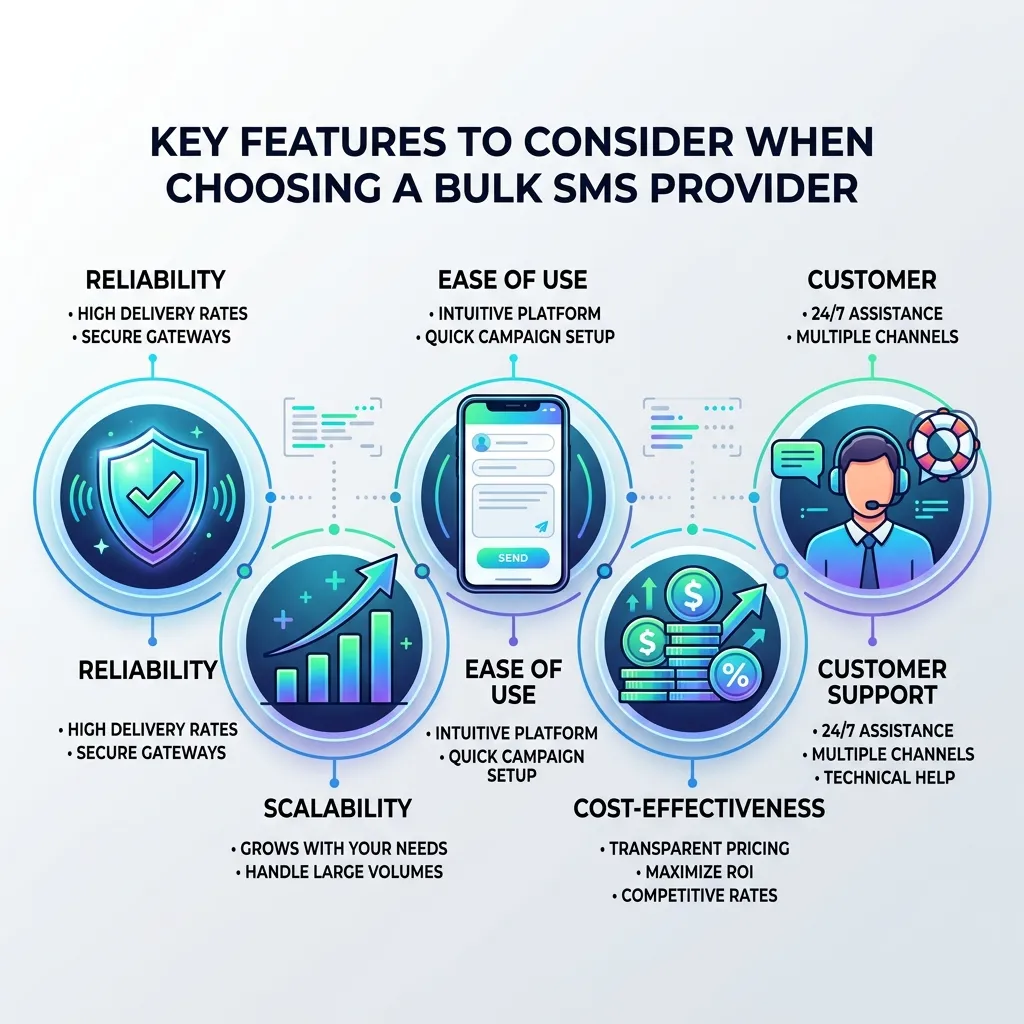
Not all providers are created equal. When you’re comparing options, focus on these core capabilities.
Programmable SMS API with solid documentation
A good programmable SMS API gives developers clean, well-documented endpoints. Look for code samples in popular languages like Python, PHP, Node.js, and Ruby. Clear documentation cuts your integration time from weeks to days.
Reliable delivery and global reach
Check the provider’s carrier relationships and coverage. If you serve international customers, you need a provider with direct connections to carriers in those regions. High delivery rates depend on quality routes, not the cheapest ones.
SMS automation API for hands-free workflows
An SMS automation API lets you set up triggers and sequences. For example, you might automatically send a welcome text when someone signs up, then follow up three days later. Automation removes manual work and keeps your messaging consistent.
Two-way messaging and an SMS notification API
The best business text messaging API supports two-way conversations, not just outbound blasts. Customers can reply, and your system can respond. An SMS notification API also lets you push real-time alerts based on system events—perfect for fraud warnings or service outages.
Scalability and competitive pricing
Your provider should handle a spike from 100 to 100,000 messages without breaking. Review the pricing model carefully. Some charge per message, others offer volume discounts or monthly plans. Watch for hidden fees on things like phone numbers or carrier surcharges.
Compliance and security features
A trustworthy bulk SMS service provider helps you stay compliant. Look for built-in opt-out handling, consent management, and data encryption. Compliance isn’t optional—violations carry steep fines.
How do you choose the right bulk SMS API provider?
The right choice depends on what you’re trying to do. Use these conditional guidelines:
- If you mainly send OTPs and alerts, prioritize a provider with a fast, reliable transactional SMS API and strong uptime guarantees.
- If you run marketing campaigns, choose an online SMS marketing platform with a built-in dashboard, contact segmentation, and analytics.
- If you’re a developer building texting into a product, focus on a programmable SMS API with excellent documentation and flexible SDKs.
- If you operate internationally, pick a bulk SMS API provider with proven global carrier coverage and local sender ID support.
- If budget is tight, compare per-message rates carefully, but never sacrifice delivery reliability for a lower price.
How do you integrate a bulk SMS API? A step-by-step overview
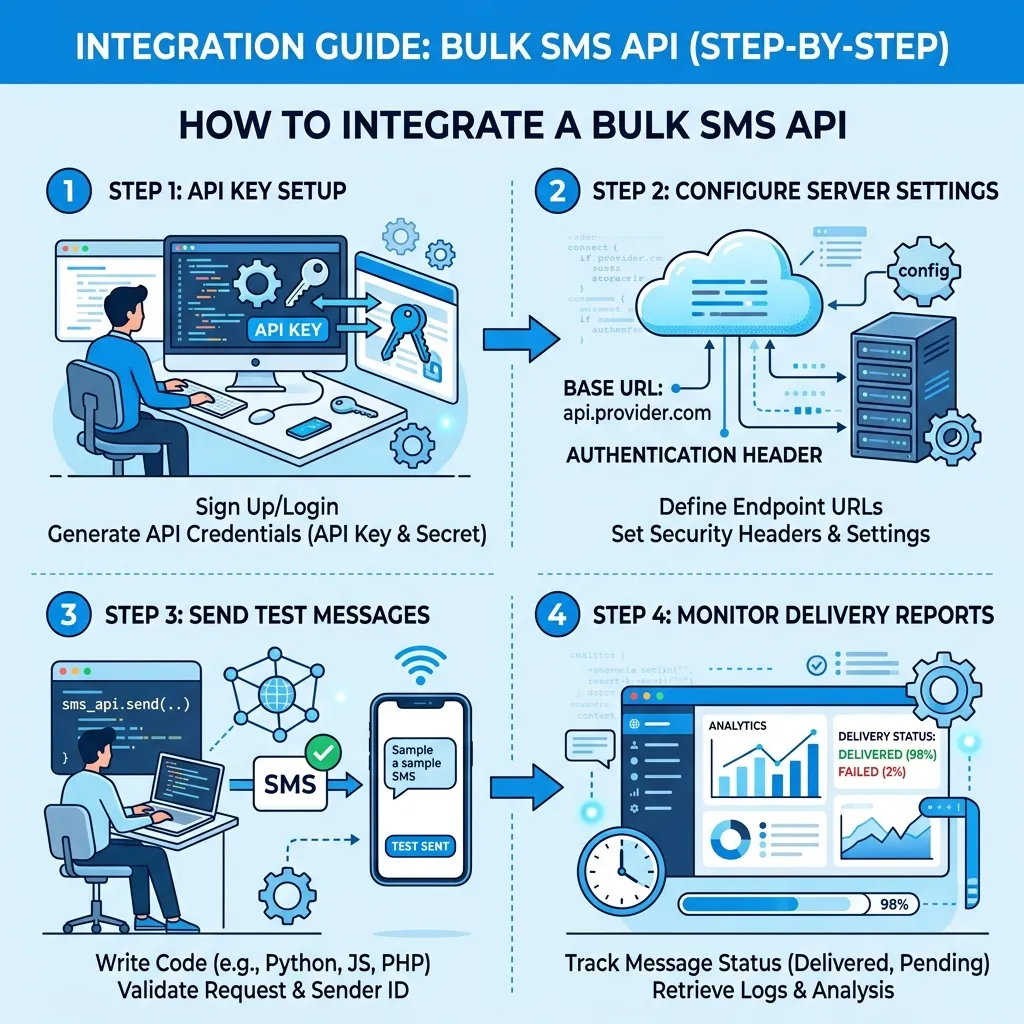
Setting up a business text messaging API is more straightforward than many people expect. Here’s the general process.
Step 1: Sign up and get your API key
Create an account with your chosen bulk SMS service provider. Once verified, you’ll receive an API key that authenticates your requests.
Step 2: Read the documentation
Spend time with the provider’s docs. Find the endpoint for sending messages, and note the required parameters—usually the sender ID, recipient number, and message body.
Step 3: Make a test request
Send a single message to your own phone first. Most providers offer a sandbox or free trial credits so you can test without spending money.
Step 4: Format your recipient list
For bulk sends, you’ll pass an array of numbers or upload a contact file. Make sure numbers are in the correct international format (E.164), which includes the country code.
Step 5: Add automation and webhooks
Set up an SMS automation API workflow to trigger messages on events. Configure webhooks so the provider can send delivery reports back to your system in real time.
Step 6: Monitor and optimize
Track delivery rates, click-throughs, and opt-outs. Use this data to refine your timing, message length, and targeting.
Best practices for sending bulk SMS that gets results
Sending texts is easy. Sending texts that work takes a little more thought.
- Get explicit consent. Only message people who have opted in. This keeps you compliant and protects your sender reputation.
- Keep it short. A standard SMS is 160 characters. Get to the point fast and include a clear call to action.
- Personalize where you can. Using a recipient’s name or past purchase can lift engagement significantly.
- Time it right. Avoid early mornings and late nights. Mid-morning and early evening tend to perform best.
- Always include an opt-out. A simple “Reply STOP to unsubscribe” satisfies regulations and respects your audience.
- Test before you scale. Send to a small segment first, review the results, then roll out to your full list.
Start sending bulk SMS at scale
A bulk SMS API turns text messaging from a manual chore into an automated growth engine. Whether you need a transactional SMS API for instant alerts, an online SMS marketing platform for campaigns, or a programmable SMS API to build texting into your own product, the right provider makes it simple to reach customers where they actually pay attention—their phones.
Start small. Pick a provider that fits your main use case, run a test campaign, and measure your results. From there, you can layer in automation, two-way messaging, and segmentation as you grow.
Ready to take the next step? Compare a few bulk SMS service providers, sign up for a free trial, and send your first test message today.
Frequently asked questions
How much does a bulk SMS API cost?
Pricing varies widely by provider and region. Most charge per message sent, with rates dropping as your volume increases. Some providers add fees for dedicated phone numbers or short codes. For accurate budgeting, request a quote based on your expected monthly volume and target countries.
What’s the difference between a transactional SMS API and a promotional SMS service?
A transactional SMS API sends event-triggered messages like OTPs, order confirmations, and alerts that users expect. A promotional SMS service sends marketing messages like sales and discounts, which require explicit opt-in consent and must follow regulations such as the TCPA.
Do I need a developer to send bulk SMS online?
Not necessarily. If you use an online SMS marketing platform with a dashboard, you can upload contacts and send campaigns without any coding. You only need a developer if you want to integrate an SMS gateway API directly into your own software.
How fast can a mass text messaging service deliver messages?
A quality bulk SMS API provider can deliver thousands of messages within seconds. Actual speed depends on the provider’s carrier routes, your message volume, and the destination country’s network conditions.
Is bulk SMS marketing legal?
Yes, but it’s regulated. In the United States, the TCPA requires explicit consent before sending promotional texts, and you must offer an easy opt-out. Rules differ by country, so always confirm the regulations in the regions where your recipients live.
Can I receive replies with a business text messaging API?
Yes. A two-way business text messaging API lets customers reply to your messages. Your system can capture those replies through webhooks and respond automatically or route them to a support